

Audio By Carbonatix
The Pro Vice-Chancellor of the Kwame Nkrumah University of Science and Technology, Prof. Ellis Owusu-Dabo has expressed concerns about the poor state of orthodox medical practice in Ghana.
He believes the forcing of people into the health sector has resulted in substandard health delivery.
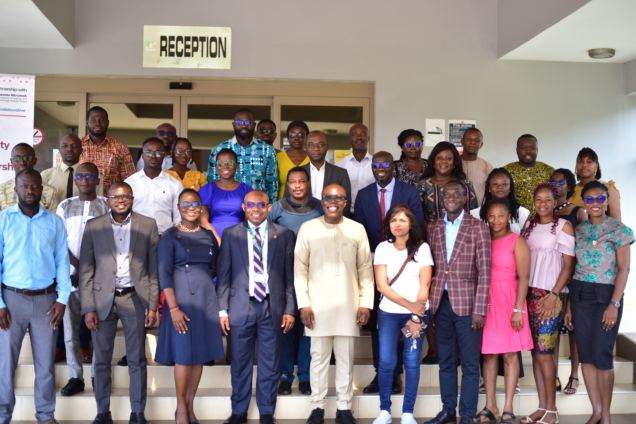
Prof. Owusu-Dabo who is also the principal investigator of the Mastercard Foundation Africa Higher Education Health Collaborative said this at the opening ceremony of the short course in community health entrepreneurship by the Collaborative in Kumasi.
“The already known traditional area in health which is known as orthodox medicine or medical practice is suffering in this country. And many people who have gotten into our profession were perhaps forced into the profession.
“We want a doctor, we want a nurse, we want this, and we want that. The consequences of these actions and the ramification thereof I promise you if we don’t change we are going to be seeing a lot of medicolegal issues in this country,” he said.
He also mentioned that the medical profession is losing what characterizes it as a noble profession.
“When we used to call the health profession a noble profession there were a lot of several things that characterized he health profession.
“Some of us have bleeding hearts because we are losing all those attributes that characterize the so called noble profession.
“Whether you are biomedical scientist, a nurse, a doctor or a physician assistant you apply yourself dutifully to certain attributes; those attributes I daresay we are losing them,” he said.
The community health entrepreneurship is a short course organized by the Mastercard Foundation Africa Higher Education Health Collaborative in partnership with the Kwame Nkrumah University of Science and Technology.
This course will equip 20 selected community health personnel from across the country with requisite skills in entrepreneurship to stem the brain drain menace.
The programme is under the health employment pillar of the MasterCard Foundation Africa Higher Education Health Collaborative.
The health employment pillar aims to expand and improve current capacities to train primary healthcare workers.
Provost of the College of Health Sciences, Prof. Christian Agyare mentioned that “there is huge opportunity for building and scaling human capital within the sector. To meet current market demands, health workers require differentiated competencies including tangible skills that can be marketed to prospective employers but also encourage self-employment when feasible.”
Latest Stories
-
Asante Gold reports US$345million loss for 2025
60 minutes -
Gov’t making progress in clearing $1.7bn power debt – Mahama
2 hours -
Justice is the engine of growth – Chief Justice
3 hours -
Meet us halfway – Trade Minister tasks private sector with AfCFTA success
3 hours -
After more than 14 years at Atletico Madrid, what next for Simeone?
3 hours -
Conquering the World – Building on the foundations laid by Otto Addo
3 hours -
[Watch Live] Kwaw Kese, Kwami Eugene, Tinny, Keche and others thrill fans at Gomoa Easter Carnival
4 hours -
Gomoa Easter Carnival: Experts charge indigenes to own festival to ensure sustainability
5 hours -
Gomoa Easter Carnival: Edem Agbana and Joy Prime fans shower festival with huge endorsements
6 hours -
Gathering of Royals 2026: Empowering women, boosting tomato production
7 hours -
Gov’t to overhaul free zones into manufacturing hubs for local production – Trade Minister
7 hours -
Ghana losing $2.5bn yearly from raw exports – Trade Minister reveals
7 hours -
Mahama unveils plans for Kwahu Airport, Convention Centre
7 hours -
World’s oldest leader, Paul Biya to get a deputy for first time in 43-year rule
8 hours -
Search for missing US airman continues as Trump threatens ‘hell’ if Iran does not reach deal
8 hours