


Audio By Carbonatix
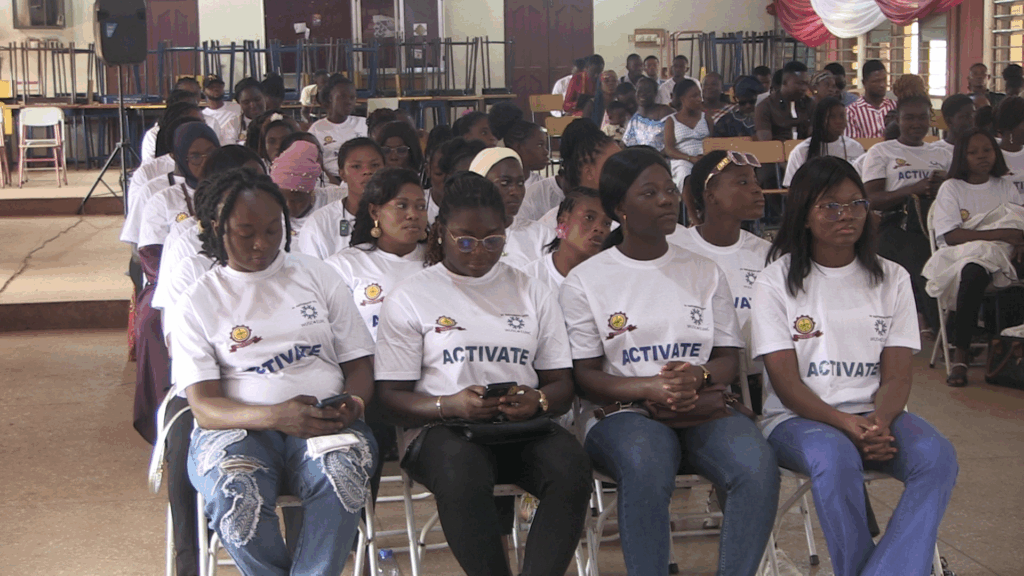
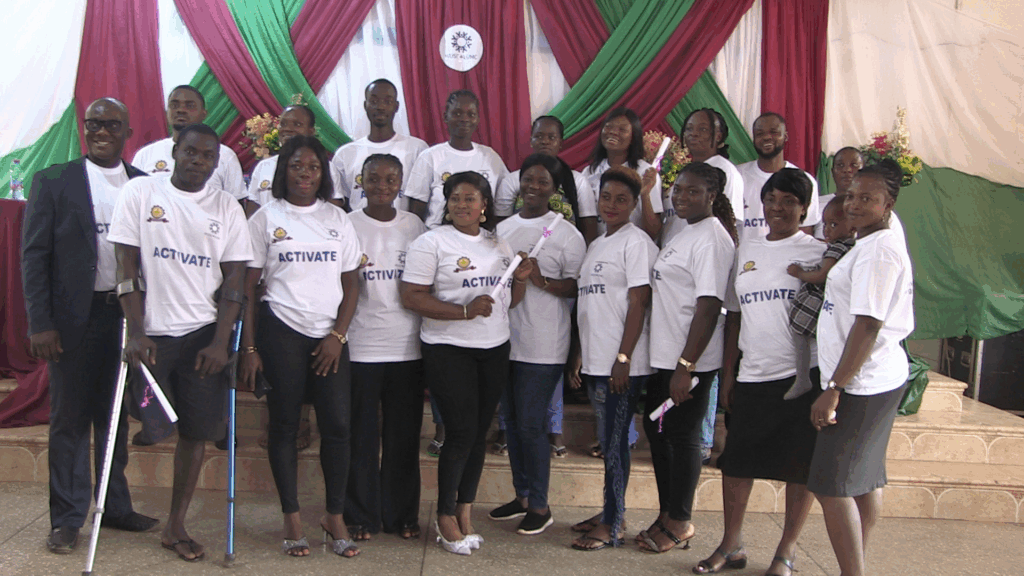
More than 200 young people in Asante Mampong in the Ashanti Region have completed practical agricultural short courses under the WUSC–ACTIVATE Project at the Akenten Appiah-Menka University of Skills Training and Entrepreneurial Development (AAMUSTED).
The programme is being implemented by World University Services of Canada (WUSC) with support from the MasterCard Foundation under the Accelerating Change Through Innovation in Agricultural TVET (ACTIVATE) project. It is designed to help young people, especially women and persons with disabilities, gain employable skills, start businesses, and move smoothly into work.
The first batch of trainees, numbering 209, took part in the programme between August and December 2025 at the AAMUSTED Mampong Campus. Most of the participants were young women, alongside young men and persons with disabilities aged between 18 and 35. Project leaders say this reflects the programme’s strong focus on inclusion and equal opportunity.
The training covered key areas across the agricultural value chain, including post-harvest handling and food processing, livestock health management, non-traditional agriculture production, and organic vegetable production. The courses combined classroom learning with hands-on practical training, business development support, and mentorship.
Coordinator of the programme, Dr. Benjamin Danso, said the ACTIVATE project was created to go beyond classroom training by supporting participants to start businesses or gain employment.
“The whole idea is to support young women and persons with disabilities with training, business development support, and some financial assistance,” Dr. Danso said. “The goal is to help them start their own businesses or transition into work, including being employed by other business owners.”
He explained that the four-month training was structured to equip participants with all the skills needed to succeed in different agricultural value chains.
“We have given them the skills they need to excel,” he said. “We trained them in livestock health management, food processing, non-traditional agriculture, and organic vegetable production. All of this is to help them start something on their own, even at a very small level.”
Participants in the post-harvest handling and food processing course learned how to process and preserve food, improve hygiene, and add value to agricultural produce. One of the beneficiaries, Christiana Opoku, described the training as life-changing.
“I have learned how to process food and preserve it,” she said. “The training has really helped me. I have achieved so much by learning many new skills, and I believe I can now impact my generation with what I have learned.”
Another beneficiary, Christiana Kwesi, a Level 300 student, said the skills she gained would support her financially while she continues her education.
“I am a Level 300 student, and learning these skills will help me a lot,” she said. “I can now make money for myself even while I am still in school.” She encouraged other young women to take advantage of the programme to build their skills and confidence.
Those trained in livestock health management gained practical knowledge in animal care, vaccination, disease prevention, and farm hygiene. Richard Osei, a physically challenged participant who received veterinary training, said the programme has made him more independent.
“Now that I have been trained, I do not need to look for an expert every time my animals are sick,” he said. “I can take care of them myself.”
Participants in non-traditional agriculture production were trained in activities such as mushroom farming, beekeeping, snail rearing, and rabbit production. They completed full production cycles and were supported to register their businesses and prepare for scale-up.
In the vegetable production and processing course, trainees learned nursery management, pest and disease control, irrigation, harvesting, and basic processing. Farmland and irrigation facilities were provided to support practical learning and year-round farming.
Dr. Danso noted that the programme directly addresses youth unemployment by supporting trainees to move from training into real economic activity.
“Unemployment has been a major challenge in Ghana,” he said. “In the past, we focused on training without supporting people to transition into work. This time, we are providing start-up support so they can begin their own businesses or work with other employers. From today, they should be able to transition smoothly into work.”
Throughout the programme, trainees received stipends, training materials, and personal protective equipment. AAMUSTED provided laboratories, demonstration farms, cold storage facilities, and workspaces, while partner financial institutions supported trainees with access to credit and business registration.
The ACTIVATE programme is expected to continue for the next three years, expanding opportunities for more young people across the agricultural sector. Project leaders say the initiative is already creating jobs, improving food security, and strengthening livelihoods in the municipality.
Latest Stories
-
Ghana Water revenue mobilisation below 50% of potential – MD
5 minutes -
Ghana’s democracy must accommodate dissent and constructive criticism – Haruna Iddrisu
6 minutes -
Fact check: Trump posts fake quote of Denzel Washington supposedly praising him
7 minutes -
UPSA students lament high fees at private hostels, call for government intervention
18 minutes -
We will upgrade Ghana’s credit ratings if government maintains fiscal discipline, policy effectiveness – Moody’s
19 minutes -
Gender Ministry supports four siblings allegedly sexually abused by their father
22 minutes -
UMB MD wins ‘CEO of the Year’, banking category at 2026 Ghana Credit Excellence Awards
23 minutes -
Don’t throw away empty egg cartons — 6 smart ways to reuse them
27 minutes -
GoldBod poised to surpass 2025 forex performance – Sammy Gyamfi
28 minutes -
Old students of Peki SHS break ground to give 70-year-old school infrastructure a facelift
42 minutes -
Ablakwa facing ‘personal vendetta’ over refusal to grant Nana B service passport – Majority
43 minutes -
Every year, the lawyers come out, and so does the nonsense! – Ace Ankomah writes
55 minutes -
Digital transformation without an ownership culture can digitise poor service
58 minutes -
Fishing communities demand revocation of offshore gold exploration licences over livelihood concerns
1 hour -
How Ghanaian tycoon Manoj Lakhiani built a water and plastics empire from a $25,000 loan
1 hour