


Audio By Carbonatix
Ghana’s microfinance subsector has been urged to embrace sweeping reforms, strengthen governance, and invest in digital transformation to remain competitive in a rapidly evolving financial landscape.
This call came during the Ghana Association of Microfinance Companies (GAMC) 14th Annual General Meeting (AGM) held on October 30, 2025, under the theme “Scaling for Impact: Empowering Microfinance Companies to Drive Industry Growth.”
Delivering the keynote address, Mr. David Cracknell, Managing Director of First Principles Consulting, Kenya, cautioned that the industry’s survival depends on decisive collective action and innovation.
Mr. Cracknell noted that the financial services sector is changing rapidly due to growing competition, digitisation, and the expansion of mobile money services.
He warned that microfinance companies (MFCs) risk becoming obsolete if they fail to adapt.
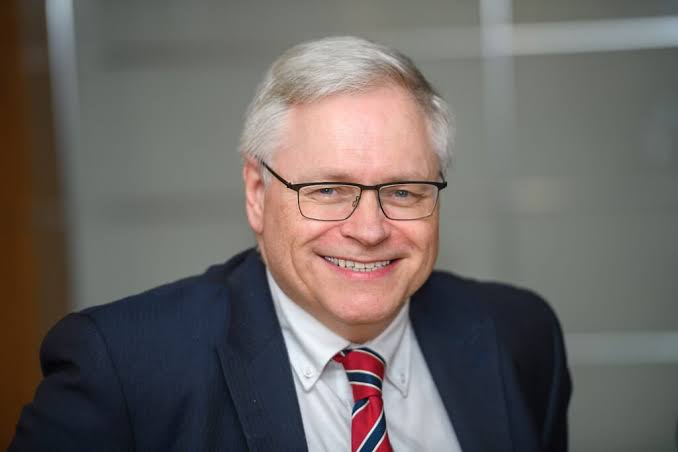
Mr. David Cracknell
“Microfinance companies must redefine their vision and evolve their operating models to meet the demands of a digital economy,” he said.
Reflecting on the 2019 collapse of several Microfinance Institutions, Mr Cracknell identified weak governance, insider lending, poor credit control, and undercapitalisation as the key causes.
He noted that although the Bank of Ghana (BoG) responded with governance and risk management guidelines, many institutions still struggle to meet regulatory and operational standards.
“A bad portfolio is our fault,” he emphasised, calling on managers to strengthen governance systems, improve capitalisation beyond founder’s equity, and focus on effective loan recovery.
Outlining a roadmap for revitalising the sector, Mr Cracknell presented a five-pillar strategy for sustainable growth:
1. Address challenges by prioritising sound governance, capitalisation, and risk management.
2. Modify business models to stay competitive over time.
3. Invest for the future through staff training, automation, and capacity building.
4. Promote collective action via shared platforms and services.
5. Enhance advocacy to influence regulatory and policy reforms.
He urged institutions to invest in staff development and automation, distinguishing between Digital Credit—mobile money-based products with automated decision-making—and Digitising Credit—technology-driven improvements to traditional lending processes such as credit referencing and loan monitoring.
"Institutions that fail to digitise will be left behind," he added.
Mr Cracknell also stressed the need for MFCs to rebuild public trust after years of instability. He encouraged firms to strengthen their brands by projecting reliability, confidence, and competence.
He further advised companies to become “investment-ready” by attracting equity partners and affordable debt, noting that scaling ownership could make institutions more resilient.
To cut costs and boost efficiency, Cracknell proposed that microfinance institutions adopt Shared Platforms on a Pay-As-You-Go basis. These include:
Banking as a Service (BaaS) – shared core banking systems, Payments as a Service (PaaS) – access to national payment systems, Software as a Service (SaaS) – digitised agent and loan systems, Infrastructure as a Service (IaaS) – shared data centre resources.

Mr. Louis Amo
Director of the Financial Sector Division of the Ministry of Finance, Mr. Louis Amo, as Special Guest of Honour, commended the GAMC for its contribution to stabilising the financial sector.
“You have weathered the storms and continue to play a vital role in Ghana’s financial ecosystem,” he said. “Governance, compliance, training, and customer service are the foundations on which real impact is built.”
The Finance Ministry assured stakeholders of continued collaboration, adding, “We will continue to work with all partners to ensure the microfinance sector remains strong, inclusive, and capable of driving national development.”
Additionally, the Board Chairperson, Rebecca Addo, noted that the coming year would bring fresh compliance and regulatory demands — including full client verification, data protection certification, and revised cybersecurity directives.
She acknowledged that while these may present challenges, with collective commitment, discipline, and a shared vision, the sector can overcome them.
“Together, we can strengthen the financial ecosystem, enhance industry credibility, and drive the sustainable growth our industry and nation deserve,” she said.
Latest Stories
-
AGI commends government’s move to resolve the power crisis in Volta and Oti Regions
2 minutes -
Trump agrees to two-week ceasefire, Iran says safe passage through Hormuz possible
58 minutes -
Dozens killed as Angola flood death toll rises
1 hour -
Russia confirms deaths of 16 Cameroonians fighting in Ukraine war, Yaounde says
1 hour -
Plan to scrap presidential elections puts Zimbabweans at loggerheads
1 hour -
Guinea-Bissau transporters strike over higher fuel prices
2 hours -
Iran ceasefire deal a partial win for Trump – but at a high cost
2 hours -
Oil slides below $100 after Trump announces two-week ceasefire
2 hours -
Madagascar declares state of emergency over energy situation due to Iran war
2 hours -
Ex-Meta worker investigated for downloading 30,000 private Facebook photos
2 hours -
World Bank says Nigerian economy to grow in 2026 but Iran war lifts inflation
3 hours -
Ringleader of suspected human trafficking network arrested in Ethiopia
3 hours -
Alexander-Arnold fails to ease Tuchel concerns as Kane stars
3 hours -
Amad backs Carrick for Manchester United job
3 hours -
English Premier League secures fifth Champions League spot
3 hours