

Audio By Carbonatix
A leading North American mining entrepreneur, who wants to open his own US copper mine, has welcomed plans for a 50% tax on copper imports.
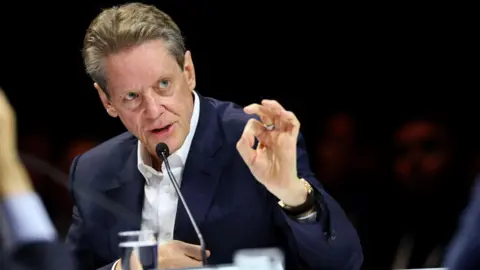
Robert Friedland, the billionaire founder of Vancouver-based Ivanhoe Mines and Ivanhoe Electric, told the BBC the tariffs would help re-establish the US copper mining industry.
US President Donald Trump has already introduced steel and aluminium tariffs, and a 50% copper tariff is due to come in on 1 August.
Critics have argued that tariffs are inflationary and will push up prices for American consumers, but Mr Friedland said the president's approach was aimed at strengthening national security by building important industries at home.
Copper is an essential metal for the modern global economy and green technology in particular. It is used in everything from buildings and power grids to electric vehicles and data centres.
"The new administration in the United States is correctly focused on making sure that the world's largest economy actually has stable access to raw materials at the scale of that economy, rather than being dependent on far-flung and potentially unstable jurisdictions," he said.
Last year, the US imported about 50% of the copper it used. The biggest sources were Mexico, Chile and Canada - which has hit out at the move.
"We'll fight against it - period," said Canadian Industry Minister Melanie Joly.
When Trump announced the tariffs on social media earlier this month, he said they would allow the US to "once again, build a dominant copper industry".
Global demand is soaring thanks to growing industrialisation and the surge of new technologies that rely on electricity.
The International Energy Agency (IEA) is warning that without more mining, global copper demand will be 30% higher than supply by 2035 as demand from China and India continues to soar.
US demand spurred by the impending tariffs has pushed the price of copper to record highs - a trend that Mr Friedland warns will only increase due to the metal's scarcity.
However, those higher prices risk broader economic damage, such as delays in construction projects, according to Ewa Manthey, who is a commodities strategist at the Dutch bank ING.
"Copper is a foundational input in everything from electronics to manufacturing and construction. When prices rise, so do production costs, which can feed into broader inflation," Ms Manthey said.
She pointed out that pressure came as the US central bank was already resisting Trump's calls to cut interest rates amid its ongoing struggles to get inflation back to its 2% target.
The US was once the world's biggest producer of copper and still has plenty left in the ground, but has fallen behind Chile, the Democratic Republic of Congo and Peru.
Its refining capacity has also been falling. In 1997, there were 11 smelters, and now there are only three, which means American copper has had to be sent abroad for processing. Meanwhile, China's share of global refining capacity has grown to 44%.
A report commissioned by industry body the Copper Development Association concluded that making the most of American reserves required increasing processing capacity in the US.
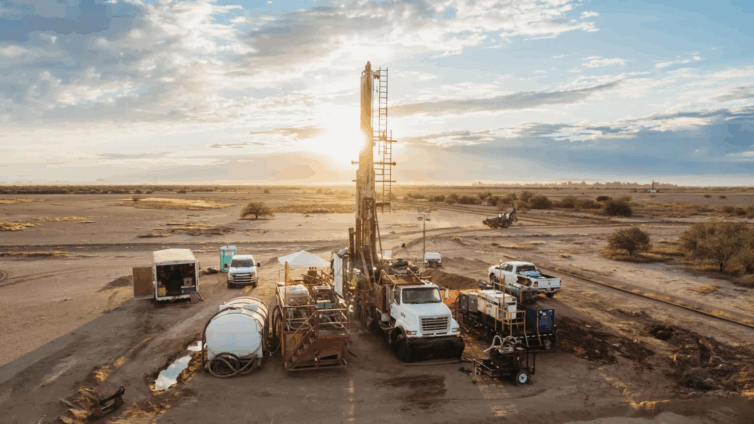
Mr Friedland, who has joint US and Canadian citizenship, made most of his mining fortune from his company's vast operations in southern Africa and the Democratic Republic of Congo, but he is working on opening what will be America's first new copper mine in more than a decade.
The Santa Cruz project in Arizona is expected to start production in 2028 and will, he says, deliver copper that is so highly refined it can be used in electronics, modern cars and data centres without requiring processing at a smelter.
And with computer chip maker TSMC and electric car manufacturer Lucid Motors coming to Arizona, Mr Friedland thinks the copper produced will never leave the state.
Other companies are also racing to mine more copper in the US but have been held back by permit delays and legal challenges.
The billionaire insists Trump's desire to bring manufacturing jobs back to the US will mean even more raw materials are needed and there will be a "continued scramble" for metals.
But others are doubtful Trump's economic shake-up will be good for growth.
"For the sake of national security, you may be willing to give up certain amounts of economic efficiency" says Adam Posen, President of the Peterson Institute for International Economics.
However, the wide-ranging tariffs will, he argues, be detrimental to the US.
"That's a very big set of costs to impose on the huge range of people, almost essentially everybody in the US."
Latest Stories
-
Mahama Ayariga leads NDC delegation to Bawku ahead of Samanpiid Festival
3 hours -
Edem warns youth against drug abuse at 9th Eledzi Health Walk
7 hours -
Suspension of new DVLA Plate: Abuakwa South MP warns of insurance and public safety risks
7 hours -
Ghana’s Evans Kyere-Mensah nominated to World Agriculture Forum Council
8 hours -
Creative Canvas 2025: King Promise — The systems player
8 hours -
Wherever we go, our polling station executives are yearning for Dr Bawumia – NPP coordinators
8 hours -
Agricultural cooperatives emerging as climate champions in rural Ghana
9 hours -
Fire Service rescues two in truck accident at Asukawkaw
9 hours -
Ashland Foundation donates food items to Krachi Local Prison
9 hours -
Akatsi North DCE warns PWD beneficiaries against selling livelihood support items
9 hours -
Salaga South MP calls for unity and peace at Kulaw 2025 Youth Homecoming
10 hours -
GPL 2025/2026: Gold Stars triumph over Dreams in five-goal thriller
11 hours -
Ibrahim Mahama supports disability groups with Christmas donation
11 hours -
2025/26 GPL: Berekum Chelsea come from behind to beat XI Wonders 3-1
11 hours -
NACOC dismantles drug dens in Eastern and Greater Accra regions in ‘Operation White Ember’
12 hours