

Audio By Carbonatix
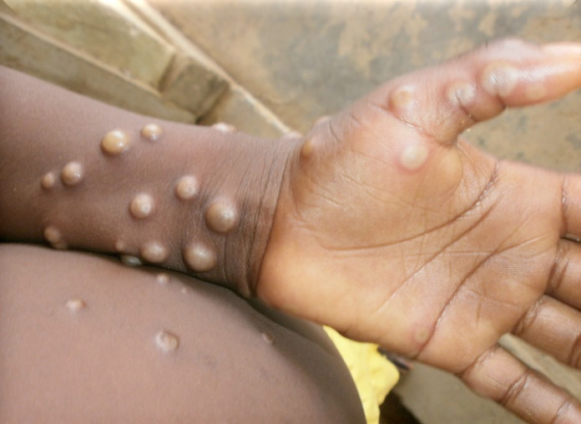
Ghana has confirmed 84 cases of Monkeypox diseases as of September 6, 2022, with Greater Accra Region recording the highest number for both suspected (191) and confirmed (51) cases.
The country has also recorded 535 suspected cases, spreading across 38 districts, with four deaths – two deaths in Upper East and one death each in Greater Accra and Central Regions.
Dr. Henry Nagai, the Chief of Party and Public Health Physician, JSI Research and Training Institute, disclosed this when he spoke on Ghana’s perspective, at a free webinar (online) session on emerging viral infections and diseases with focus on the Monkeypox virus.
The JSI is collaborating with the Ghana Health Service (GHS) to implement the Global VAX Project being funded by the USAID under its strengthening the Care Continuum Project in parts of the country.
World Health Organisation’s (WHO) Regional Office for Africa organised the four-hour webinar, which among other objectives, sought to support the continental response by advocating proactive measures from African leadership to overcome the Monkeypox disease.
Under the Global VAX Project, the JSI and its implementing partners, would specifically be leveraging its existing network to mobilize people aged 15 years and above, pregnant women, people living with HIV, people with disabilities, and migrant population to access COVID-19 vaccines in the Western, Western North and Ahafo Regions.
In a breakdown, Dr. Nagai explained that 51 cases of the Monkeypox disease were recorded among males, constituting 60.7 per cent, saying the national case fatality rate also stood at 4.8 per cent.
So far, Bono region has recorded 16 suspected cases, Ahafo region (nine) suspected cases, Ashanti region (69) suspected cases, Bono East region (15) suspected cases, Central region (15) suspected cases, Eastern region (48) suspected cases and North-East region (four) suspected cases.
Northern region has recorded 24 suspected cases, Oti region (seven), Savannah region (seven), Upper East region (43), Upper West region (25), Volta Region (18), Western Region (11) and Western North region (3) suspected cases.
Dr Nagai said “some communities feel the Monkeypox is derogatory” and called on the WHO to consider changing the name of the disease to stem stigmatization and discrimination.
“WHO must listen, work hard and change the name of the disease now”, he stated, and lauded the contributions of the GHS and its partners for the support towards the fight against Monkeypox in the country.
Latest Stories
-
COCOBOD’S GH¢16.3bn SPV: Real progress toward a sustainable cocoa sector
18 minutes -
Ghana lose Morocco friendly as Atlas Lions turn to Mali
2 hours -
2026/2027 GPL: Kelvin Nkrumah strike sends Medeama top of league table
2 hours -
Emmanuel City crowned champions of maiden Global Game Scouting Tournament
3 hours -
Thomas Partey loses father Jacob Teye Partey
3 hours -
Martin Kpebu explains when EOCO can arrest Manhyia South MP after securing court warrant
3 hours -
EOCO’s reasons for seeking Manhyia South MP arrest warrant not justified – Kpebu
3 hours -
MTN Ghana warns SMEs against sharing PINs amid digital fraud risks
3 hours -
Yendi nursing students warn restricted access to skills lab could affect their training
3 hours -
Minority awaits formal notice of arrest warrant for Manhyia South MP – Annoh-Dompreh
3 hours -
LTIF announces 2026 Pan-African edition in Accra from October 6-7
3 hours -
Mfantsipim needs broader funding partnerships to bridge infrastructure gap – Prof Baiden
3 hours -
MP status must not shield anyone from law enforcement – Kwakye Ofosu
3 hours -
EOCO had tactical team ready to arrest Baffour Awuah – Felix Kwakye Ofosu
4 hours -
Afoko can unite NPP’s factions, says Charles Owusu Juanah
4 hours