

Audio By Carbonatix
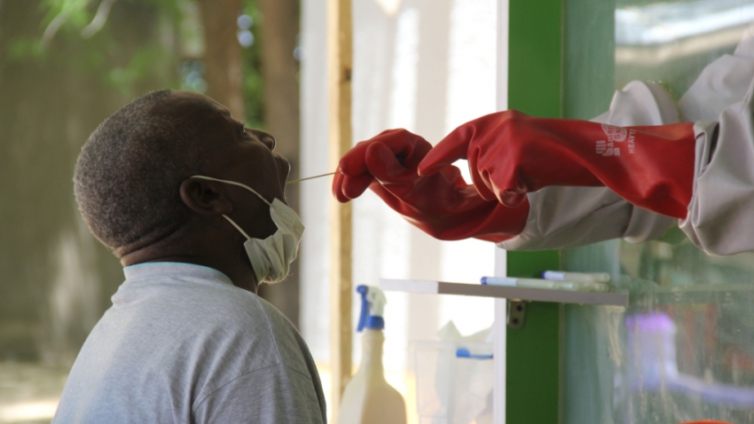
The majority of Ghanaians have never tested for Covid-19 because of the fear of stigma around testing positive, a Ghana Statistical Service survey has shown.
The survey conducted in the first two weeks of December 2021 showed that only 21.6 percent of Ghanaians had ever been tested for Covid-19.
Apart from the fear of stigma, some of the people interviewed cited the unavailability or distance to a testing facility for not getting tested for Covid-19.
The data was collected from a total of 7,999 households in the first two weeks of December 2021 across the country.
In a brief on the impact of the Covid-19 Households and Jobs Tracker Survey Report, Mr Victor Boateng Owusu, Senior Statistician, and Project Coordinator said the survey revealed that Covid-19 was not a major reason for people not working, adding that only 4.3 percent of the respondents gave Covid-19 as a reason for not working.
Touching on the nine indicators of the wellbeing of children between four and 17 years old, Mr Owusu said improvements were reported compared to the period before January 2021 when schools were reopened.
He said Children felt less distressed, less afraid, and less sad but also less likely to experience physical punishment and less likely to work.
Mr Owusu said only 26.7 percent of Ghanaians indicated that their total household income stayed the same as compared to the period before Covid-19, adding that 5.1 percent of citizens indicated that their total income increased while 68.2 percent indicated that their household income decreased.
“Of the different sources of income, non-farm family business income saw the biggest reduction. 77.3 percent of households with income derived from a non-farm family business saw a decrease in income and only 4.4 percent reported an increase in income,” it said.
He said 4.2 percent of households, who got income from pension, saw the smallest change of this income source while 76.7 percent reported no change in pension income, 13.0 percent a reduction, and 10.3 percent an increase.
It said the median expenditure on Personal Protective Equipment (masks, sanitisers, face shields, etc.) per household on the seven days before the interviews was 12.0 Ghana cedis and the mean expenditure of 22.0 cedis, adding that the Median expenditure was slightly higher in urban areas (14 GH?) than in rural areas (10.3 GH?).
Approximately, 87 percent of households used some sort of coping strategy such as relying on savings and reducing food consumption to deal with the negative effects of Covid-19 since March 2020.
It stated that 73.4 percent indicated that an increase in prices was the most common shock experienced by households due to Covid-19 since March 2020.
“Rural households were less food secure than urban households and the coastal zone was more food secure on all indicators than the national average with the exception of the percentage of households that indicated they ran out of food,” Mr Owusu said.
Latest Stories
-
NPP had more permanent fuel relief measures than current GH¢2 diesel cut – Amin Adam
14 minutes -
Photos from the 3rd Republic Bank-JoyNews Habitat Fair Clinic
17 minutes -
Ethiopia’s army promises restraint amid fears of new civil war
26 minutes -
Amin Adam calls for review of fuel taxes as diesel prices remain above GH¢18
58 minutes -
World Vision Ghana, Ahafo districts sign MoU for universal WASH coverage
1 hour -
When the gold engine stutters: What Ghana’s Cedi and reserves are telling us about the new economic architecture
2 hours -
Two reportedly die after being trapped in mining pit at Juaboso
2 hours -
Petrosol cleans up Wa Municipal Hospital, to donate medical equipment
2 hours -
‘If NPP was ‘insensitive’ over fuel prices, NDC must accept same description now’ — Amin Adam
2 hours -
KiDi brings the hits to London in sold-out UK headline concert
2 hours -
The last goodbye of Ghanaian shot dead in the US
3 hours -
MCC opens door to Ghana again as MiDA revives development partnership
3 hours -
CSIR moves to turn scientific research into jobs, national growth
3 hours -
More patrons troop in as 3rd Republic Bank-JoyNews Habitat Fair clinic enters final day stretch
3 hours -
German, Russian foreign ministers hold rare talks amid rising tensions
3 hours