

Audio By Carbonatix
The Monetary Policy Committee of the Bank of Ghana will from today, January 23, 2024, begin its 116th meeting to review developments in the Ghanaian economy.
The meeting is coming at a time when there is pressure on the Committee to cut the policy rate by some significant margin due to the consistent decline in inflation.
The policy rate was kept unchanged at 30.0% in November 2023, but inflation eased to 23.2% in December 2023.
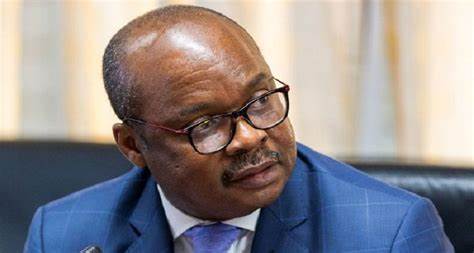
Governor of the Bank of Ghana, Dr. Ernest Addison, however, said though his outfit is committed to a tight Monetary Policy stance, the Committee will cut the policy rate when necessary.
The MPC is expected to prioritise the recent International Monetary Fund Board approval of the first review of Ghana’s programme and the $600 million bailout package from the Fund and its impact on the economy.
Already, Fitch Solutions, has stated that it expects the policy rate to go down by 8.0 percentage points in 2024.
“With inflation moderating substantially through 2024, we anticipate that the BoG will embark upon a sizeable monetary easing cycle, cutting the policy rate by a cumulative 800bps to 22.00% by year-end.”
Fitch Solutions added it usually takes about 12 months for interest rate adjustments to affect the real economy due to the lag in monetary transmission mechanisms.
As such, it believes that the Bank of Ghana’s dovish monetary policy stance is unlikely to result in a sharp increase in real loan growth – which has remained in contractionary territory over January to August 2023.
MPC to assess business environment
The MPC will assess the business environment, particularly the business and consumer risk factors.
In the third quarter of 2023, the Bank of Ghana said its high-frequency real sector indicators pointed to continued pick-up in economic activity, although at a moderate pace. The updated Composite Index of Economic Activity (CIEA) contracted at a lower rate of 0.4 percent in September 2023, compared with a sharper contraction of 1.2 percent in the same period of last year.
The main indicators that contributed to the relative improvement in the CIEA were industrial consumption of electricity, private sector contributions to Social Security, and tourist arrivals. The momentum in credit to the private sector, cement sales, and port activity, however, slowed down over the period
Latest Stories
-
Ato Forson urges ECOWAS states to honour EBID capital commitments
18 seconds -
Why Ghana’s Mobile Money security is a house of cards
3 minutes -
EBID records strong financial growth amid global economic uncertainty – Ato Forson
4 minutes -
PSG vs Liverpool: Date, time and everything you need to know about the Champions League quarterfinal
21 minutes -
Education Minister orders probe into illegal SHS online class fees
23 minutes -
Barcelona vs Atlético Madrid: Date, time and everything you need to know about the Champions League quarterfinal
27 minutes -
Monthly Indicator of Economic Growth slows to 7.5% in January 2026
29 minutes -
The Reputation Bomb: Why fraud in the digital age destroys more than freedom
30 minutes -
Mahama nominates 5 to Ghana’s Fiscal Council to strengthen economic oversight
45 minutes -
Enterprise Insurance crowns first “Insure Na Chilli” winner: Jonathan Syme set for ultimate football experience
46 minutes -
Bear with us over temporary outages as ECG begins transformer upgrade programme – Energy Ministry
1 hour -
President Mahama has not broken promise on anti-LGBTQ bill — Akwatia MP
2 hours -
Education Minister promises swift fix to Aburi Girls’ SHS water crisis
2 hours -
Top Australian soldier charged with war crimes to remain in jail on remand
2 hours -
US journalist Shelly Kittleson released after kidnap in Iraq, officials say
2 hours