

Audio By Carbonatix
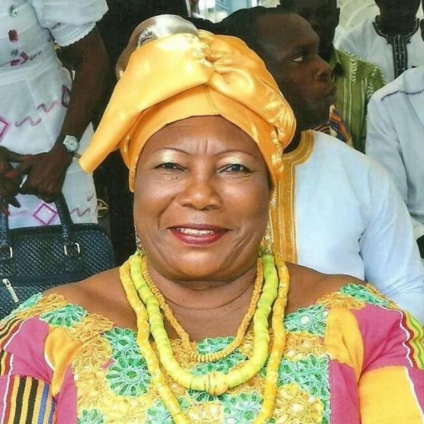
The President of the Greater Accra Markets Association, Madam Mercy Needjan on behalf of the group says funds earmarked as Covid-19 relief for its members have been very difficult to access.
She explained that as a result of the cumbersome application process, many members of the association have been unable to benefit from the intervention.
The funds were disbursed by the National Board for Small Scale Industries (NBSSI) as part of the government's effort to ease the financial struggle existing in small scale industries in a time of Covid-19.
“We were expected to fill and submit forms online to access the funds. As you can imagine many of our members who are not literate were unable to fill and submit the forms on time, even when they found other people to help them”.
Mrs Needjan in her submission called on the NBSSI to release the rest of the loans to traders who have applied but are yet to receive their pay-out.
Madam Needjan was speaking at a webinar organized by the Centre for Social Justice under the theme Celebrating Women in Leadership in a Pandemic.
Other speakers at the webinar included Deputy Chairperson of the National Commission for Civic Education, Kathleen Addy, Obstetrician and Gynaecologist, Dr. Hawa Malechi, President of the Greater Accra Markets Association, Mercy Needjan, lawyer and politician, Joyce Bawah Mogtari and CSJ Council member and Fellow for Gender and Social Inclusion, Bashiratu Kamal Muslim.
Madam Needjan said that the leadership of her association had gone to great lengths to educate its members on social distancing and other safety protocols.
She identified overcrowding in the markets as one of the greatest challenges in fighting the pandemic.
Speaking at the webinar was lawyer and politician, Joyce Bawah Mogtari. In her presentation, she stressed that women account for about 70% of the health and social workforce, which puts them at higher risk than men and yet they are less represented at the decision-making table.
She enumerated various ways in which women have borne the greater part of the effects of the pandemic. She however noted that women in leadership have proven to be better at handling the pandemic.
“They have a higher responsibility because they are more concerned with the health situation at home and must also carry their organizations along” she said.
Latest Stories
-
Edmond Boateng takes up secretary role at Honorary Consular Corps of Ghana
3 hours -
Gambia appoints British barrister to prosecute gruesome Jammeh-era crimes
3 hours -
Girl group Flo on entering into their ‘bombastic, confident, strong’ era
3 hours -
Germany suspends military approval for long stays abroad for men under 45
3 hours -
Liverpool face uphill Champions League task after PSG thrashing in Paris
3 hours -
‘Ketamine Queen’ sentenced to 15 years in Matthew Perry overdose death
4 hours -
Nigeria begins mass trial of 500 terrorism suspects
4 hours -
Atletico Madrid stun 10-man Barcelona to seize Champions League semi-final advantage
4 hours -
Black Stars coach to be announced by next week – Sports Minister
4 hours -
Chiefs, queen mothers and principal elders of Odau group denounce ‘rebellious Etweresohene’, pledges allegiance to Okyenhene
5 hours -
KNUST library dress code sparks online backlash over strict rules
5 hours -
Cultural Diplomacy in Action: Ghanaian youth leaders present symbolic smock to U.S. Chargé d’Affaires
5 hours -
Ghana Card payment activation under review – NIA breaks silence on financial integration
5 hours -
Ofori-Atta’s ICE release on bail positive; he poses no risk – Amanda Clinton
5 hours -
Ken Ofori-Atta’s passport seized after bail, set to reappear in US Court on April 27
5 hours