

Audio By Carbonatix
Nearly half of Ghana’s economic engagements with its neighbouring countries take place within the informal sector, a development that significantly affects the accurate assessment of the country’s economic growth.
According to new data from the Ghana Statistical Service (GSS), a substantial portion of trade between Ghana and its northern and western neighbours occurs outside formal systems, obscuring the true size and performance of the Ghanaian economy.
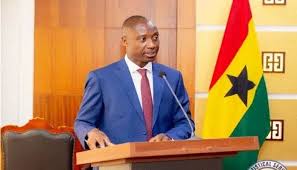
Launching the Informal Cross-Border Trade (ICBT) Survey, Government Statistician, Dr Alhassan Iddrisu, explained that Ghana’s Gross Domestic Product (GDP) calculations may be understating real economic activity, as informal trade flows are not fully captured in national accounts.
Read also: Cross-border informal trade in 2024 Q4 estimated at GH₵7.4bn – GSS
The GSS’s maiden ICBT survey tracked the movement of goods between Ghana and neighbouring Togo, Côte d’Ivoire, and Burkina Faso that pass through informal customs channels.
The findings highlight that informal cross-border trade remains a vital part of Ghana’s economy, generating billions of cedis annually and sustaining thousands of small traders, farmers, transporters, and market operators.
Because much of this activity goes unrecorded, the country’s official trade statistics and GDP estimates fail to present a complete picture of economic performance.
Dr Iddrisu noted that the goal is not to suppress informal trade, but rather to recognise and support it, ensuring that policy reflects economic realities.
“When we acknowledge informal trade as legitimate economic activity, we build a more inclusive and realistic picture of our economy,” he stated.
He further explained that GDP and trade statistics depend on understanding the value of goods and services entering and leaving the country.
When significant volumes of goods cross borders informally, national accounts fail to capture these flows, resulting in undercounted GDP, distorted growth rates, and poorly targeted policies due to gaps in data on demand, supply, and distribution.
With the ICBT data now publicly available, the GSS is urging government, the private sector, and development partners to move from dialogue to decisive action—investing in border infrastructure, introducing trader registration and financing schemes, and harmonising regional trade procedures to make cross-border commerce more efficient.
“Now we have the data on informal trade. Let’s use it to design policies that are grounded in evidence,” Dr Iddrisu urged.
Latest Stories
-
Afenyo-Markin demands Interior Minister brief Parliament over security recruitment expansion
10 minutes -
Felicia Boadu inspires gratitude with new song ‘Aseda’
18 minutes -
Conflict of interest and the President’s use of a private jet: A constitutional perspective
19 minutes -
Otto Addo names Black Stars squad for Austria and Germany friendlies
39 minutes -
Rev. Stephen Wengam urges leaders to embrace ‘servant leadership’ to transform national institutions
48 minutes -
Ghana Development Awards spotlight need for intentional socio-economic transformation
49 minutes -
The Private Jet Debate: When generosity becomes an alleged “Scandal”
54 minutes -
IGP Cyber Vetting arrests 20-year-old woman for false publication on social media
1 hour -
Overall government debt in sub-Saharan Africa stabilises but at high level – IMF
1 hour -
We will file an appeal against Freddie Blay’s remand – Lawyer
2 hours -
Tema crash: Safety record of microlight aircraft ‘very poor’ – Aviation expert
2 hours -
Only 5% of CHPS compound in Ghana are well tooled – Agotime Ziope MP
2 hours -
PwC Ghana , UGBS call on women to embrace collaboration and take up leadership roles
2 hours -
‘My mother cried out one last time’: Palestinian boy, 12, describes how Israeli forces killed his family in car
2 hours -
National Seed System Reset Programme launched at University of Ghana to boost 24-hour economy
2 hours