

Audio By Carbonatix
The Ghana Statistical Service (GSS) has revealed that total value of informal trade in the fourth quarter of 2024 is estimated at GH₵ 7.4 billion. This was captured in the GSS’ maiden Informal Cross-Border Trade (ICBT) Report.
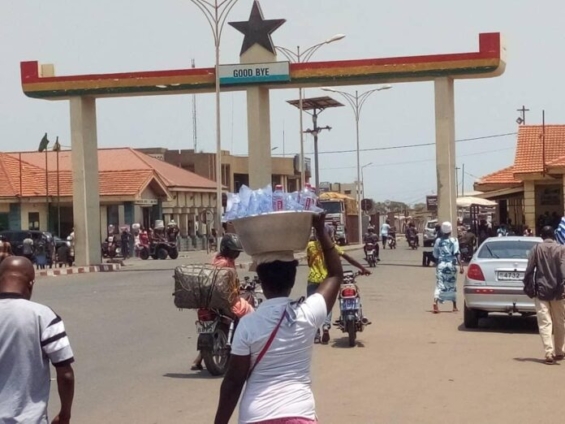
The report breaks down the numbers behind the transaction of goods and services between Ghana and its neighbouring countries.
According to the GSS, the items captured in the report are mainly goods and services usually carried by truck, or often carted on foot but remain invisible on official data.
Speaking at a press briefing to break down the figures, Government Statistician, Dr. Alhassan Iddrisu said the figure, which accounts for about 4.3% of the total trade volume in the same period is largely dominated by food items such as alcoholic beverages, cooking oil, livestock and other beverages.
"The total value of cross-border informal trade amounted to GH₵7.4 billion. During the same period Ghana's formal trade stood at GH₵165.3 billion"
With 102 field officers employed across 321 border points, the survey covered 10 out of 16 administrative regions of the country.
Volta Region recorded the highest number of border points of 76, followed by Western North and the Upper regions with 45 and 44 respectively.
Trade with Togo remains the most informal out of the 3 neighbouring countries. Ghana's east-African neighbours led the ICBT trade with the highest import of GH₵1.8bn, while Burkina Faso recorded the highest exports of GH₵1.7bn
Also imports from Togo was about thrice that from Cote D'ivoire which amounted to GH₵600 million.
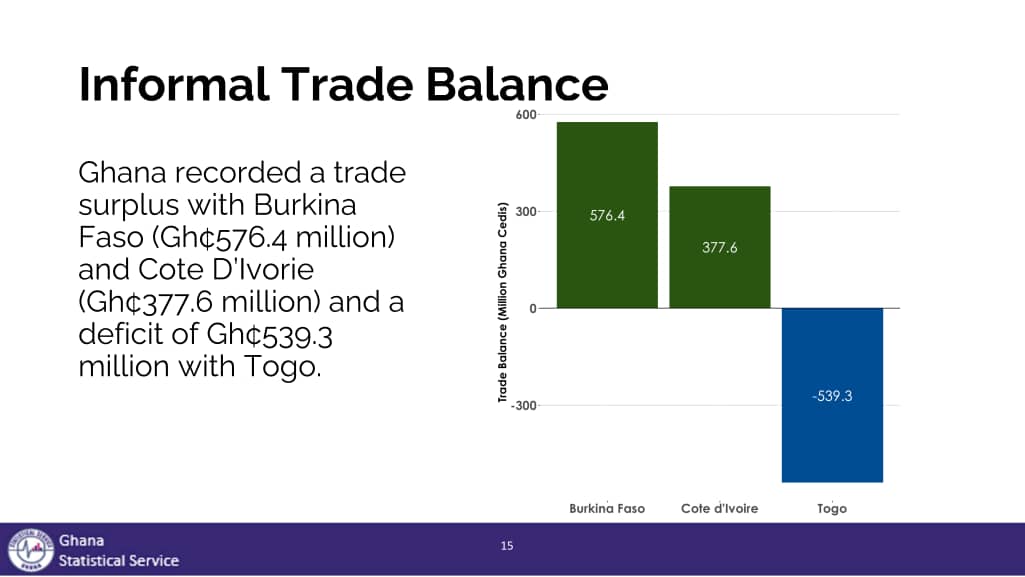
Ghana recorded a trade surplus with Burkina Faso (GH₵571m) and Cote D'ivoire (GH₵374.6). Meanwhile, a deficit of GH₵538.9 was recorded with Togo.
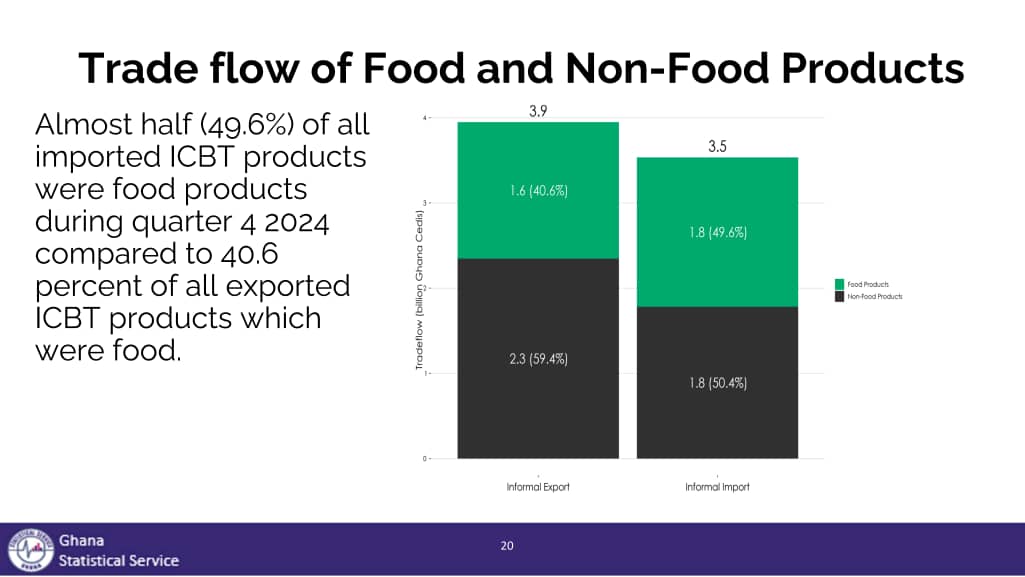
The survey revealed that more than two-thirds of formal imports representing 74.6%, which come from the 3 neighbours are food products compared to almost half (49.5%) for informal imports.
“Import on livestock was about twice that of that of export. Over GH₵300 million worth of livestock was imported, however exports hovered around GH₵177 million.” The report added.
On the recommendations, Dr. Iddrisu called for reforms geared towards formalising the informal sector. He further urged businesses to consider the production of food items such as cooking oil to reduce the over-reliance on foreign products.
“Boost production of items like cooking oil, mattresses, to cut dependence on imports. We also need to collaborate with neighbouring countries on data sharing to explore how we can work on formalizing the informal trade.
“Improvement on border infrastructure and the simplification for customs procedures will also be crucial,” he noted.
Latest Stories
-
Dr. Mohammed Amin Adam writes: Ghana’s 2026 domestic debt financing
12 minutes -
Kosmos Energy, Eni, TotalEnergies and AGL Win Big at African Energy Awards
23 minutes -
Government secures financing to fix water shortages in Tamale, Yendi and Damongo
48 minutes -
NSA extends 2026/2027 National Service registration deadline to October 23
1 hour -
Mahama reaffirms commitment to private investment and industrial growth
2 hours -
‘We have been used and dumped’ – NDC’s James Agbey warns over grassroots neglect
2 hours -
Ghana defender Marvin Senaya begins training ahead of comeback
2 hours -
Joyce Bawah Mogtari urges women leaders to build strong support networks
2 hours -
Bawumia engages GUTA over import duties, VAT and rising business costs
2 hours -
Fuel prices begin to fall as Star Oil cuts petrol to GH¢16.45
2 hours -
GoldBod supplies banks with US$282m in weekly forex sales
2 hours -
Joyce Bawah Mogtari says Obaasima Conference should help women connect and learn
2 hours -
Ghana’s Crude Oil Production Rebounds by 30% After Five Years of Decline
2 hours -
Nzema East launches Responsible Cooperative Mining Programme to tackle environmental destruction
3 hours -
Ghana included in WHO lead-testing programme as questions remain over local exposure risks
3 hours