

Audio By Carbonatix
Ghana is among six sub-Saharan African countries selected for support to strengthen laboratory capacity for blood lead testing under a World Health Organisation (WHO) initiative, as concerns grow over the health risks posed by exposure to the toxic metal.
The programme aims to improve the monitoring and early detection of lead exposure. However, the WHO's latest announcement does not provide figures on the number of people tested through the initiative in Ghana or the results recorded so far.
The announcement comes amid evidence of widespread exposure among young children in the country.
A survey conducted by the Ghana Health Service, Pure Earth and UNICEF found that 52% of children under five in Ghana had elevated blood lead levels, according to a report published by the Ghana News Agency in September 2026.
The finding highlights the importance of identifying the sources of exposure and strengthening measures to protect children.
Lead is a toxic metal that can damage several body systems. Children are particularly vulnerable because their brains and nervous systems are still developing.
Why lead exposure matters
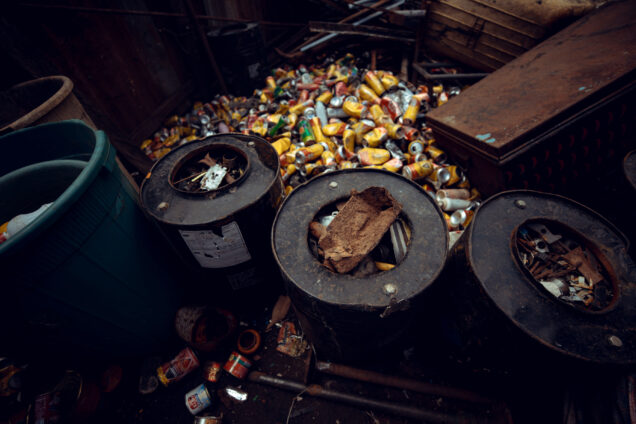
The WHO says lead exposure can occur through contaminated paint, cookware, cosmetics, spices, informal recycling and industrial pollution, among other sources.
The metal can affect the brain, kidneys and cardiovascular system. In children, exposure can cause lasting damage to brain development and affect learning, behaviour and intellectual development.
The WHO says there is no level of lead exposure known to be without harmful effects. Even relatively low exposure can cause irreversible damage.
In adults, lead exposure is associated with cardiovascular and kidney disease. The health effects may not be immediately apparent, making it difficult to identify some cases without appropriate testing.
The WHO estimates that lead exposure was responsible for more than 3.5 million deaths globally each year, primarily through cardiovascular effects based on global health burden data.
The WHO says laboratory capacity building and technical support under the Lead Poisoning Prevention Initiative will cover Ghana, Ethiopia, Malawi, Rwanda, South Africa and Tanzania, alongside Brazil, Nepal and five states in India.
The initiative is intended to strengthen blood lead testing so that health authorities can monitor exposure and identify affected people.
The WHO's announcement does not specify how many laboratories in Ghana will receive support, when implementation will begin locally or how many people are expected to be tested.
Separately, Ghana is taking steps to address contamination by heavy metals in food. In September 2026, the Ghana News Agency reported that the country had launched a national strategic plan for heavy metals reduction in food covering 2026 to 2030. The plan seeks to strengthen food safety regulation, surveillance, laboratory capacity and public awareness, including measures addressing lead, cadmium, mercury and arsenic.
The report also cited findings of lead contamination in some consumer products and food-related materials.
WHO calls for action at the source
“Lead poisoning should not be stealing children's potential in 2026,” said Bruce Gordon, Director a.i. of the WHO's Department of Environment, Climate Change and One Health.
“We know where many exposures come from and we know how to prevent them. Countries now need to move upstream, removing lead from products and environments before it reaches a child's bloodstream. WHO is working with governments and partners to help turn that evidence into action,” Bruce added.
The WHO is urging governments to strengthen regulations, enforce safety standards, improve monitoring and surveillance, and eliminate lead hazards from products and environments.
It also recommends safer industrial practices and waste management systems, stronger public awareness and better capacity to manage poisoning cases.
Despite decades of progress, fewer than half of countries had confirmed legally binding controls on lead paint in the WHO's latest published global assessment.
The WHO says its member states have mandated the development of a Global Action Plan on Lead Mitigation, which is scheduled to be presented to the World Health Assembly in 2027.
The agency also plans to launch its PREVENT Technical Package on Lead Poisoning Prevention in 2027. The package is expected to provide practical guidance on identifying major sources of exposure, choosing effective interventions, strengthening regulations and tracking progress.
The initiatives form part of a broader effort to shift from detecting lead exposure to preventing it.
For Ghana, key questions remain about the implementation of the WHO-supported laboratory programme, the availability of blood lead testing, the sources of exposure affecting children and the enforcement of relevant safety standards.
The WHO says preventing lead exposure can protect children's development, reduce the burden of disease and bring wider social and economic benefits.
Latest Stories
-
Joyce Bawah Mogtari urges women leaders to build strong support networks
11 minutes -
Bawumia engages GUTA over import duties, VAT and rising business costs
12 minutes -
Fuel prices begin to fall as Star Oil cuts petrol to GH¢16.45
13 minutes -
GoldBod supplies banks with US$282m in weekly forex sales
14 minutes -
Joyce Bawah Mogtari says Obaasima Conference should help women connect and learn
15 minutes -
Ghana’s Crude Oil Production Rebounds by 30% After Five Years of Decline
35 minutes -
Nzema East launches Responsible Cooperative Mining Programme to tackle environmental destruction
44 minutes -
Ghana included in WHO lead-testing programme as questions remain over local exposure risks
52 minutes -
2026 Amputee World Cup: We will win the trophy – Samson Deen
1 hour -
Controller and Accountant-General pays promotion arrears to 56,003 GES teachers ahead of deadline
1 hour -
2026 Amputee World Cup: We want to make the continent proud – Black Challenge coach
1 hour -
International Day of the Girl: Central Region Education Directorate calls for action to tackle child marriage, teenage pregnancy
1 hour -
The Eyes of Ghana: iShowSpeed joins Obamas as producers of Chris Hesse documentary
1 hour -
FirstBank Ghana pledges action on customer feedback at service week forum
2 hours -
Sahara Group urges journalists to look beyond fuel prices in energy reporting
2 hours