

Audio By Carbonatix
African countries need to increase their health workforce recruitment budgets by an average of 35% if they are to employ more health workers, while one in every five dollars spent on health in Africa is lost through waste and inefficiency, a World Health Organization health workforce expert has said.
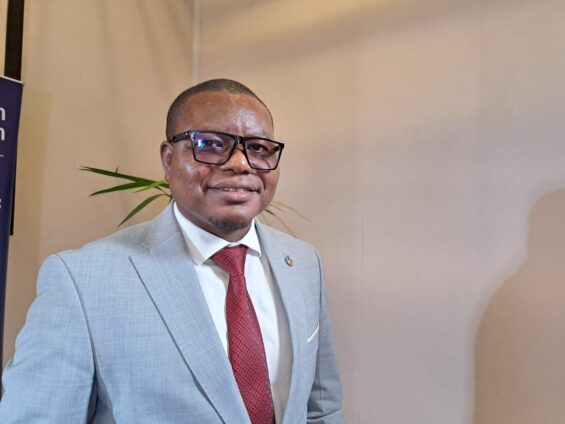
Health Workforce Team Leader at the WHO, Prof James Avoka Asamani, made the remarks in a Zoom interview with JoyNews Science and Climate Journalist Mahmud Mohammed-Nurudeen on Thursday, 27 August 2026.
His comments come a day after African health ministers adopted a 10-year plan to train, employ and retain at least three million additional health workers by 2035.
But Prof Asamani says the challenge facing Africa is not simply a shortage of trained professionals.
The continent has an estimated one million trained health professionals who are unemployed, even as many people struggle to access health workers.
“It is not a reflection of surplus health workers. In fact, it is a reflection of shortage of jobs.”
Prof Asamani says the problem is largely caused by poor coordination between the number of people being trained and the number of jobs available.
“The mismatch at the moment is due to a disconnect in planning the training and the job creation.”
He says governments need to link health education and employment planning so that newly qualified professionals do not spend long periods waiting for work.
The private sector should also be encouraged to employ some trained health professionals, he said.
But creating those jobs will require more money. Prof Asamani says African countries need, on average, a 35% increase in health workforce compensation budgets for the recruitment of new health workers.
He stressed that the estimate is for new recruitment and does not include salary increases or incentives for health workers already employed.
“Government need to plan education and link it with ability to create the jobs so that there will be very small lag in between finishing training and getting jobs.”
Money already being lost
Prof Asamani says governments should also look closely at how existing health funds are being used.
“In Africa, 1 out of every $5 spent on health goes to waste, inefficiency.”
He believes reducing such losses could create room for more recruitment.
“If we can plug in those inefficiencies, then we can create more room to spend more on health workers.”
He also cited payroll problems in some countries, saying the removal of so-called ghost names could free resources to employ qualified professionals who are currently without jobs.
“Cleaning those ghost names from payrolls can create the room to employ those who are currently trained and not employed.”
The workforce problem is also affecting patients. Africa currently has only about 46% of the health workers it needs, according to the WHO.
Prof Asamani says several million people do not have access to a qualified health worker. For those who become ill, the journey to care can be long and costly.
“When they are ill, to the extent that their resources can transport them, they have to go very far to access services.”
He says employing more health workers should bring services closer to communities.
“You will be able to receive care near your home or near where you live when you need it and without necessarily spending a fortune.”
Rural communities
The shortage is particularly difficult in rural and underserved communities, where retaining health workers remains a challenge.
Prof Asamani says countries need to consider where health workers come from and how they are trained.
One approach is what WHO calls the rural pipeline. People from rural communities would be prioritised for training and students would gain experience working in rural areas while they are still in training.
The aim is to increase the likelihood that they will accept rural postings after qualification. Financial incentives can also make rural work more attractive.
“Paying those who work in rural areas an additional incentive and giving them accelerated career progression is one other incentive we know.”
But Prof Asamani says rural retention requires more than money. Health workers need decent accommodation, water, roads and schools for their children.
“All of these need to be addressed as a package, not as siloed interventions.”
He says local authorities can help by providing accommodation for health workers needed in their districts.
The cost of closing the gap
The WHO estimates that substantially reducing Africa's health workforce gap would require an additional US$4 to US$6 per person per year for recruitment and salaries.
Prof Asamani says the investment could generate significant economic and social returns.
He estimates that every dollar invested could generate about 10 dollars in direct economic benefits, while the wider social return could be about 33 times the investment.
But he says governments also have room to make better use of existing resources.
African countries spend roughly 7% of their national spending on health, compared with the 15% target agreed by African heads of state in 2001.
Within health budgets, about 43% of spending in Africa goes towards health workers' compensation, compared with a global average of 57%.
Prof Asamani says this suggests some countries could give greater priority to health workers within their existing health spending.
What happens by 2035?
African health ministers adopted the Africa Health Workforce Agenda 2026–2035 on 26 August, committing countries to train, employ and retain at least three million additional health workers.
The plan follows a WHO assessment of the continent's workforce needs.
In 2022, Africa's estimated health workforce shortfall was 6.1 million. Prof Asamani says that figure has since fallen to about 5.85 million.
But he says the success of the plan should not be measured by the number of health workers trained.
“By 2035, we should not be counting how many we have trained.”
The focus, he says, should be on whether trained health workers are actually employed, whether they are working where they are needed and whether people can access health services closer to their homes.
Ultimately, he says, the measure should be whether people's health improves.
“The business of the health sector is to give more health to people.”
For Africa, the challenge now is to turn training into jobs, jobs into a stronger workforce and that workforce into healthcare that people can reach when they need it.
Latest Stories
-
Lastec CEO Lasisi Oseni nominated for Ghana Auto Fix Award
3 minutes -
Polo Beach Club land belongs to La Traditional Council, not Labadi Beach Hotel – Freddie Blay
3 minutes -
‘Don’t speculate’ – Upper West Minister charges SOCO facilitators as project delivers 127 projects, 173 more underway
4 minutes -
Finance Ministry approves 3 months’ rent allowance for security personnel
19 minutes -
Ten people linked to Kenya’s first-ever Ebola case quarantined as screening concerns grow
32 minutes -
Ghana warns medical travellers to South Africa to obtain visas for treatment beyond 90 days
39 minutes -
Canada suspends plans to expand assisted dying to people with mental illness
40 minutes -
Minority accuses Sports Ministry, NSA of creating fake portfolios for VISA applicants
41 minutes -
6th Inter Tourism Expo comes off in Cape Coast this October; register now
1 hour -
Afenyo-Markin accuses government of diverting attention from cocaine seizures linked to Ghana
1 hour -
GJA gives Armed Forces 14 days to account for alleged assaults on Sika Official, Bullet TV’s Philip Abutiate
1 hour -
PAC gives CWSA 30 days to recover GH¢10m in unpaid water bills from police, army, hospitals, other public institutions
1 hour -
Major Accra roads to get facelift ahead of Ghana’s 70th Independence anniversary – Agbodza
1 hour -
Account for GH¢650bn allocated to existing programmes before new economy – Oppong Nkrumah to gov’t
2 hours -
‘You’re an action man’ – Abena Osei-Asare hails Rent Commissioner’s hostel fee crackdown
2 hours