

Audio By Carbonatix
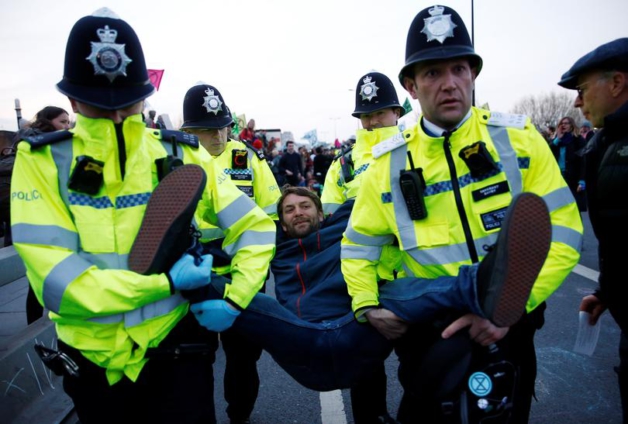
Police could be allowed to shut down protests before they cause serious disruption, under new government plans.
Downing Street said the proposals would help officers clamp down on "a disruptive minority" who use tactics like blocking roads and slow marching.
It said the changes seek to give police greater flexibility and clarity over when they can intervene.
But human rights group Liberty said the proposals amounted to an attack on the right to protest.
The plans will be set out in an amendment to the Public Order Bill, due to be introduced on Monday.
The bill, which covers England and Wales, is making its way through Parliament and any changes would have to be approved by MPs and peers.
Its aim is to crack down on disruptive protests by groups like environmental activists Just Stop Oil, Insulate Britain and Extinction Rebellion, which have used tactics including blocking roads.
No 10 said the changes would mean police would not have to wait for disruption to take place to shut down a protest.
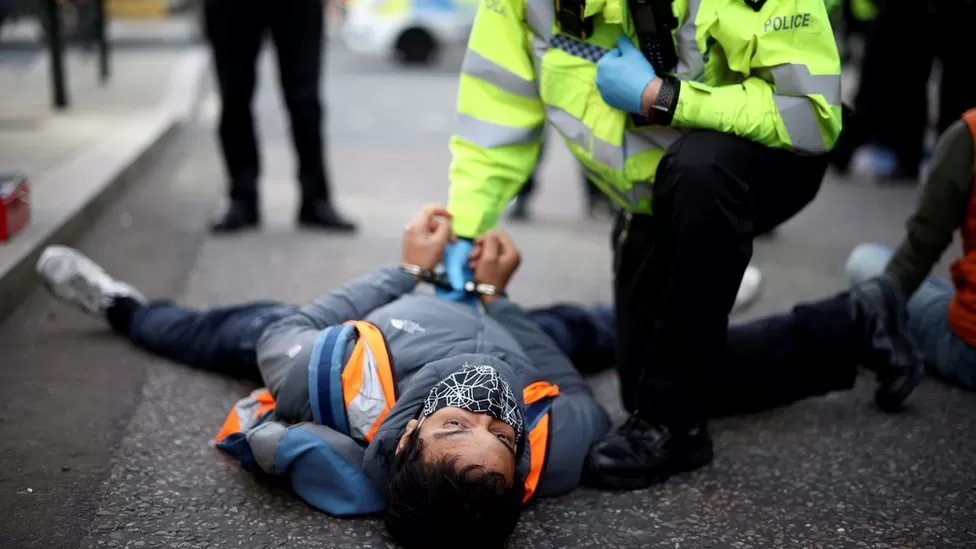
However, Martha Spurrier, director of human rights group Liberty, said the proposals were "a desperate attempt to shut down any route for ordinary people to make their voices heard".
She said allowing the police to shut down protests before any disruption had taken place "sets a dangerous precedent".
Labour leader Sir Keir Starmer said the tactics of Just Stop Oil activists were wrong and "deeply arrogant" but police already had the power to take action against them.
He told LBC officers could be given greater clarity over when to intervene without the need for legislation.
Labour peer Baroness Shami Chakrabarti, a former director of Liberty, said police already had adequate powers to arrest people obstructing highways and the government's proposals gave officers "a blank cheque".
"This, I fear, is about treating all peaceful dissent as effectively terrorism," she told BBC Radio 4's Today programme.
"This degree of pre-emption will basically shut down the kind of dissent that isn't even causing disruption at all because their definition will set such a low bar."
The Just Stop Oil group described the proposal as "a sinister and authoritarian attempt to undermine the basic human rights that underpin our democracy".
The Public Order Bill already included provisions to create a new criminal offence for interfering with key national infrastructure like oil refineries and railways and for "locking on".
That tactic - where someone locks themselves to an object or building - has been used by some climate protesters.
The bill builds on the controversial Police, Crime, Sentencing and Courts Act, which passed last year and was criticised by some groups for introducing curbs on the right to protest.
Under this existing legislation, if the police want to restrict a protest, they generally have to show it may result in "serious public disorder, serious damage to property or serious disruption to the life of the community".
The new government proposals would broaden the current legal definition of "serious disruption" and give officers greater clarity on when they should intervene.
It said forces could also consider the "total impact" of a series of protests by the same group, rather than seeing them as standalone incidents.
Prime Minister Rishi Sunak said: "The right to protest is a fundamental principle of our democracy, but this is not absolute. A balance must be struck between the rights of individuals and the rights of the hard-working majority to go about their day-to-day business.
"We cannot have protests conducted by a small minority disrupting the lives of the ordinary public. It's not acceptable and we're going to bring it to an end."
Chief Constable BJ Harrington, the National Police Chiefs' Council lead for public order and public safety, said: "This will support officers in confidently and quickly taking action and making arrests where appropriate."
Metropolitan Police Commissioner Sir Mark Rowley also backed the proposals, saying the lack of clarity in legislation was drawing police into "complex legal arguments about the balance between that right to protest and the rights of others to go about their daily lives free from serious disruption".
Latest Stories
-
Wa West MP commissions five boreholes for the benefit of his constituents
2 minutes -
Havertz’s late strike hands Arsenal narrow first-leg advantage over Sporting
4 minutes -
Damang mine award: Minority not against Ghanaian participation; we’re asking for fair process – Konadu
26 minutes -
NPA to enforce stricter registration rules for petroleum tankers
53 minutes -
Manhyia South MP laments decline in hospitality operations in his constituency
1 hour -
How a simple clean charcoal innovation could benefit Ghana’s climate future
1 hour -
NPA, COMAC launch Safety Week 2026 to promote risk management in petroleum sector
1 hour -
Stakeholder engagement resolves onion trade impasse
1 hour -
Gender Ministry holds staff durbar, welcomes new Chief Director
1 hour -
Unexpected illness sparked my radio career – Tommy Annan-Forson
2 hours -
Bolt Ghana awards GH¢50,000 to women entrepreneurs through “She Moves to Win” campaign
2 hours -
NRGI Country Manager questions speed of ministerial approval in Damang mining deal
2 hours -
Publish the assessment — NRGI demands transparency in Damang mining deal award to E&P
2 hours -
Tamale: Alhaji Hussein Fuzak funds construction of 3-storey classroom block at Ambariya Islamic School
2 hours -
Gender Ministry holds staff durbar, welcomes new Chief Director
2 hours