

Audio By Carbonatix
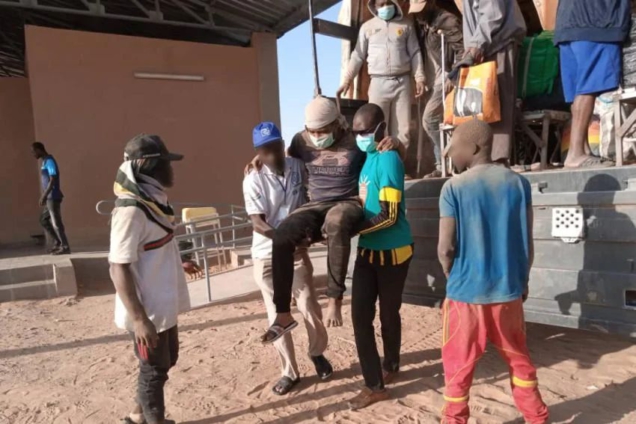
From January to May 2022, 14,196 migrant people were expelled from Algeria, and abandoned in the middle of the desert at the Algerian-Nigerian border, in the so-called “Zero Point” area 15 km from the town of Assamaka, according to Médecins Sans Frontière (MSF).
Among the 2,000 people deported each month from Algeria and Libya are seriously injured, women raped or severely traumatized.
Nearly 70% of the people supported by Médecins Sans Frontière (MSF) testify having suffered violence and abuse at the borders of Algeria and Libya.
“The seriousness of the abuses committed against subsaharan migrants is indisputable. The testimonies of our patients and their physical and mental health upon their arrival in our health facilities prove that these people have experienced extreme violence during their expulsion from Algerian and Libyan territories,” said Jamal Mrrouch, Head of Mission of MSF in Niger.
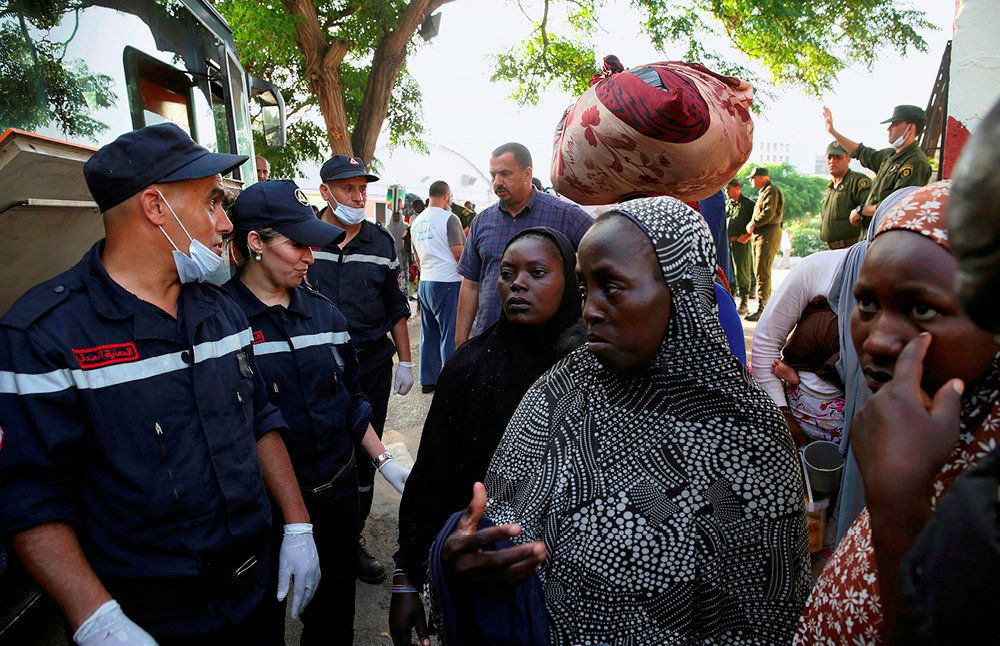
In 2021, 27,208 migrants were deported from Algeria in inhumane conditions to Assamaka on the Niger border. This represents an increase of over 17% over 2020.
The initiatives launched by the European Union to curb the migratory phenomenon oblige migrants and smugglers to use excessively dangerous corridors in the desert to avoid controls. As a result, the exploitation of migrants by traffickers has increased. Migration routes have become more deadly.
For displaced migrants in Niger, access to basic services, including health care, is becoming very complicated. Since 2018, MSF teams have regularly organized missions to help migrants lost or abandoned in the desert.
By supporting several Integrated Health Centers and mobile clinics in the Agadez region, MSF teams provide free health care, psychosocial support, referrals for complicated cases and emergency evacuations.
In 2021, more than 47,000 medical consultations were conducted, including 34,276 mental health consultations. Thirty-eight (38) bodies were found between 2020 and 2021.
Faced with this situation, MSF is calling on the regional authorities and their partners to find urgent and appropriate responses to put an end to the mistreatment of displaced migrants from Algeria and Libya in the Sahel desert.
“As a humanitarian actor and witness to the terrible suffering of thousands of migrants in this region of the Sahel, it is our duty to denounce this humanitarian tragedy,” said Jamal Mrrouch.
It is also our duty to appeal to the authorities concerned, to the European Union and to humanitarian partners to take immediate action to respect human dignity in border control. We can no longer simply ignore this situation and think that the problem will solve itself.”
Latest Stories
-
President Mahama is not sincere with Ghanaians on LGBTQ bill matter – Hassan Tampuli
14 minutes -
Gov’t to establish Prison Industrial Hub to equip inmates with income-generating skills – Prison Service boss
33 minutes -
Alhassan Tampuli donates cement, roofing sheets to support storm victims in Gushegu
33 minutes -
Alhassan Tampuli appeals for urgent support for storm victims in Gushegu
36 minutes -
The hypocrisy must stop; pass Anti-LGBTQ+ Bill now – Alhassan Tampuli to Mahama
40 minutes -
Imprisonment should be rehabilitative, not punitive – Ghana Prisons boss at UNGA
1 hour -
Ga Adangbe traditional priests petition Mahama over McDan aviation licence revocation
1 hour -
Anti-LGBTQ Bill: NDC’s arrogance is worrying – Hassan Tampuli
1 hour -
Let’s give OSP time to mature, not to scrap it – Hassan Tampuli
1 hour -
Nigeria convicts 386 Islamist militants in mass trials
2 hours -
Djibouti president wins election with 97.8% of vote, state media says
2 hours -
We don’t have mandate to deduct tax from rent allowance of security services personnel – Interior Ministry clarifies
2 hours -
Ablakwa receives Presidential Special Envoy on Reparations to advance global agenda
2 hours -
Christina Koch becomes first woman to travel around the moon on Artemis II
2 hours -
Epstein survivors’ calls to meet King Charles and Queen harder to ignore as US visit approaches
2 hours