

Audio By Carbonatix
Ruling party candidate Mohamed Bazoum to face former President Mahamane Ousmane in runoff, according to provisional results.
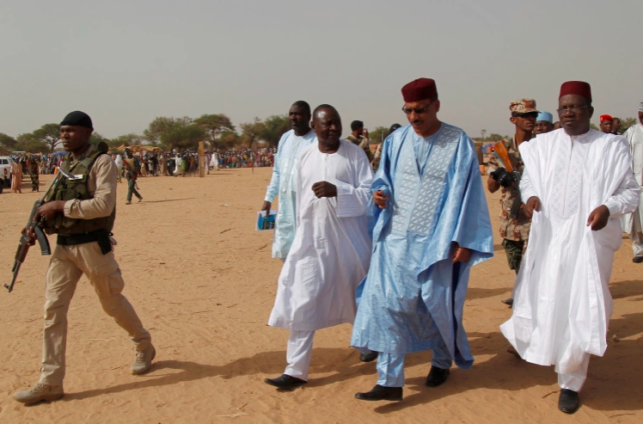
Niger’s ruling party candidate Mohamed Bazoum will face former President Mahamane Ousmane in a presidential election runoff in February, according to provisional results announced by the electoral commission.
Bazoum, 60, led the first round with 39.33 percent of the vote, falling short of the 50 percent plus one needed to win the first round.
Ousmane received 17 percent of the votes cast, the commission said on Saturday.
Former prime ministers Seini Oumarou and Albade Abouba respectively came third and fourth with 8.95 percent and 7.07 percent of the ballots.
The second round is expected to be held on February 21 after the results of the first round have been validated by the constitutional court, which will hear any appeals.
Bazoum, who has been both interior and foreign minister, campaigned on promises of improved security and education and had hoped to clinch victory in the first round.
Bazoum’s Nigerien Party for Democracy and Socialism (PNDS) is also leading in the legislative vote held at the same time with 80 of the 165 seats and five diaspora seats remaining to be decided.
Niger’s President Mahamadou Issoufou is stepping down after two five-year terms, which is expected to lead to the West African country’s first transfer of power between two democratically elected presidents.
Almost 7.5 million people cast their votes on Sunday to choose a successor to Issoufou, who in a New Year radio address hailed the election as “a new, successful page in our country’s democratic history”.
Insecurity overshadowed the campaigning, with Niger battered by armed groups on its southwestern border with Mali as well as its southeastern frontier with Nigeria.
Five years of violence in the former French colony have cost hundreds of lives with many more displaced. Earlier this month, 27 people died in an attack claimed by Boko Haram.
But security is not the only concern for the people in Niger, a country of 23 million people.
The country’s economy has been hit hard by the coronavirus pandemic with a fall in the price of its top export uranium.
It has also suffered due to the closure of the border with Nigeria, a key gateway for the import of essential goods.
Latest Stories
-
Ghana must rethink education around relevance, resilience and responsibility — Ibn Chambas
1 minute -
Prince Harry faces defamation lawsuit from charity he co-founded
3 minutes -
South Korea deploys thermal cameras to track escaped zoo wolf
5 minutes -
Calls for royal meeting with Epstein survivors grow ahead of US visit
8 minutes -
Ibn Chambas advocates blend of technology and human values in education
10 minutes -
UMA improves healthcare access in Asutifi North with GH₵700k ‘Kim Taylor Legacy’ Walkway
15 minutes -
Scholarships Authority and Fanaka University offer sponsorship for procurement and supply chain studies
18 minutes -
Bisa Kdei drops new single ‘Go N Look’ featuring Medikal
24 minutes -
Benin facing rising terrorism in north as French military presence faces growing criticism
25 minutes -
UEW Public Lecture Series 2026: Education debate ‘about the soul of Ghana’s future’ — Dr Ibn Chambas
26 minutes -
EU fingerprint and photo travel rules come into force from today
53 minutes -
Anti-LGBTQ+ Bill: Ghanaians demand expedited passage, not dialogue – Ntim Fordjour to Mahama
1 hour -
EU airline industry warns of fuel shortages if Strait of Hormuz stays closed
1 hour -
White House staff told not to place bets on prediction markets
1 hour -
Auctioneers petition Prez Mahama over ‘interference’ in public auctions
1 hour