

Audio By Carbonatix
Nigeria has imposed a mandatory annual levy for organisations employing expatriate workers, requiring them to pay $15,000 (£12,000) for a director and $10,000 for other categories.
The move is meant to encourage foreign companies to employ more Nigerian workers.
Staff of diplomatic missions and government officials are exempt.
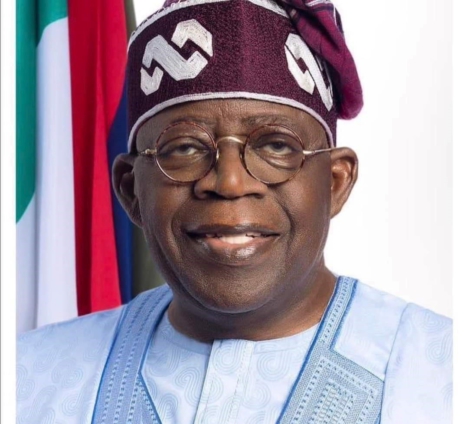
President Bola Tinubu has warned that the levy should not be used to frustrate potential investors.
He spoke while launching the Expatriate Employment Levy (EEL) handbook on Tuesday, adding that the government was expecting to improve revenue and indigenisation.
He said that its aim was to balance employment opportunities between Nigerians and expatriates.
"The goal is to close wage gaps between expatriates and the Nigerian labour force while increasing employment opportunities for qualified Nigerians in foreign companies in the country," he said.
There are more than 150,000 expatriates in Nigeria, according to local media citing data from the interior ministry.
They mostly work in the oil and gas, construction, telecommunication and hospitality sectors.
Nigeria is one of Africa's biggest oil producers. Its oil and gas exports account for 90% of foreign exchange earnings, according to the International Monetary Fund.
The move comes as Nigeria is experiencing its worst economic crisis in a generation, which has led to widespread hardship and anger in recent months.
Labour unions and government workers on Tuesday held demonstrations to protest against economic hardships.
Mr Tinubu acknowledged that Nigerians were going through a difficult period.
He said efforts were being made to improve the country's finances and grow the economy.
The levy applies to employees who work for at least 183 days in a year.
The scheme imposes fines of up to three years and jail terms of up to five years for a person or organisations that do not comply, including failure to provide accurate information.
The Nigerian Immigration Service will be responsible for enforcing the levy.
Local media quoted Interior Minister Olubunmi Tunji-Oj as saying that it would be operated on a public-private partnership model between the government, the immigration service and a private firm.
Nigerian economist Abubakar Abdullahi says the levy is good for the country and won't frustrate potential investors as "they'll love to see the country grow as well".
"I believe Nigeria stands to benefit from this levy as more companies will start looking inwards as there are qualified Nigerians from all sectors," he says.
Latest Stories
-
Prudential Life settles GH¢100,000 medical bills under its PRUCares Valentine Experience Initiative
4 hours -
Wa West Picnic: Peter Lanchene Toobu champions peace, health and unity in landmark celebration
5 hours -
Dr Mensah Market flooded after downpour in Kumasi
5 hours -
Armed men reportedly storm Adjen Kotoku Onion Market amid tensions
6 hours -
Tecco Mensah writes: Why football fans must look beyond statistics
6 hours -
Police recover stolen Honda CR-V in Kumasi within 48 hours
7 hours -
Apetorku Gbodzi 2026 Festival opens in Dagbamete with development focus
7 hours -
President Mahama arrives in Lyon to co-chair One Health Summit
7 hours -
Beverly View Plus Hotel draws crowds amid coastal Easter rush in Volta
7 hours -
Maiden Zongo Festival held in Wa amid calls to tackle drug abuse among the youth
8 hours -
FDA warns of fake HIV test kits on Ghanaian market
8 hours -
Africa urged to build resilient health systems as donor support tightens
8 hours -
Easter gesture: Ablakwa settles medical bills for 85 North Tongu constituents
10 hours -
Africa must harness its population strength—Titus-Glover
10 hours -
Visa-free access doesn’t mean unlimited stay – Lom Ahlijah
10 hours