

Audio By Carbonatix
Nigeria had a dramatic buildup to the presidential election, but we have to count our blessings. Firstly, this is the first federal election since Nigeria’s return to democratic rule with no ex-military dictator in the race. Since 1999, either Olusegun Obasanjo or Muhammadu Buhari has been on the ticket.
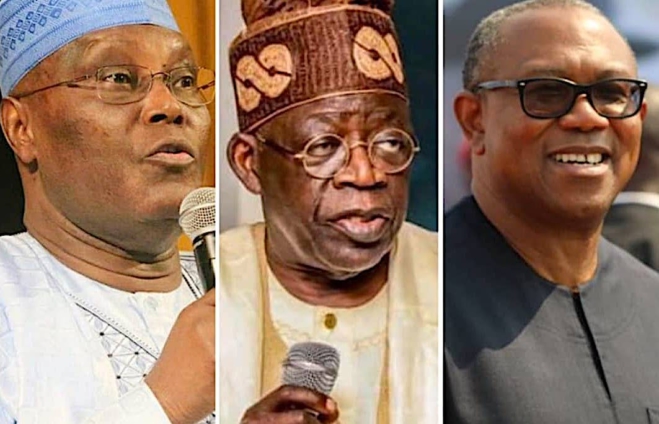
Secondly, the Labour Party (LP)’s successes, which have been propelled by the reputation of its presidential candidate, Peter Obi, and his connection with Nigerian voters, particularly young and first-time voters, have shown that Nigeria can break the mould. Most opinion polls favoured Mr Obi in the run-up to the vote, and early signs show that he is doing well in the South, but early results imply that it is likely that either the ruling All Progressives Congress (APC)’s Bola Tinubu or the Peoples Democratic Party (PDP)’s Atiku Abubakar will end up as the country’s next president.
Meanwhile, one of the downsides of this election is the violence seen in some polling units in some states where voter verification machines were stolen. In Gwoza, Borno State, militant Islamists shot at electoral officers and left some injured. However, Cross River, Anambra, Lagos and Oyo were the most affected by the accounts of SBM’s field researchers, 185 of whom were deployed in every state and the Federal Capital Territory. In Uli, Anambra, our researcher witnessed gunmen shooting at voters; while in different parts of Lagos, researchers saw ballot boxes being snatched away and burnt. We also saw voter intimidation in Ikom, Cross River State. It is important to note that SBM’s work covered at least 40 polling units in each state.
By SBM’s research, voting materials were delivered late in every sample polling unit in the following states: Abia, Anambra, Bayelsa, Enugu, Jigawa, Kaduna, Kebbi, Nasarawa, Yobe and Zamfara. However, logistical performance was better in Kano, Katsina, Niger, Osun and Taraba. This logistical failure will likely contribute to depressing the official turnout figures when INEC publishes them. Our turnout estimates were based on the number of people seen at our sample polling units against the number of registered voters for those polling units as displayed by INEC officials when they arrived. The official turnout figures are based only on accredited voters, leaving the possibility that systemic failures, particularly on the part of the Independent National Electoral Commission, disenfranchised many Nigerians.
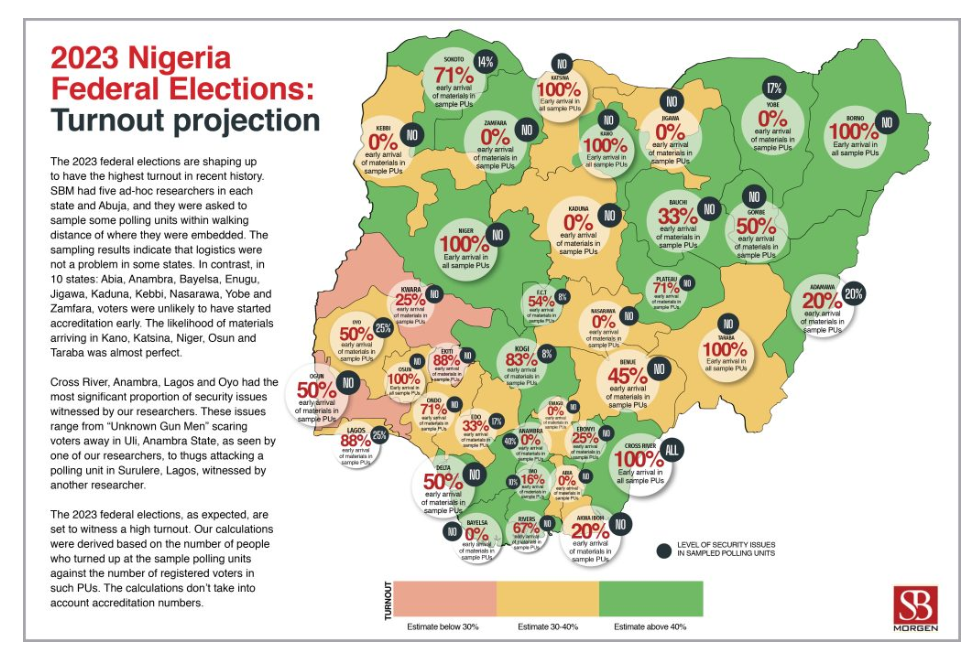
The 2023 federal elections were set to have Nigeria’s highest voter turnout, but what eventually happened was voters showed up but were unable to get accredited, polling results were not uploaded on time, and people now suspect foul play in the collation of results. If Nigerian elections are to deliver the legitimacy needed for effective governance, INEC must ensure that votes count, but more importantly, are seen to count.
This is crucial because the state governorship elections will be held in a couple of weeks; traditionally, they usually have a lower turnout rate than the presidential elections, making them more vulnerable to election violence, suppression and other malpractices. While the federal elections were shaped mainly by ethnic and religious interests, we hope the state contests will be built on competence, substance, fairness and credibility.
https://www.sbmintel.com/2023/02/nigerias-presidential-election-a-first-post-mortem/Latest Stories
-
Open letter to Education Minister: Rising student deviance and the urgent need for national parental responsibility framework
4 minutes -
Mahama delivers State of the Nation Address on February 27
4 minutes -
Dr Kotia backs Ghana’s move to refer maritime boundary dispute with Togo to International arbitration
7 minutes -
When “substantive ” become a security strategy — Rev Ntim Fordjour’s nameplate doctrine
12 minutes -
No plan to pay cocoa farmers, yet ready to change NIB to BNI—Dr Ekua Amoakoh
14 minutes -
COCOBOD is not your cover story. It will not be your scapegoat
14 minutes -
BOST Energies welcomes Salifu Nat Acheampong as new Deputy Managing Director
21 minutes -
NIB or BNI: Will changing the name solve the problem? Asks Prof. Boadi
26 minutes -
Abidjan to host DRIF 2026 as global talks on digital rights and inclusion open for registration
30 minutes -
CEPI unveils new plan to protect the world from deadly disease outbreaks
34 minutes -
NVI survey aims to build trust in local vaccines across Ghana
40 minutes -
Kofi Asmah Writes: From seedlings to strategy: Can Ghana process 50%?
50 minutes -
Kofi Asmah Writes: The land we may never build on
53 minutes -
3, including woman, arrested in Obuasi anti-robbery operation
59 minutes -
How the Liberator Became the Strongman: Museveni’s long slide from revolutionary promise to entrenched power
1 hour