

Audio By Carbonatix
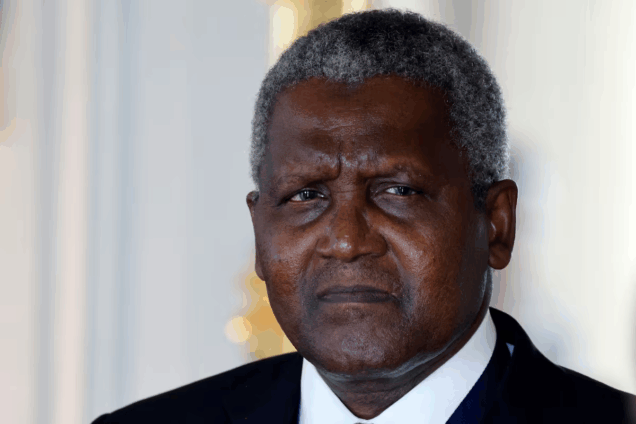
Nigeria’s richest man Aliko Dangote escalated his fight with regulators on Sunday, accusing them of enabling cheap fuel imports that threaten local refineries.
Nigeria is Africa’s biggest oil producer, but relies heavily on imports, and Dangote’s refinery was meant to change that.
Dangote said if imports continue unchecked, they will threaten jobs, investment and energy security.
Speaking at his 650,000-barrel-per-day oil refinery in Lagos, Dangote said imports were being used “to checkmate domestic potential”, creating jobs abroad while Nigeria struggles to industrialise.
“You don’t use imports to checkmate domestic potential,” he told reporters.
Dangote called for an official inquiry into Farouk Ahmed, head of the Nigerian Midstream and Downstream Petroleum Regulatory Authority, citing concerns over his management of the sector and allegations of private expenditures exceeding legitimate earnings.
Ahmed did not immediately respond to a request for comment, but he has previously said Dangote refinery wants a monopoly on petroleum products sales, but the refinery's output can not meet local demand.
Last month, the regulator urged the president to drop plans to ban imports of refined petroleum products because local output cannot meet the national demand of 55 million litres daily.
Dangote disputes this, saying the regulator was distorting the refinery's actual capacity by reporting offtake statistics instead of the true production data.
The refinery, designed to end Nigeria’s reliance on imported fuel and save billions in foreign exchange, says it has been unable to secure all the required crude it needs because the regulator has failed to implement a rule that guarantees crude supply to local refiners before exports
Dangote said the refinery imports 100 million barrels of crude oil annually — a figure expected to double after expansion of the refinery and limited domestic supply.
Despite these hurdles, Dangote vowed to continue with expansion plans for the facility and safeguard his investment, which he said is "too big to fail".
He also reiterated plans to list the company on the local stock market and pay dividends in U.S. dollars so “every Nigerian can own a piece of the economy.”
Nigeria, Africa’s top oil producer, has long depended on imports due to mothballed state refineries.
Latest Stories
-
TTAG raises alarm over proposed recruitment of 7,000 teachers, demands national posting roadmap
33 minutes -
Civilians feared killed after reports of air strike on Nigerian market
43 minutes -
Bishop Simon Kofi Appiah installed as new Jasikan Diocese Bishop
44 minutes -
Trump’s Strait of Hormuz blockade threat raises risks and leaves predicaments unchanged
46 minutes -
US Court backs extradiction of former MASLOC CEO Sedina Tamakloe-Attionu’s to Ghana
1 hour -
Seven arrested as NAIMOS dismantles illegal mining camp, seizes firearms at Boin River
1 hour -
Fire erupts at Madina Ritz Junction, destroys multiple wooden structures and containers
1 hour -
Daniel-Kofi Kyereh returns from long-term injury, registers assist for Freiburg U23
2 hours -
Knifeman calling himself ‘Lucifer’ slashes three at NYC’s Grand Central
2 hours -
Brands are built from within to without
2 hours -
Matriculants urged to pursue excellence as gov’t reaffirms support for Maritime education
2 hours -
See the areas that will be affected by ECG’s planned maintenance on Monday, April 13, 2026
2 hours -
GPL 2025/26: Salim Adams double fires Medeama back to summit after Kotoko rout
2 hours -
Two robbery suspects convicted following violent gold dealer attack in Obuasi
2 hours -
Supreme Court @150: Fanfare meets reflection as nationwide activities roll out
2 hours