

Audio By Carbonatix
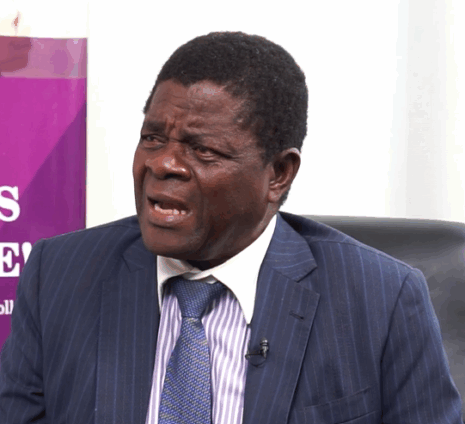
A former Director of the Ghana School of Law, Kwaku Ansa-Asare, has stated that the ongoing probe into the potential removal of the suspended Chief Justice, Gertrude Torkornoo, cannot be telecast live, as doing so would contravene provisions in the 1992 Constitution.
Speaking on JoyNews’ The Pulse on Thursday, May 22, Mr Ansa-Asare stated that Article 146, which outlines the procedure for the removal of a Chief Justice or a superior court judge, is explicit about the nature of the proceedings.
Read also: Suspended CJ Torkornoo is merely barking – Ansa-Asare on injunction to stop removal probe
“The probe may be telecast live, but as a lawyer, my take is that Article 146 of the 1992 constitution has provided a format; it says that the proceedings shall be held in-camera, it is not opened to the public, and therefore it cannot be telecast live,” he said.
His comments come after the suspended Chief Justice, Gertrude Torkornoo, as part of her legal challenge, has called for the proceedings to be broadcast live.
Prof Ansa-Asare argues that the framers of the Constitution clearly intended such hearings to remain private, and that any deviation would amount to an unlawful breach of due process.
“If the Constitution had contemplated that it could be done, they would have provided for it,” he noted.
"..By our public policy, certain matters are to be held in-camera, and where they are held in-camera, no one would be above the law."
Mr Ansa-Asare added that in judicial practice, where rules are established to govern court proceedings, they also determine whether hearings should be public or private.
In this case, he believes the law is clear.
"The law is no respecter of persons. There is only one law of equality. We are all equal before the law, so don’t let us try to bend the rules to favour," he said.
Mr Ansa-Asare added that Article 146 was crafted to uphold the dignity and independence of the judiciary, particularly the office of the Chief Justice.
"Article 146 has been designed to protect the Chief Justice because the office of the Chief Justice is one of the three pillars of the state, and therefore if there are certain matters that should not be in the public domain, in the wisdom of the framers of the 1992 constitution, don’t let the chief justice be marred in the full glare of the public," he said.
Latest Stories
-
SOS Children’s Villages Ghana deepens partnership with Gender Ministry
13 minutes -
Gender Ministry celebrates Christina Koch, reaffirms commitment to empowering girls
26 minutes -
Live stream: Newsfile digs into E&P’s takeover of Damang Mines, OSP powers and Anti-LGBTQ Bill
35 minutes -
Moody’s maintains Ghana’s rating at Caa1, revises outlook to positive
1 hour -
Zambia elevates tourism education to national priority as President Hichilema backs continental summit
2 hours -
Activa promotes credit insurance to boost SME export growth
2 hours -
ILTM Africa 2026 opens doors to inbound and outbound luxury travel in Cape Town
2 hours -
“BP Soul Travel and Tours scored the highest marks” – Sports Minister Kofi Adams endorses agency for World Cup travel
2 hours -
‘At the age of 12, I was teaching people and collecting money from them’ – Forty Under 40 Awards
3 hours -
I broke my virginity at the age of 26 after university – Richard Abbey Jnr.
4 hours -
Sacked for fees, saved by faith: The untold story of Forty Under 40 Awards founder Richard Abbey Jnr
5 hours -
GCB Bank surges GH¢0.45, ETI gains GH¢0.06 as GSE ends week higher
5 hours -
Two teens jailed 55 years for robbery
6 hours -
UDS demands apology for MPhil student wrongly branded as Tamale robber
7 hours -
“We don’t sell fish!” – Tema Shipyard CEO hits back over dead fish discovery
7 hours