

Audio By Carbonatix
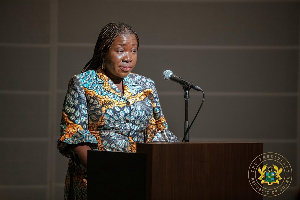
Ghana's Minister for Trade, Agribusiness and Industry, Elizabeth Ofosu-Adjare, has described non-tariff barriers as the most stubborn obstacle to regional trade in West Africa, warning that they continue to impose significant costs on businesses and consumers across the region.
Speaking at the 5th Joint Meeting of ECOWAS Ministers of Trade and Industry in Accra, the minister said non-tariff barriers are adding an estimated 15 to 20 percent to the cost of cross-border trade, despite efforts by member states to promote regional integration and economic cooperation.
"Non-tariff barriers remain the most stubborn obstacle in all of this, adding an estimated 15 to 20 percent to the cost of cross-border trading in West Africa," she stated.
The minister noted that while tariff barriers are visible and predictable, non-tariff barriers are often difficult to identify and address.
"I keep saying I am not afraid of tariff barriers. If it is five percent, you can factor it into your cost of production," she said.
She explained that the real challenge lies in the hidden nature of non-tariff barriers, which continue to frustrate traders and businesses operating across borders.
"But with respect to faceless non-tariff barriers, it continues to create a challenge for us to resolve it," she added.
According to Ofosu-Adjare, the burden created by these barriers do not end with traders but affect the entire value chain, including businesses and consumers.
"The premium is paid by our traders and absorbed by businesses and passed on to consumers," she stressed.
Her comments come at a time when ECOWAS countries are working to enhance intra-regional trade and maximise opportunities under the African Continental Free Trade Area (AfCFTA).
The meeting in Accra has brought together trade and industry ministers from across the sub-region to discuss strategies for removing trade bottlenecks, boosting industrialisation and strengthening economic integration.
Participants say tackling non-tariff barriers remains essential to reducing the cost of trade, improving competitiveness and unlocking the full potential of the West African market.
Latest Stories
-
Caveman Watches partners with Mfantsipim School for 150th anniversary
12 minutes -
We’ll pursue GH¢15m defamation suit against Sammy Gyamfi to its logical conclusion – Afenyo-Markin’s lawyers
13 minutes -
Martin Kpebu urges Afenyo-Markin not to return to court over Sammy Gyamfi lawsuit
22 minutes -
GRA submits preliminary report on drug shipment case to Mahama – Commissioner-General
49 minutes -
Sammy Gyamfi using ‘procedural roadblocks’ to dodge defamation case? – Afenyo-Markin’s lawyers
50 minutes -
The illusion of a good deal: Why some everyday money-saving habits may be costing you more
1 hour -
Family seeks autopsy, police investigation into death of student 12 days after Abomosu SHS enrolment
1 hour -
Trade Minister urges employers to leverage industrial opportunities to create jobs
1 hour -
Asantehene plants trees to commence Jimi Watercourse Rehabilitation destroyed by galamsey
2 hours -
15 arrested, 6 trucks impounded over sandwinning activities on Kumasi-Accra Expressway
2 hours -
OFFICIAL: Vinicius will miss El Clásico, suspended four games
2 hours -
Prayer vigil held after four arson attack murders
2 hours -
GRA fully recovers $154k legacy debt owed by foreign entities between 2022 and 2024
2 hours -
Kwesi Pratt Jr warns bus preachers are adding to passengers’ stress with accident prophecies
2 hours -
MTN Ghana to spend $1.1bn in 3 years, build 500 new sites as MoMo hits 44% Growth
2 hours