

Audio By Carbonatix
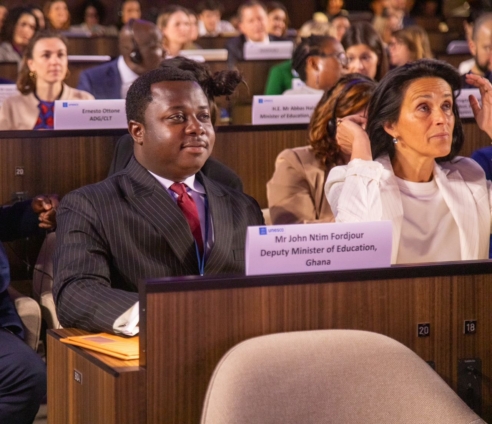
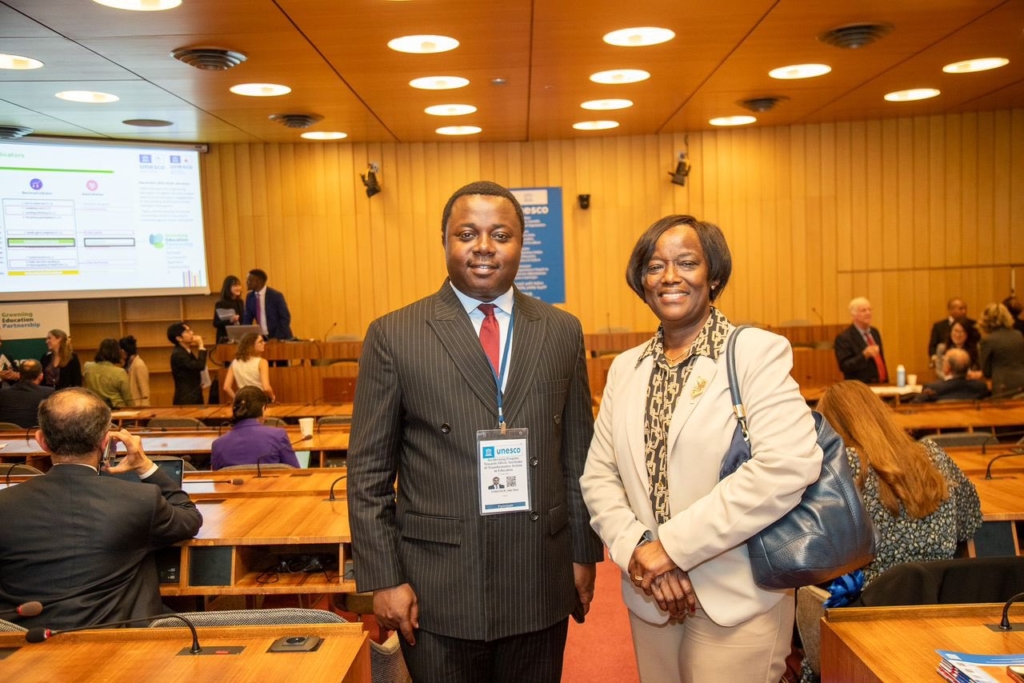
Deputy Minister for Education, Rev. John Ntim Fordjour, has showcased the country's strides in educational transformation during a high-level dialogue at UNESCO.
The event, attended by global education leaders and policymakers at the UNESCO Headquarters in Paris, provided a platform for Mr Fordjour to highlight Ghana's innovative approaches and achievements in improving its education system.
At the UNESCO High-Level Dialogue, he emphasised Ghana's commitment to enhancing access to quality education for all.
At the just ended High-Level Dialogue on Education Finance and Digital Learning at UNESCO Headquarters in Paris, we highlighted the strides made through Ghana’s innovative financing approach of GALOP and the wave of digital learning transformation in our schools.
— John Ntim Fordjour MP (@NtimFordjour) June 20, 2024
GALOP, a… pic.twitter.com/buG8rbxYPw
He outlined key initiatives and reforms that have been implemented to address challenges and foster positive changes in the education sector.
These initiatives include improvements in infrastructure, curriculum development, teacher training, and the adoption of technology to support learning outcomes.
The Assin South lawmaker underscored Ghana's progress in increasing enrollment rates and improving educational outcomes at various levels.
He pointed out specific programmes aimed at promoting inclusive education and reducing disparities, particularly in underserved communities and among vulnerable populations.
The dialogue also provided an opportunity for Mr Fordjour to exchange ideas and best practices with international counterparts.
He highlighted collaborative efforts between Ghana and UNESCO in advancing global education agendas, including sustainable development goals related to education, equity, and lifelong learning.
"At the just ended High-Level Dialogue on Education Finance and Digital Learning at UNESCO Headquarters in Paris, we highlighted the strides made through Ghana’s innovative financing approach of GALOP and the wave of digital learning transformation in our schools."
"GALOP, a results-based intervention, has seen the transformation of learning outcomes in 10,579 basic schools across Ghana with the support of the World Bank, GPE and FCDO UK. Additional innovative financing called Ghana Education Outcomes Fund has within the first year, impacted some 17,000 out-of-school children who got reintegrated into schools, out of a target of 70,000 OOSC."
"Digital learning content and platforms such as Learning Passport, MineCraft, iBox and iCampus, have been deployed into schools by CENDLOS to ensure 21st-century learning is accessible for free digitally," he posted on X.
Latest Stories
-
Anti-LGBTQ Bill: Forget the rumour mongers, I’m a man of action, and will pass the bill – Speaker
37 minutes -
Women and children among those killed in Sudanese army shelling of wedding celebration
40 minutes -
President Mahama is not sincere with Ghanaians on LGBTQ bill matter – Hassan Tampuli
58 minutes -
Gov’t to establish Prison Industrial Hub to equip inmates with income-generating skills – Prison Service boss
1 hour -
Alhassan Tampuli donates cement, roofing sheets to support storm victims in Gushegu
1 hour -
Alhassan Tampuli appeals for urgent support for storm victims in Gushegu
1 hour -
The hypocrisy must stop; pass Anti-LGBTQ+ Bill now – Alhassan Tampuli to Mahama
1 hour -
Imprisonment should be rehabilitative, not punitive – Ghana Prisons boss at UNGA
2 hours -
Ga Adangbe traditional priests petition Mahama over McDan aviation licence revocation
2 hours -
Anti-LGBTQ Bill: NDC’s arrogance is worrying – Hassan Tampuli
2 hours -
Let’s give OSP time to mature, not to scrap it – Hassan Tampuli
2 hours -
Nigeria convicts 386 Islamist militants in mass trials
2 hours -
Djibouti president wins election with 97.8% of vote, state media says
2 hours -
We don’t have mandate to deduct tax from rent allowance of security services personnel – Interior Ministry clarifies
3 hours -
Ablakwa receives Presidential Special Envoy on Reparations to advance global agenda
3 hours