

Audio By Carbonatix
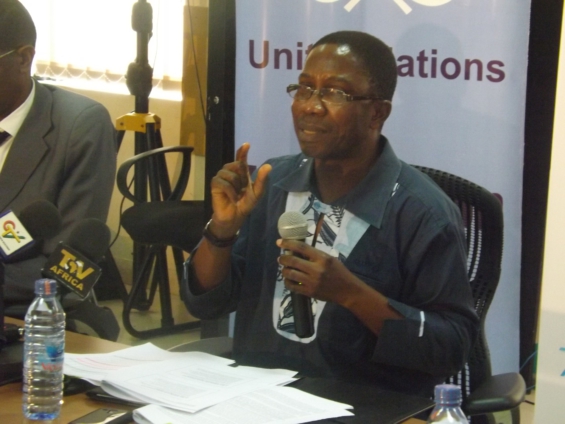
Coordinator of the Third World Network (TWN-Africa), Dr Yao Graham has stated that the deployment of military troops to safeguard water bodies is not a sustainable way of solving the country's problem with illegal small-scale mining (galamsey).
According to him, previous administrations have toed the line of using troops to guard the river bodies just as is being done currently, but that approach is yet to yield any good result.
“The PNDC used this approach once upon a time, the Rawlings government, Kufuor government, Mahama government used troops and Akufo-Addo government is using troops for the second time. We must learn something about the strengths and weaknesses of those methods,” he stated.
He described the measures deployed to stop illegal miners on the water bodies as "short term", adding that there is the need for a long or medium-term approach to be considered in order to bring sustainable outcomes.
He added, “So even the methods must be of the type that builds consensus, which deepens the consensus that we have. It must also get some of the most active people in the field who can work with the government, that is the legal small-scale miners, to be on site. So, we are in danger of fragmentation precisely because of a kind of one instrument approach to the problem.”
Dr Graham further questioned the basis on which soldiers destroy equipment belonging to legal miners and small scale miners with licences to operate.
“I ask the question, is it part of the legal mandate of the soldiers to burn equipment? Because if the complaints of the licenced small-scale miners are in order, it shows that just like capital punishment, where you can kill an innocent person, if you burn equipment belonging to somebody who has a licence, you’ve brought a suit on yourself.
"If you destroy somebody’s legal business it undermines the legitimacy of the fight and the soldiers on their own are not going to solve this problem,” he stressed.
The Lands Minister, Abu Jinapor responding to the concerns raised by Mr Graham said, "of course, we know it’s not sustainable that’s why we are not keeping them forever. It’s not even wise to keep soldiers in the bush forever.
"It’s not a wise thing that’s how come operation Vanguard we had to pull the soldiers out. We don’t want the soldiers to become civilians.
"We are saying that they are doing a surgical operation and we must judge these operations in the context of the fact that it is a surgical operation and once it is achieved we will move on,” he said at a press conference held on Wednesday, May 19.
Latest Stories
-
Power restoration fault suspected in Kumasi Central Market fire
4 hours -
The 7-foot giant of Ngleshie Amanfro: Seven-foot Ghanaian Ephraim Saawa dreams of joining the national basketball team
5 hours -
Government promises support for Kumasi Central Market fire victims
5 hours -
Vibes The Movie: Big Ghun’s Ghanaian film earns five nominations at 2026 REFFA
5 hours -
MamaCare CEO warns unresolved conflicts among health workers could undermine maternal and neonatal care
6 hours -
Health professionals urged to translate medical knowledge into practice to save mothers
6 hours -
Conflicts among care providers linked to maternal, neonatal deaths – Expert
7 hours -
GIS marks 10th TIME conference, champions improved teaching practices
7 hours -
BRICS Or Balance? What Ghana’s bid really means
8 hours -
GPRTU wants full TRAFFITECH-GH implementation to start in 2027
8 hours -
Mahama announces plans to import electric wheelchairs for PWDs
8 hours -
KGL U17 Colts 2026: Western beat Prempeh Elite Academy to set up final final with Greater Accra Region
8 hours -
Late Solanke strike salvages 10-man Spurs draw at Man United
9 hours -
Gender Ministry to monitor welfare of Nana Akua Addo’s children amid domestic violence case
9 hours -
Benedict Okyere Yeboah: Ghana’s football problem goes beyond sacking a coach
9 hours