

Audio By Carbonatix
Vice President of IMANI Africa, Kofi Bentil, has called for the enforcement of strict sanctions against Chief Executive Officers of State-Owned Enterprises which do not perform.
He believes the non-performance of SOEs has been rampant because managers of these institutions are neither tied to any performance benchmark nor made to pay any price for their non-performance.
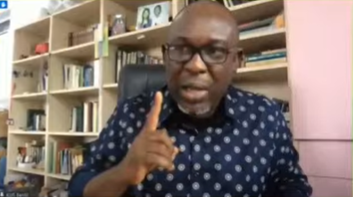
Speaking on the Super Morning Show, on Tuesday, April 26, he stated that "our leaders do not pay a price for continuing to use our State-Owned Enterprises as an extension of their personal resources, so they use it to reward their friends - when some people need favors they use it to give them jobs, when they need to pass a contract to another friend, they use them to do these things.
"We [Ghana] are a poor country, we should behave like that until we become a more wealthy country"
— Joy 99.7 FM (@Joy997FM) April 26, 2022
- Kofi Bentil on neutrality allowance, SOE executives, and matters arising. #JoySMS pic.twitter.com/9Ho915BKKh
"So we have set up a structure where these State-Owned Enterprises have become an extension of the people in power and they use it to reward their friends and cronies and other people and they don't pay a price for that," he said.
His comment follows recent agitations from a section of the public over the seemingly “fat salaries and allowances” of Management of some State-Owned Enterprises (SOEs) in Ghana.
On JoyNews’ Newsfile on April 23, host, Samson Lardy Anyenini, revealed a number of allowances leaders of State-Owned Enterprises (SOEs) are enjoying aside from their huge salaries.
The allowances include; an entertainment allowance of GH¢1,500 a month, home enhancement loan of about GH¢2,000, travel per diem of $1,500, allowance for a replacement for eye lenses at GH¢1,000 yearly, and inconvenience allowance of ¢500 per day. This revelation has sparked a conversation about protecting the taxpayers’ monies.
Already the Finance Ministry had revealed that SOEs were causing huge losses to the country to the tune of about GH¢6bn. Yet, leaders of State-Owned Enterprises do not only take high salaries but also enjoy a wide range of allowances.
Mr. Bentil therefore called for structures to be put in place to check the wastage.
"We should get to a point where companies that are state-owned, tax-funded have an existential redline where, by law, if for instance you make losses consistently three times or the state has to invest a certain amount of money in you more than twice, you are shut down or you are absolutely privatised.
"The state must not continue to put money in these institutions ad infinitum regardless of the outcome. We should stop somewhere. We are a poor country we should behave like that until we become a more wealthy country," he added.
Latest Stories
-
Kwaku Azar writes: A-G vs OSP
18 minutes -
Mfantsipim–Adisadel rivalry built excellence, not division – Sam Jonah
43 minutes -
Vice President launches Mfantsipim’s 150 years of shaping Ghana’s greatest mind
60 minutes -
I assure Otumfuo, Mahama will join him to commission KNUST Teaching Hospital by end of this year – Haruna Iddrisu
2 hours -
Barcelona dominate derby to extend La Liga lead
2 hours -
Gov’t to roll out free special education for persons with disabilities from July 1 – Education Minister
2 hours -
Importers and Exporters Association declares full support for Publican AI port system
2 hours -
“We used it to test our officiating officials’ readiness” – Bawah Fuseini after CAA Athletics event
2 hours -
Volleyball emerges as Ghana’s fastest rising sport
3 hours -
National Sports Fund needs strong leadership from the top – Administrator David Wuaku
3 hours -
JoySports Exclusive: Steve McLaren in talks with GFA after expressing interest in Black Stars job
3 hours -
Fire guts auto parts warehouse at Bubuashie, one fire officer injured
3 hours -
I owe my victory to coach Ofori Asare – Allotey after winning WBA Africa Gold Super Flyweight belt
3 hours -
Church of Pentecost supports over 2,000 BECE candidates in Obuasi with career guidance seminar
5 hours -
Brandon Asante and Coventry all but promoted to Premier League despite Sheffield Wednesday draw
5 hours