

Audio By Carbonatix
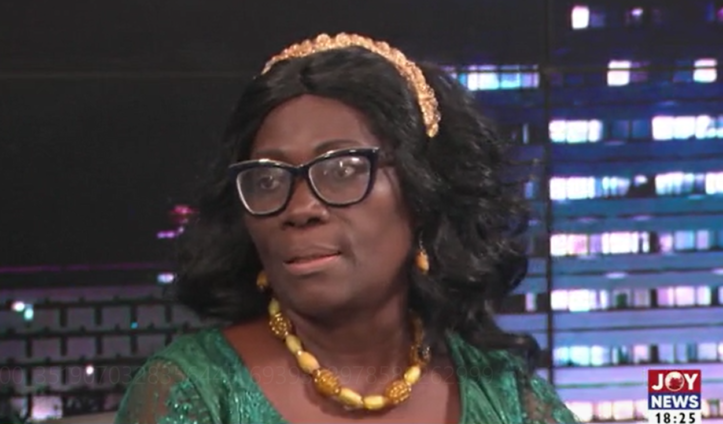
A Medical Sociologist and Public Health Expert, Rev. Prof. Yaa Adobea Owusu, has advised against the government’s plan to replace textbooks in Senior High Schools with tablets.
Speaking on Upfront on JoyNews, she stated that despite the advancement of technology globally, there are many challenges that hinder this plan including electricity and internet issues that many communities face.
Hence, it will be tough for many students in rural areas especially to use the tablets to their full capacity which could greatly affect their studies, Prof Owusu told the host Raymond Acquah, on Wednesday.
“I will not personally think that our priority should be on tablets instead of textbooks. We are even talking about the ability of a child to carefully handle this especially if you are walking over a distance to school,” she said.
Prof Owusu added that “technology is advancing everywhere in the world and it is good for Ghana to catch up, that will be very good. But with tablets, we are probably also talking about electricity and connectivity and I don’t think that all these are available now. With the textbook, it is not dependent on some of these issues that we have mentioned.”
In May 2023, the Vice President, Dr. Mahamudu Bawumia, announced that the government through the Ministry of Education is preparing to replace textbooks with laptops in Senior High Schools nationwide.
He said textbooks and other teaching and learning materials would be installed on the tablets to be used during lessons.
Speaking at the 60th Anniversary celebration of the Hohoe Evangelical Presbyterian Senior High School, Dr. Bawumia said the initiative would be implemented before the end of 2023.
He noted that it is aimed at preparing the students to fit into the global village.
However, the Institute of Statistical, Social and Economic Research’s Dr Michael Kodom, believes that it will serve students better to build more ICT labs and equip them with modern and adequate computers.
He explained that the children will learn better about technology when these labs are made available rather than tablets.
Dr Kodom said “there are some rural areas where electricity is a problem, even people are still struggling with basic chairs to sit on. The child can easily take his textbook, go home and read.”
Latest Stories
-
Middle East crisis shows Ghana needs to diversify energy sources – Energy expert
2 minutes -
Government of Ghana Internal Revenue Generation cannot fund Big Push in Four Years
10 minutes -
EPCG Moderator urges leaders to serve with courage and humility in Easter message
41 minutes -
The Cobra at the gate: When good intentions overrun the system
47 minutes -
Easter service disrupted in Nyanyano as suspected land guards storm church event
53 minutes -
Price surge exposing NDC gov’ts dishonesty -Titus Glover
57 minutes -
Afigya Kwabre North MP urges Finance and Energy Ministers to submit energy sector report
58 minutes -
Deliver quality or face sanctions — GETFund administrator cautions contractors
2 hours -
Kwahu Easter festivities trigger condom shortages; Health teams boost awareness
2 hours -
Victims of a legend: The women Daddy Lumba left behind
2 hours -
Mahama vows to prioritise roads, social amenities in Savannah region
2 hours -
Mahama sets up 18-member panel to advance Africa-led global health reforms
2 hours -
Ghana Medical Trust Fund Administrator urges hope and compassion in Easter message
2 hours -
Traders, Freight forwarders push back against planned cargo tracking policy
2 hours -
BoG Governor highlights tough trade-offs in monetary policy decisions
2 hours