

Audio By Carbonatix
There are 54 countries in Africa. More than 20 produce oil and five of these countries are part of the world’s 30 oil-producing countries.
However, only two countries in Africa do not import oil.
In 2019 Africa accounted for more than 7.9 million barrels per day, which is about 9.6 per cent of global output.
Between 2005 and 2010, however, oil production in Africa rose to nearly 10 million barrels per day.
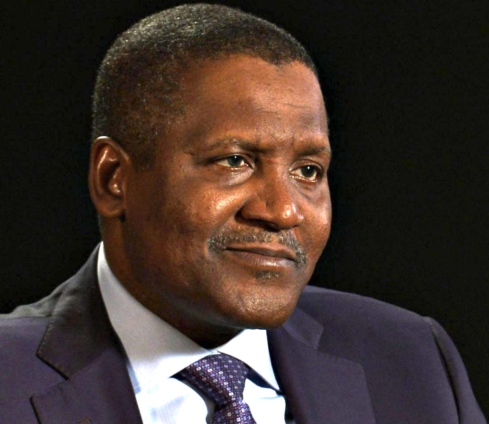
Speaking on Sunday, June 18, at the opening of the 30th Anniversary of the Afreximbank Annual Meetings in Accra, Ghana, the businessman, Aliko Dangote, pointed out that even though there are oil-producing countries on the continent, only two countries, Algeria and Libya, do not import oil.
Dangote who was speaking about the importance of free movement and intra-Africa trade, said: “We are importing poverty and exporting jobs.” He said that in relation to the fact that African countries continue to export raw materials.
He also expressed concern about the difficulty of travelling around the continent.
He said he has an African passport and should be able to travel around, but there are two countries that for some reason do not recognise the African passport.
According to Dangote, Nigeria produces about six million tons of urea and therefore, Africa should not be seeking to import fertilizer from outside the continent.
Dangote shared his experience on how his company started producing cement for local consumption and export, as well as opening factories in other countries and urged the establishment of local domestic.
In his welcome address, the Governor of the Bank of Ghana, Dr Ernest Addison gave tribute to Afreximbank.
He said since its establishment three decades ago, Afreximbank has transitioned into a first-class supranational financial institution, championing African trade and driving growth across multiple sectors in Africa.
“Evidence of the bank’s interventions are numerous and includes infrastructural investments to support intra-African trade, investments in agriculture and industry, trade facilitation, trade guarantee and advisory services, and country-specific programmes to support those in dire economic situations, among others,” he said.
Latest Stories
-
US, Iran fail to reach peace agreement after marathon talks in Pakistan
3 minutes -
ECG kicks off Phase Two of transformer upgrades at Lashibi; brief outages expected
37 minutes -
Port crises loom as 11,000 drivers threaten four-day strike
1 hour -
A source of excellence across generations – Vice President Opoku-Agyemang lauds Mfantsipim
2 hours -
(Photos) Mfantsipim School launches historic 150th anniversary
3 hours -
Knights and Ladies of Marshall group backs Catholic Bishops’ stance on anti-LGBTQ+
4 hours -
Bright Simons writes: All the Filla in the Ibrahim Mahama/E&P – Gold Fields Saga
4 hours -
Monetise Idiocy In Ghana
4 hours -
The Ghanaian prophet and the mysterious death of his scottish wife Charmain Speirs
5 hours -
Nearly 400 sentenced in Nigeria for links to militant Islamists
5 hours -
Ghana’s recovery supported by gold strength despite global oil price pressures – Standard Bank Research
5 hours -
Methodist Church hails Mfantsipim@150; calls for “fresh consecration” to excellence
6 hours -
‘Excellence is our inheritance’ – Nana Sam Brew-Butler hails Mfantsipim’s 150-year reign in leadership
6 hours -
Kwaku Azar writes: A-G vs OSP
6 hours -
Mfantsipim–Adisadel rivalry built excellence, not division – Sam Jonah
6 hours