

Audio By Carbonatix
Energy Minister John Jinapor has revealed that Ghana’s energy sector is grappling with outstanding liabilities of approximately GH₵80 billion, with the debt continuing to rise.
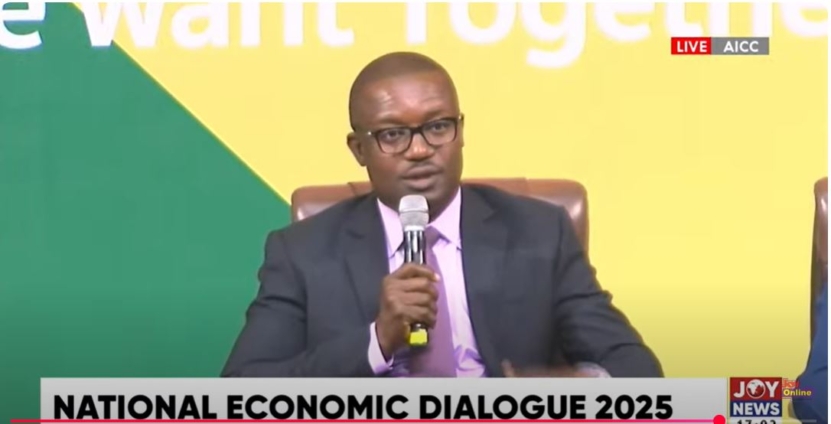
Speaking during Day 2 of the National Economic Dialogue, the minister warned that restoring the sector to stability would require clearing this massive debt burden.
“Today, the outstanding liabilities stand at about GH₵80 billion, and it keeps increasing. If we were to fully revive the energy sector, we would need to flush out this debt. Clearly, this situation is unsustainable,” he stated on Tuesday, March 4.
Beyond the existing liabilities, Mr Jinapor highlighted an even more concerning issue—the sector's monthly financial shortfall. According to him, “Our total bill, especially in the power sector, is about $170 million per month, but collections are less than $100 million. This means we are accumulating an additional $70 million in liabilities every month."
Mr Jinapor highlighted inefficiencies within the energy sector, citing financial indiscipline as a major concern. He noted that in 2023, the Public Utilities Regulatory Commission (PURC) approved $200 million as a capital expenditure cap for the Electricity Company of Ghana (ECG), but ECG ended up incurring $700 million, exceeding the approved amount by $500 million.
This excess spending, he explained, was not factored into the tariff structure, worsening the sector’s financial crisis.
The minister further emphasised the need for private sector involvement in managing the energy sector, warning that failure to do so could lead to its collapse.
He disclosed that some power producers have already shut down their plants due to non-payment of their bills, stressing that tough decisions must be made to prevent a total breakdown.
Mr Jinapor also called for an urgent transition from liquid fuel to gas for power generation, arguing that Ghana has stranded gas that is not being utilized, while the country continues to spend heavily on liquid fuel.
He revealed that the cost of liquid fuel this year alone is projected to reach $1 billion, whereas half of that amount could build a gas processing plant that would save the country $600 million annually. He maintained that constructing the plant is non-negotiable, as it would not only cut costs but also reduce corruption and waste in the sector.
Latest Stories
-
How healthy is Ghana’s health sector?
2 minutes -
HACSA Tech4Girls graduates 80 young women with digital and technology skills
3 minutes -
Arrest of Manhyia South MP should involve Parliament, not police station – Kpebu
35 minutes -
Two Nigerians sentenced to 189 months in US prison over $2.4m cyber fraud
58 minutes -
Cristiano Ronaldo leaves Portugal’s training camp after rift with Head Coach
59 minutes -
Ghana Energy Awards opens nominations for landmark 10th anniversary edition
1 hour -
Aayalolo contra-flow: Are we treating the symptom instead of the disease?
1 hour -
GTEC orders Colleges of Education to begin 2026/2027 admissions despite fees approval delay
1 hour -
Legal reforms must solve real problems, improve justice – Bagbin
1 hour -
Ofori-Sarpong named Alumni President of the Year, honoured for PRESEC dormitory project
2 hours -
Germany commits $132m to Ghana for skills development and training university – Pelpuo
2 hours -
‘Influence should go beyond visibility’ – Taadi Banyinba GH launches The TB Impact
2 hours -
Videos: Government announces emergency LEAP package for Hohoe flood victims
2 hours -
Salomey Baffoe’s children are crying for their mother – Family appeals for her release
2 hours -
Shortage of trained investigators and prosecutors hampers Ghana’s fight against money laundering – Report
2 hours