

Audio By Carbonatix
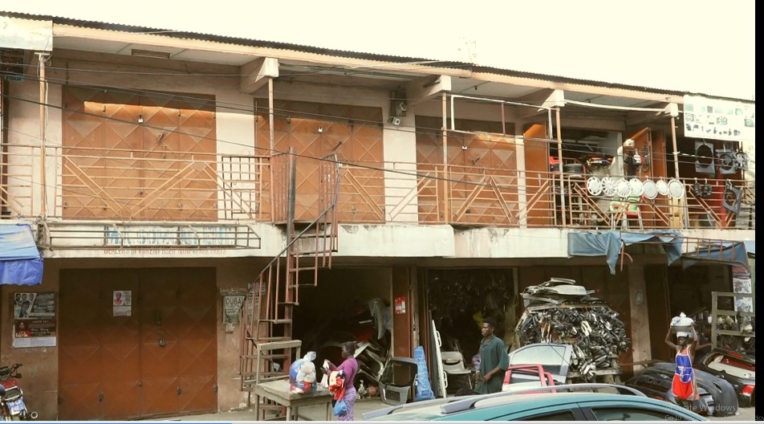
Over 50 shops at the Abossey Okai Spare parts market have shut down their operations due to default in paying their loans.
Some of the owners of the shops blamed the situation on the high cost of doing business in the country, as a result of high inflation and volatilities in the exchange rate regime earlier this year.
They also cited high taxes at the port as contributing to the default in repaying their loans.
“A lot of traders go for loans to import goods to the market. Due to the high cost of port duties and the unstable exchange rate regime, we are compelled to increase prices but at the end, customers don’t buy and we lose”, a trader who gave his name as Julius said.
According to Julius, many of his colleagues have to leave the country in search of better opportunities to pay back their loans.
“It is not easy my brother. A lot of people are travelling outside the country to look for better conditions. Why operate a shop here when you can't break even”.
Expressing his disappointment, Julius said he is unhappy with the current economic situation in the country and as a result will also leave for Dubai for a carpentry profession.
"Listen! We don't have any business to do. All we have is what we do here. Look at the shops, they are all closed with no spare parts in there. Do you know why? They have all travelled because the banks are chasing them for repayment of the loans which they can't repay.
"The only option now is to travel abroad, get some monies and pay your debt. I don't think you will meet me here in your next visit. I am also going to Dubai to make money"" he said.
Kwesi, who primarily deals in automobile engines, had to rely on his children living abroad to pay a local bank a loan for ₵2 million, which, in his words, almost got him imprisoned.
He stated that the operations of the spare parts merchants are being hampered by the failure to implement pricing control policies.
"They came to my shop with some policemen. To be frank with you, the goods I used the money for were in the shop and buyers were not willing to buy because of the price. I had wanted to resort to reduction of the goods which means I won't be able to recoup my principal I used to purchase the goods"
“I would be happy if we could have price control, but it appears it won't work out because people just want to sell their goods just to stay in business. The issue of taxes too is a big problem for us”, he stated
Latest Stories
-
Power restoration fault suspected in Kumasi Central Market fire
41 minutes -
The 7-foot giant of Ngleshie Amanfro: Seven-foot Ghanaian Ephraim Saawa dreams of joining the national basketball team
1 hour -
Government promises support for Kumasi Central Market fire victims
1 hour -
Vibes The Movie: Big Ghun’s Ghanaian film earns five nominations at 2026 REFFA
2 hours -
MamaCare CEO warns unresolved conflicts among health workers could undermine maternal and neonatal care
2 hours -
Health professionals urged to translate medical knowledge into practice to save mothers
2 hours -
Conflicts among care providers linked to maternal, neonatal deaths – Expert
4 hours -
GIS marks 10th TIME conference, champions improved teaching practices
4 hours -
BRICS Or Balance? What Ghana’s bid really means
5 hours -
GPRTU wants full TRAFFITECH-GH implementation to start in 2027
5 hours -
Mahama announces plans to import electric wheelchairs for PWDs
5 hours -
KGL U17 Colts 2026: Western beat Prempeh Elite Academy to set up final final with Greater Accra Region
5 hours -
Late Solanke strike salvages 10-man Spurs draw at Man United
5 hours -
Gender Ministry to monitor welfare of Nana Akua Addo’s children amid domestic violence case
6 hours -
Benedict Okyere Yeboah: Ghana’s football problem goes beyond sacking a coach
6 hours