

Audio By Carbonatix
The National Commission for Civic Education (NCCE) has said over-dependence on the central government for all development needs of communities across the country was creating underdevelopment and deepening the poverty cycle.
According to the Commission, it is imperative for communities to initiate and seek support for development projects as government alone could not bear the responsibility of meeting the needs of every community.
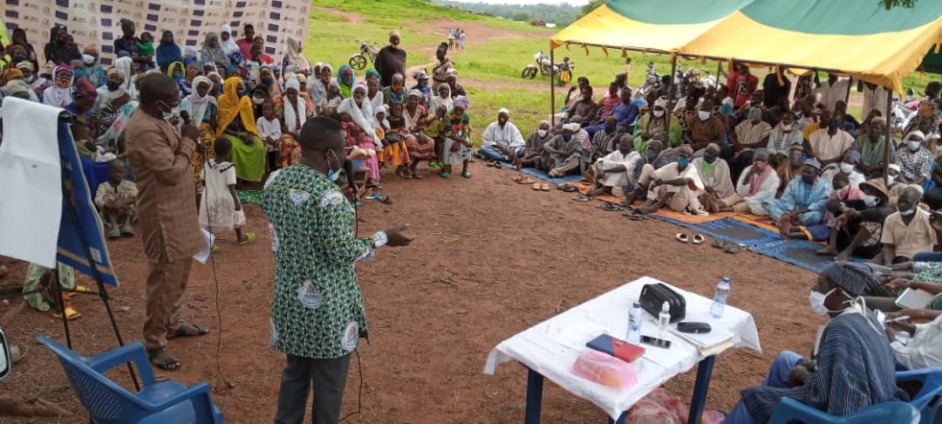
Mr Pontius Pilate Baba Apaabey, the Upper East Regional Director of the Commission, made the call at Sokabisi in the Bolgatanga Municipality, during a social auditing forum organized by the NCCE with financial support from the European Union (EU).
According to the Regional Director, the era and age in which government could meet the needs of every community was over and called on communities in the region to initiate projects and take steps to seek for assistance to complete them to improve their lives.
This, he said, would enable the communities to take ownership of the project, support its implementation to promote quality of work and to protect it.
It would also contribute to reducing corruption and instilling the values of communal labour, nationalism and patriotism.
The social auditing forum was part of the implementation of the Commission’s flagship programme, Accountability, Rule of Law and Anti-Corruption Programme (ARAP).
It aims to reduce corrupt practices, ensure transparency, improve accountability and promote good governance. Mr Apaabey called on the citizens to get involved in the development of their communities and to demand accountability from duty-bearers.
Mrs Felicity Thelma Akana, the Assistant Director II B, who spoke on behalf of Mr Mahamadu Azonko, the Regional Coordinating Coordinator, urged the community to employ social auditing to ensure good governance.
She said, “Social auditing is a way of measuring, understanding, reporting and improving an organization’s social and ethical performance. The District Assembly is responsible for the overall development of communities within their jurisdiction and the coordinating council cannot monitor their performance without the citizens’ participation.”
The members of the community prioritized the construction of a Kindergarten classroom block for the Sokabisi basic school. They also formed a five-member social audit implementation committee to work together to address the challenge.
Latest Stories
-
Police launch manhunt for bikers following brutal assault on Kaneshie MTTD officer
4 hours -
Senegal’s World Cup jersey won’t have two stars – but it’s nothing to do with AFCON
4 hours -
Danny Welbeck scores twice as Brighton beat Liverpool
4 hours -
Trump at a crossroads as US weighs tough options in Iran
5 hours -
Nana Fredua-Agyeman Jnr. outdoors maiden anthology, ‘Poematic – The Kickstart’
5 hours -
IGP orders PPBS to probe alleged assault on artist Ibrahim Mahama
6 hours -
Tema aircraft crash: Families of victims thank first responders, request privacy to mourn
7 hours -
Eastern Region: Mahama orders free fertiliser distribution for farmers
7 hours -
Police launch investigation into alleged assault on artist Ibrahim Mahama
7 hours -
Robert Mueller, ex-FBI chief who led Trump-Russia investigation, dies at 81
7 hours -
Foreign secretary denounces ‘reckless Iran threats’ after missiles fired at Diego Garcia
7 hours -
Joint police–military operation in Sampa yields weapons haul, 24 suspects arrested
7 hours -
Contractor set to begin work on Afram Bridge project – President Mahama
8 hours -
‘Galamsey is not going anywhere’- Senyo Hosi calls for tech-driven regularisation
8 hours -
Joy Ghana Fest 2026 Day 2: Patrons turn up for shopping, entertainment and culture
9 hours