

Audio By Carbonatix
Vice President Professor Jane Naana Opoku-Agyemang has called for stronger collaboration among ministries, departments and agencies (MDAs) and other state institutions to ensure the prudent use of national resources and accelerate Ghana’s development.
She said national progress depended on collective effort, cautioning against institutional silos and turf wars that undermined efficiency and weakened the country’s overall development agenda.
“We need to avoid turf wars and silos. We are working together and advancing one country. That should be the beginning of the dialogue. It’s not about what’s mine or me; it’s about us,” she said.
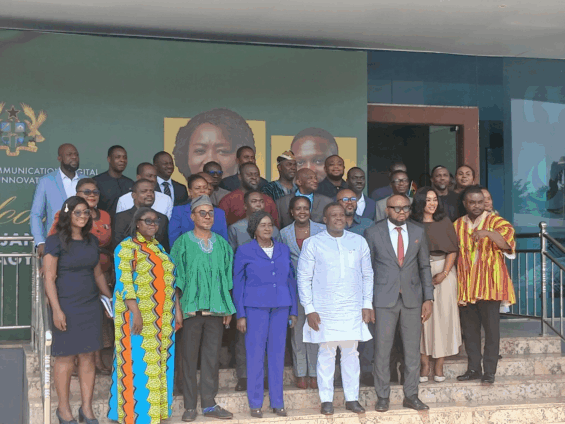
The Vice President made the call on Thursday during a working visit to the Ministry of Communications, Digital Technology and Innovation, where she engaged the Minister, Samuel Nartey George, management and heads of agencies under the Ministry.
The visit sought to close perceived gaps between the Presidency and MDAs, as well as obtain first-hand information on the successes, challenges and constraints facing the institutions.
Prof Opoku-Agyemang said success at every level of government ultimately translated into national success, noting that all public officials shared a common responsibility to advance Ghana’s progress.
“Regardless of where we are, we all want Ghana to be successful. That is the beginning of the dialogue – not ‘my space’ or ‘your space’, but ‘our country,” she said.
She commended the Ministry and its agencies for ongoing reforms, particularly the review of outdated legislation and efforts to streamline digital governance.
The Vice President warned against duplication and waste, saying limited national resources must be used efficiently.
“We are not a rich country, and even if we had all the money, it does not mean we should waste it,” she noted.
Addressing challenges in the digital space, Professor Opoku-Agyemang underscored the importance of accountability in communication, especially in an era of anonymity, misinformation and hate speech.
She cautioned against actions that undermined peace and social cohesion, noting that national stability remained a fundamental prerequisite for development.
The Vice President expressed strong interest in the Government’s flagship One Million Coders Programme, urging long-term planning to ensure that trainees were productively absorbed into the economy.
“It is not just about training people. We must ask: what happens after? Where should Ghana be in 10 years, and what are we doing now to get there?”
While welcoming partnerships with global technology firms, she encouraged the Ministry to look beyond alignment and work towards developing homegrown digital solutions over time.
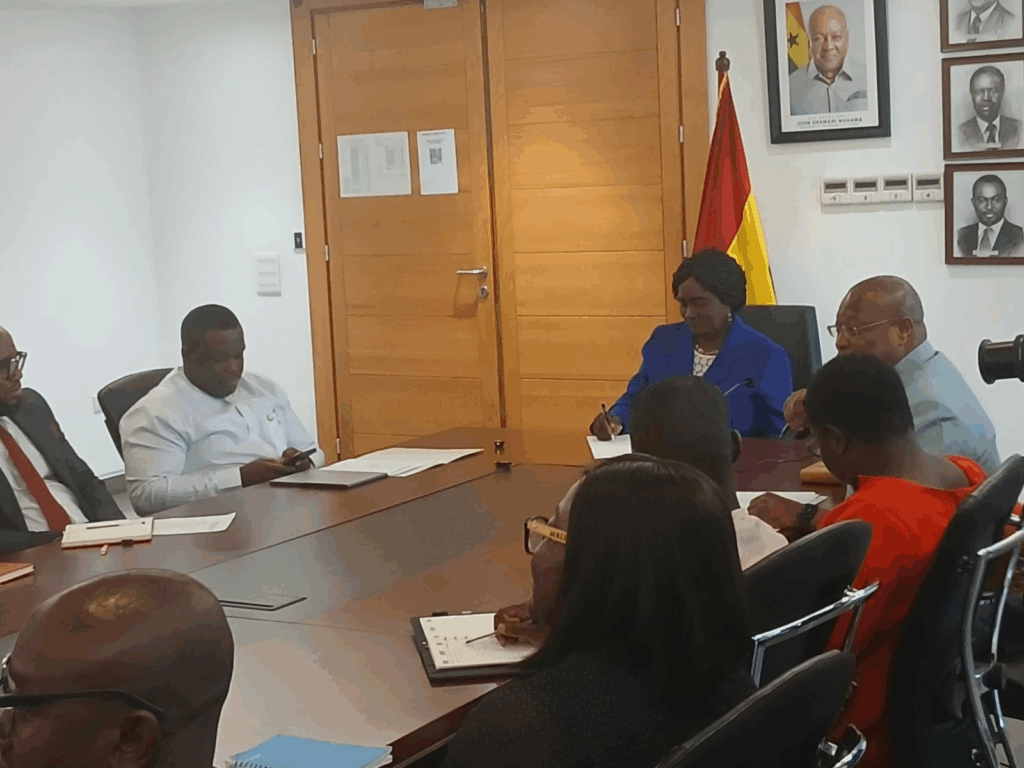
Prof Opoku-Agyemang urged public servants to remain committed to service, national unity and legacy-building.
“Whatever we do, let us ensure that we leave the trail in a much better shape than we found it,” she added.
Briefing the Vice President, Mr George outlined key reforms and projects underway within the Ministry and its agencies, including a comprehensive review of the Legislative Framework, describing many existing ICT laws as outdated and no longer fit for purpose.
He said 15 new and amended bills, covering areas such as electronic communications, cybersecurity, data protection and digital economy development, were at various stages and would soon be presented to Cabinet after extensive stakeholder consultations.
Mr George highlighted the One Million Coders Programme as the Ministry’s flagship initiative, explaining that partnerships with global technology firms, including Google, MTN, Huawei and Telecel, were aimed at providing internationally recognised certification and improving the employability of beneficiaries.
He noted that the programme was being implemented despite financial constraints, with support from agencies such as the National Communications Authority and the Ghana Investment Fund for Electronic Communications.
To curb waste in government’s ICT procurement, Mr George said the Ministry was working with the Public Procurement Authority and the National Information Technology Agency (NITA) to prevent duplication of systems across MDAs, safeguard sensitive national data and ensure value for money.
“We have asked the Public Procurement Authority not to grant approval for any IT-related government procurement without reference to NITA, so that existing systems can be leveraged instead of paying for them twice, while also protecting critical national data,” he said.
On institutional reforms, the Ministry had adopted a fully paperless internal system, enabling documents to be processed digitally from receipt to approval, Mr George said.
Latest Stories
-
Education Minister assures teachers of salary adjustments by October 16
18 seconds -
Abass Osabutey declares bid for NDC Deputy National Organiser position
2 minutes -
Education Minister inaugurates NDU Governing Council, announces $25m seed funding
10 minutes -
THE LAW 101: La Beach Demolitions – The State’s own documents, the courts’ orders – and the bulldozers
13 minutes -
DVLA contributes GH¢17.7m to Consolidated Fund in 2025
16 minutes -
Why disaster risk reduction must connect early warnings, preparedness and financial protection to household-level resilience
23 minutes -
The AI Gold Rush: Who strikes gold and who gets left behind?
47 minutes -
Australia visa scandal: Pius Hadzide says failed checks left him carrying the blame
1 hour -
Pius Hadzide rejects blame for journalists’ visas in 2018 Australia scandal
1 hour -
What Is Wrong With Us: We queue for the Colosseum while our own Castles crumble
1 hour -
Dangote IPO fever could deepen Africa’s capital markets, Citi Bank executive says
2 hours -
US hopes diesel deal can ‘soften’ Moscow on peace talks, sources say
2 hours -
Oil falls as Russia diesel supply prospects counter Gulf supply risks
2 hours -
Moroccan centrist party agrees to form coalition government with three other parties
2 hours -
IMF cites AI slowdown, spiking yields as looming global market risks
2 hours