

Audio By Carbonatix
The Peasant Farmers Association of Ghana (PFAG) has dispelled speculations being made by some actors in the agricultural sector that agroecology farming practices being promoted by the association cannot feed the growing African population.
According to the association, the current industrial farming practices coupled with mining activities and population growth contributed negatively to the changes in the climate which is associated with erratic rainfall pattern, increasing temperatures and decreasing soil fertility leading to decreased in crop yields and low income for smallholder farmers.

The PFAG explained that industrial farming practices has been going on for years and yet farmers are not seeing much improvement in their livelihoods which call for sober reflection on alternative farming practices.
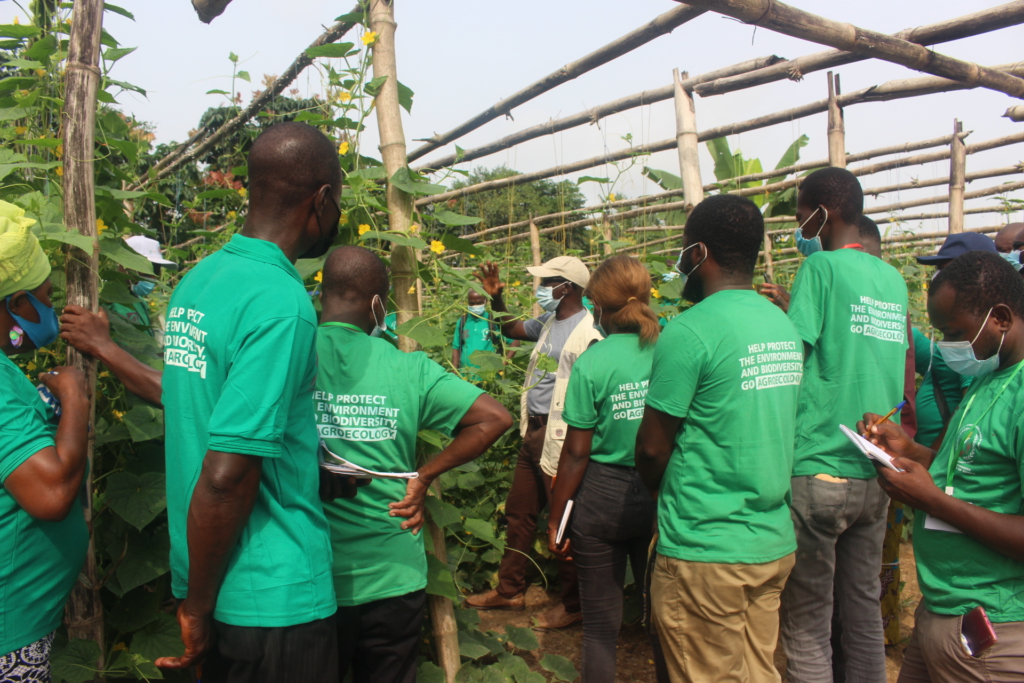
This statement was made during a two-day training workshop on agroecology farming practices organized by the PFAG for farmer leaders, extension officers, officers from the District Department of Agriculture and the media in Shama in the Western Region of Ghana with funding from the Open Society Initiative for West Africa, 11th Hour Foundation and JAFOWA.
In his opening statement, the Head of Programmes and Advocacy at the PFAG, Dr. Charles Kwowe Nyaaba explained that climate change has negatively impacted on agriculture, the environment and rural communities leading to poor crop yields, low incomes and the only sustainable way to still produce enough food for the growing population today and for the future generations is through agroecology farming practices.
He summarized Agroecology farming practices as farming that recognizes the importance of agro-ecosystems and their inter-relations in agriculture and land use practices.
“Agroecology is scientific basis for sustainable agriculture and applies ecological concepts and principles to the design and management of agro-ecosystems. With agroecology, we promote agroforestry, biodiversity, mixed farming, limited disturbance of the soil structure, mulching and limited application of external inputs”.
The Western Regional Director of Agriculture, Patrick Akowuah acknowledged the importance of agroecology in dealing with the recent climate change and the need to promote it.
"One thing we have not been able to push well, as we work, is Agroecology, let us all support with ideas to mitigate climate change. We don't know the future but we know the past that can guide us to mitigate climate change,” he noted.
The first day training which was led by the Executive Director of the Centre for No-Till Agriculture, Dr. Kofi Boa featured theoretical lessons on Agroecology and the second day was field visits and practical training. According to Dr. Boa, a combination of traditional knowledge, farmers’ experience and science of ecological principles is what one needs in order to actualize the practices and techniques of agroecology farming.
He explained the four key principles of Agroecology which include: little or no soil disturbance, permanent soil cover, diversified crop systems (rotations & associations) and integration of livestock with crop farming. “Whiles the principles of agroecology are universal, the practices are very much site-specific” he indicated.
Making a presentation on the topic "Farming as a Business", Dr. Nyaaba reiterated that, "farming cannot be done anyhow, you need to acquire some entrepreneurial skills to make it work. This include developing business plans, record keeping and proper financial management with marketing being priority”.
He called on smallholder farmers to change their mindset about farming and see farming as a business.
Yaw Asafuah, a 41-year-old farmer in the Shama District, said, he has gained exceptional knowledge on how to do farming in consonance with nature by ensuring that the environment is not disturbed.
“I will educate my colleague farmers so that we practice this type of farming method that will help us use the land for a very long time to come and pass it on to our children.”
At the end of the training, participants took the opportunity to thank government for creating policy space for Agroecology in its plan but added that, Agroecology demonstration farms should be set up across the country and budgetary allocation made by government for training at the district levels in order to educate more farmers about the concept.
Peasant Farmers Association of Ghana promised to further showcase the opportunities of agroecology to stakeholders in the country.
Latest Stories
-
Teachers have lost confidence in government over delayed demands – Abuakwa South MP
3 minutes -
Two months of talks with the government have yielded no progress – GAUA
13 minutes -
COP31 must deliver action, not more promises – African climate negotiators
27 minutes -
What happens when you have too little body fat
28 minutes -
Peki SHS old students to break ground for new entrance gate
46 minutes -
This is an Organised Crime – PAC Ranking Member on 10 million MoH car loan debt
1 hour -
GAUA strike disrupts student registration at University of Ghana
1 hour -
Tema is regaining its industrial glory days as Ghana’s industrial city – Mahama
1 hour -
FBI says more than 130 detained in Ghana over scam operation targeting US victims
1 hour -
BlaKid reflects on Shatta Wale collaboration and TGMA recognition
1 hour -
When vulnerability shows up, run – Rev. Daniel Annan cautions women
2 hours -
FDI rises from $624m to $2.62bn as Tema industrial activity picks up – Mahama
2 hours -
Artificial stability or sustainable equilibrium? Rethinking the Cedi’s performance
2 hours -
GIPA CEO calls for investment to support Ghana’s economic transformation
2 hours -
Banks to suspend lending to public sector workers under Controller and Accountant General’s payroll
2 hours