

Audio By Carbonatix
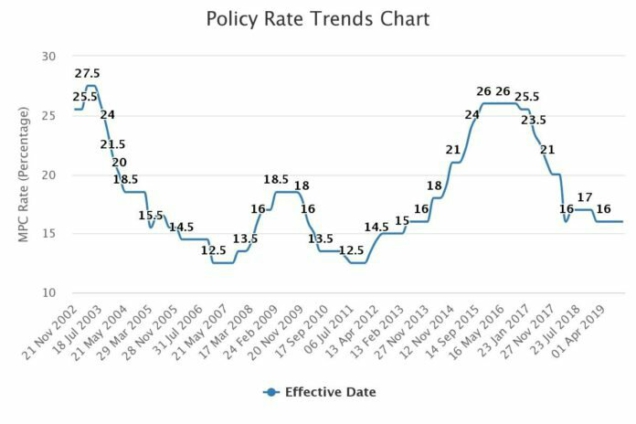
The policy rate- the rate at which commercial banks borrow from the Bank of Ghana- will remain unchanged at 14.5%, at least until after the first quarter of next year, Fitch Solutions has disclosed.
This means cost of borrowing will stay largely same during the period.
The Bank of Ghana cut its base lending rate by 1.5 percentage points to 14.5% in March 2020, the first time in 14 months. The move was to stimulate spending in the Ghanaian economy and increase money supply.
Senior Country Risk Analyst for Sub Saharan Africa, William Attwell told Joy Business that there will be some monetary policy easing getting to mid-next year when economic growth picks up.
“Interest rate decisions in Ghana could come, that’s of course, till then the Bank of Ghana will hold rate [policy rate] steady. The most recent inflation is still outside of the Central Bank’s target so we would expect that ratings will hold for some time being”
Furthermore, he said “looking ahead to next year though as the Central Bank is likely to encourage recovery to gather pace next year, we would expect a bit of monetary policy easing during mid-2021,” he said.
September 2020 MPC Report
The Bank of Ghana cited risks to inflation and growth as the reason to keeping its base lending rate unchanged in September 2020.
“The Committee’s view is that risks to the immediate outlook for inflation and growth are broadly balanced and decided to keep the policy rate unchanged at 14.5%”, it said in a statement.
It however emphasized that he drivers of economic growth are returning to normal with prospects for a good recovery, adding, monetary and fiscal policies have been supportive, providing the necessary underpinnings for the economy to withstand the negative output shock arising from the covid-19 pandemic.
Interest rate development
Interest rates on the money market saw mixed developments as rates on short to medium term instruments eased between Quarter Two and Quarter Three, but generally tightened at the longer-end.
On a year-on-year basis, the 91-day Treasury bill rate declined to about 14.0% in August 2020 from 14.7% a year ago.
Similarly, the interest rate on the 182-day instrument declined to 14.1% from 15.2%.
With the exception of the 6-year bond, yields on the 7-year, 10-year, 15-year, and 20-year bonds all increased.
Presently, treasury yields are hovering around 14.5%
Latest Stories
-
I assure Otumfuo, Mahama will join him to commission KNUST Teaching Hospital by end of this year – Haruna Iddrisu
11 minutes -
Gov’t to roll out free special education for persons with disabilities from July 1 – Education Minister
33 minutes -
“We used it to test our officiating officials’ readiness” – Bawah Fuseini after CAA Athletics event
60 minutes -
Volleyball emerges as Ghana’s fastest rising sport
1 hour -
National Sports Fund needs strong leadership from the top – Administrator David Wuaku
1 hour -
JoySports Exclusive: Steve McLaren in talks with GFA after expressing interest in Black Stars job
2 hours -
Fire guts auto parts warehouse at Bubuashie, one fire officer injured
2 hours -
I owe my victory to coach Ofori Asare – Allotey after winning WBA Africa Gold Super Flyweight belt
2 hours -
Church of Pentecost supports over 2,000 BECE candidates in Obuasi with career guidance seminar
3 hours -
Brandon Asante and Coventry all but promoted to Premier League despite Sheffield Wednesday draw
4 hours -
GPL 2025/26: Late Kwartemaa strike downs Hearts in Tema
4 hours -
Ghana Faces Sierra Leone Moment as Prosecutorial Powers come under strain
4 hours -
Don’t consume fish or seafood from Tema Shipyard until further notice – FDA warns
4 hours -
Why volunteering might be Africa’s most underrated career accelerator
4 hours -
ActionAid Ghana raises concern over gender gaps in Feed Ghana Programme
4 hours