

Audio By Carbonatix
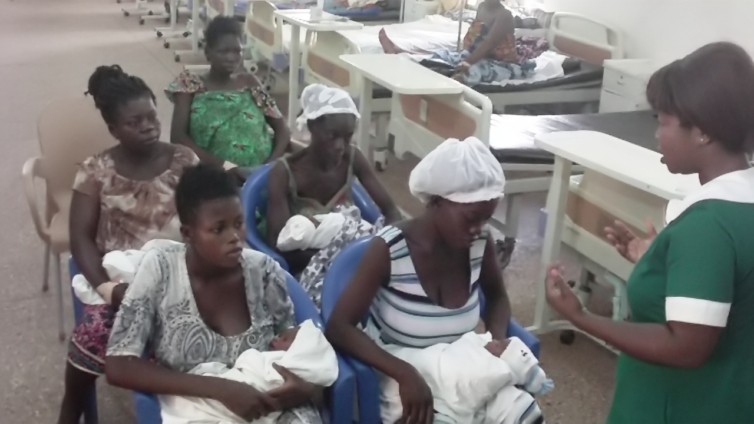
A health advocate and Executive Director of Indigenous Women Empowerment Network Ghana (IWEN), Ms Celestina Andoh, has stated that the leading causes of neonatal death in Ghana are prematurity, birth asphyxia and infections, while the leading cause of maternal death is postpartum haemorrhage.
She noted the country has made considerable progress in reducing maternal and newborn mortality over the past few decades but is still confronted with many challenges in ensuring that mothers and newborns receive high-quality healthcare services.
According to her, Ghana achieved an institutional maternal mortality ratio of 102 per 100,000 live births, while the institutional neonatal mortality rate dropped to 7 per 1,000 live births.
Speaking in an interview, Ms Andoh said the figures indicate that there is still much work to be done to improve the health outcomes of mothers and newborns in the country.

She, therefore, stressed the need for a strong partnership between the Ministry of Health, nonprofit and private organisations, especially local transport operators, to provide a sustainable patient transport solution.
‘‘They should also collaborate with pharmaceutical companies to improve the supply chain for maternal and newborn health medicines,’’ she added.
Ms Andoh emphasised this will improve inpatient referrals to appropriate health facilities within the first six months.
She further said "it will also increase the availability of essential maternal and neonatal medicines and supplies in targeted health facilities, especially in rural communities."
She announced her organisation is implementing a project to improve sexual, maternal and newborn health through social accountability and community mobilisation in the Ada West District.
"The project will empower and mobilise women and communities to be better prepared to manage pregnancy and childbirth, while they are actively seeking quality maternal and neonatal services when needed,’’ Ms Andoh stated.
On cultural and socio-economic barriers, she said in some communities, cultural beliefs and practices might discourage women from seeking formal healthcare services.
The Officer-in-Charge of the Project, Edward Ayabilah, noted despite Ghana's commendable progress in maternal and child health over the past decades, Ada West district remains significantly underserved in connection with access to quality health care.
Mr Ayabilah, therefore, called on all health sector actors, both state and non-state actors, to join forces together to help improve access to quality health care delivery in the district to achieve targets of Sustainable Development Goal 3, reducing the global maternal mortality ratio to less than 70 per 100 000 live births by 2030.
Latest Stories
-
Anthony Joshua declines showdown with Tyson Fury but admits they ‘probably’ clash next
8 minutes -
Tyson Fury dominates Makhmudov, calls out Joshua next
27 minutes -
I have supported highway authority financially to fix roads in my constituency – A Plus
2 hours -
US, Iran fail to reach peace agreement after marathon talks in Pakistan
2 hours -
ECG kicks off Phase Two of transformer upgrades at Lashibi; brief outages expected
3 hours -
Port crises loom as 11,000 drivers threaten four-day strike
3 hours -
A source of excellence across generations – Vice President Opoku-Agyemang lauds Mfantsipim
4 hours -
(Photos) Mfantsipim School launches historic 150th anniversary
5 hours -
Knights and Ladies of Marshall group backs Catholic Bishops’ stance on anti-LGBTQ+
6 hours -
Bright Simons writes: All the Filla in the Ibrahim Mahama/E&P – Gold Fields Saga
6 hours -
Monetise Idiocy In Ghana
6 hours -
The Ghanaian prophet and the mysterious death of his scottish wife Charmain Speirs
7 hours -
Nearly 400 sentenced in Nigeria for links to militant Islamists
7 hours -
Ghana’s recovery supported by gold strength despite global oil price pressures – Standard Bank Research
7 hours -
Methodist Church hails Mfantsipim@150; calls for “fresh consecration” to excellence
8 hours