

Audio By Carbonatix
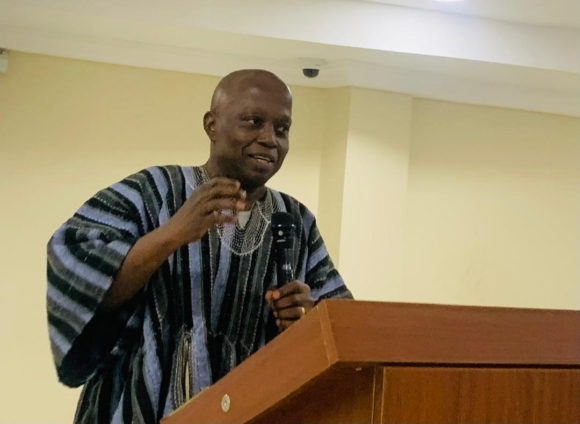
Former Auditor-General of Ghana, Daniel Yaw Domelevo, has called for enhanced controls to safeguard public funds, stressing that existing measures are insufficient to prevent corruption among public officeholders.
Speaking at an event on Tuesday, December 3 at the Alisa Hotel in Accra, dubbed Curbing Illicit Financial Flows in Ghana, Mr. Domelevo emphasized that while the country’s public financial management system has certain controls in place, they are not enough to deter individuals from embezzling public funds through collusion.
“The truth is that all that I have said about the public financial management system, the controls in it alone are not enough to deter public office holders from stealing from the public funds through connivance,” he said.
Mr. Domelevo pointed to the declaration of assets as a key measure to protect public funds. He referenced Article 286 of the Constitution to support his argument, highlighting the importance of such declarations for public office holders.
“One of them is asset declaration by key officials, and this is a provision in Article 286 of the Constitution and also the Public Office Holders Asset Declaration and Disqualification Act, 1998 (Act 550),” he stated.
He argued that proper asset declaration goes beyond merely submitting forms and requires verification of the assets in question.
He criticised the current system, where more than 30,000 public officials sign documents and submit them to the Auditor General, stating that this often results in “anticipatory declarations.”
“The declaration is just a paper declaration. If you say you own a piece of land, we must go and see the land. If you don’t do that, there will be what we call an anticipatory declaration. The moment you are appointed Minister, you say, ‘I will build a six-storey building before I leave.’ So, you declare the six-storey building, and by the time you leave, you will say it’s still the same six-storey building,” he explained.
Mr. Domelevo also advocated for the publication of public officials’ assets after they leave office. He argued that such transparency would allow the public to see whether individuals had gained wealth illicitly during their tenure.
“There is the need for publication so that people will know what they had before coming to office, and when they are leaving, people will say, ‘Thank you very much! You are such a good thief. You came with almost nothing and you are going with so much,’” he said.
Latest Stories
-
‘We’ve become quite experienced in negativity’ – Liverpool’s Slot
1 hour -
Legendary manager Lucescu dies days after resigning
2 hours -
One dead as train travelling 99mph collides with lorry in France
2 hours -
Airlines cut flights and hike fares as fuel prices surge
2 hours -
Kane inspires Bayern to first-leg advantage over Real Madrid at Bernabéu
2 hours -
Wireless Festival cancelled after Kanye West blocked from coming to UK
3 hours -
Wa West MP commissions five boreholes for the benefit of his constituents
3 hours -
Havertz’s late strike hands Arsenal narrow first-leg advantage over Sporting
3 hours -
Damang mine award: Minority not against Ghanaian participation; we’re asking for fair process – Konadu
3 hours -
NPA to enforce stricter registration rules for petroleum tankers
3 hours -
Manhyia South MP laments decline in hospitality operations in his constituency
4 hours -
How a simple clean charcoal innovation could benefit Ghana’s climate future
4 hours -
NPA, COMAC launch Safety Week 2026 to promote risk management in petroleum sector
4 hours -
Stakeholder engagement resolves onion trade impasse
4 hours -
Gender Ministry holds staff durbar, welcomes new Chief Director
4 hours