

Audio By Carbonatix
Policy Advisor at the John A. Kufuor Foundation, Nana Ama Oppong-Duah, is urging private companies in the agriculture mechanisation sector to support rice farmers in the country.
She says mechanisation is a key service rice farmers need if the country can become self-sufficient in rice production.
Nana Oppong–Duah says the foundation and other partners are working with the Ministry of Food and Agriculture to get that highly needed service for farmers.
"We also have a mechanisation component which we were talking about to be able to identify mechanisation service providers and link them directly to rice and cassava farmers to be able to have a more efficient value chain in the districts," she explained.
"The good thing about this is that we are partnering with private sector actors like TATA, John Deere, Troto Tractor, and of course some of the government bodies to be able to bring this service to farmers," she added.
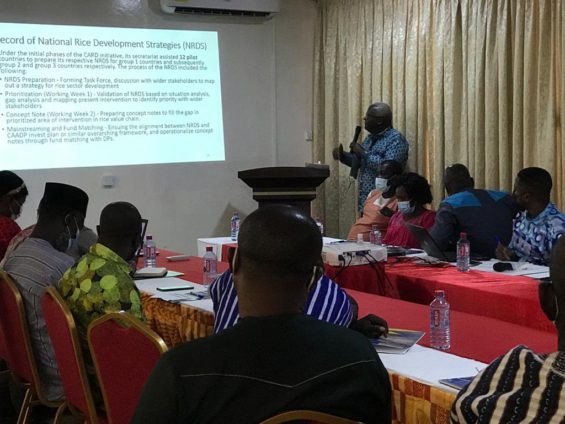
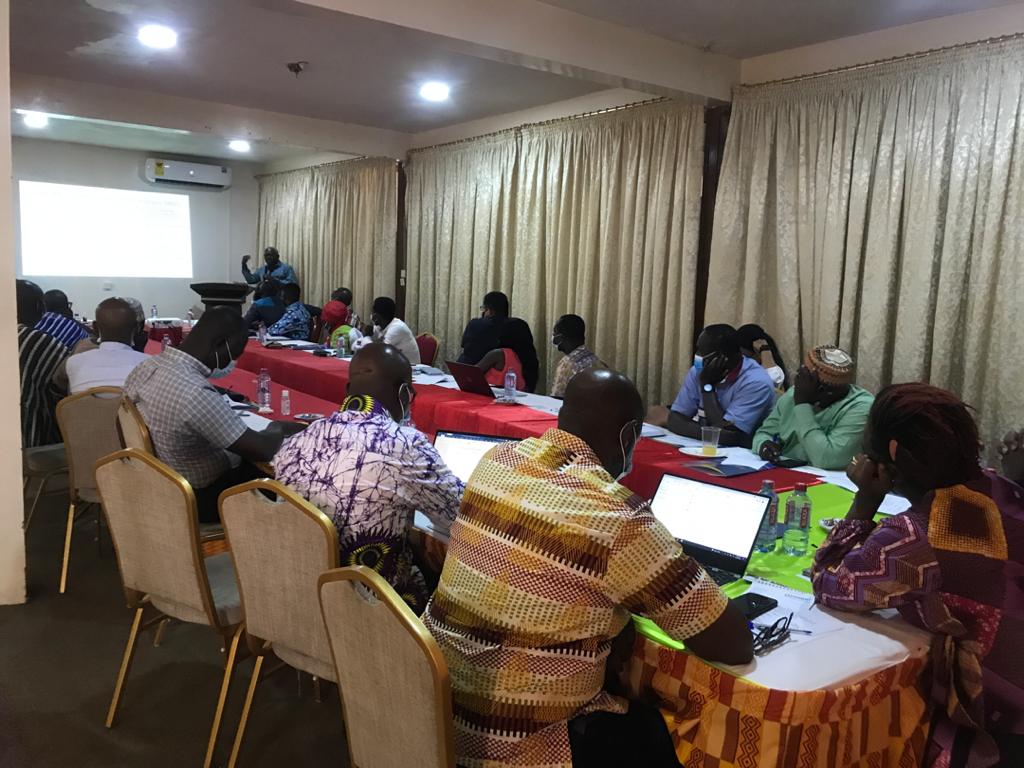
Nana Oppong–Duah was speaking to the media at a learning event on the Ghana Rice Project in Accra.
The event saw the unveiling of findings from research carried out in about 140 districts to identify gaps in local rice production following the implementation of the "Public-Private Partnership for Competitive and Inclusive Rice Value Chain Development: Planting for Food and Jobs (PFJ) Rice Chapter Project."
The Alliance for a Green Revolution in Africa (AGRA) is funding the project to improve the rice value chain so Ghana is less dependent on imported rice.
The Ministry of Food and Agriculture, the John A. Kufuor Foundation, Intervale Ghana, Hopeline Institute, Sparkx Farms and Volta City Farms are the consortium partners implementing it.
"We are training the service providers and mapping them based on the physical location of farmers. So, we are training service providers who are located in areas where farmers are. We started with the farmer database. And so, farmers are aligned to service providers in clusters," Madam Oppong-Duah explained.
"We are working with Ghana Rice Inter-professional Body (GRIB) because they are private sector mainly. That is a sustainability measure. So, we are facilitating the process for the private sector actors to meet. This meeting is bringing partners together so we can learn," she added.
The policy advisor also noted the need for effective coordination in the rice sector to ensure farmers' availability of inputs and markets. "One of the things is coordination. How do we coordinate?
"Some farmers don't even know input dealers are nearby. If there is rice in the district, how do we move to the miller? When we bring them together, the synergy comes to play," she observed.
She also noted the need for farmers to have access to improved seeds and funding. "We advocated for government to put together a fund for the rice sector. And the disbursement for that has taken place," Madam Oppong Duah explained.
President of GRIB Nana Agyei Ayeh identified difficulties with land preparation and funding as key challenges militating against efforts to boost local rice production in the country.
"GRIB is advocating for land development first. That is the foundation. If you are able to develop the land, that is where everything will be dictated," Nana Ayeh observed.
"Rice is a special crop. So before you start the rice, develop the land. When I say the development of land, it is different from, let's say, doing cassava. With rice, you need to go in there, clear the land, go deep and remove stumps for proper mechanisation like combine harvesters and rooters and power turners to work on the land. Without that, you cannot do so much," he explained.
On the high cost of loans, he said, "money is very expensive in Ghana. We are looking at the government to do something on the interest rate. "As it stands now, with the 25 per cent interest rate, it is very difficult.
"We are competing with people who are getting 5%. In Thailand for instance, their interest, rate is so low. So how can you be a rice farmer here and compete with a farmer from Thailand?" he quizzed.
Latest Stories
-
Bond market: Turnover surges 559.42% to GH¢2.49bn
3 minutes -
Dagomba line residents begin rebuilding after Easter Monday inferno
3 minutes -
ECG substation upgrade exercise: parts of Accra to experience power outages
7 minutes -
IMANI petitions Mahama over alleged procurement breaches in state insurance placements
12 minutes -
First Atlantic Bank posts strong 2025 results as profit surges 30.5%
15 minutes -
Maguire signs contract extension with Man United
18 minutes -
The WTO is debating trade: The world runs on investment
44 minutes -
Minority questions gov’t purchase of fuel-powered buses, pushes for electric alternative
46 minutes -
GFA Executive Council to decide on new Black Stars coach ahead of 2026 World Cup
47 minutes -
One injured as fire destroys 14-bedroom house at Kwame Danso
55 minutes -
GACL struggling despite recording profit, levy needed for expansion – Agalga
58 minutes -
Kwahu Business Forum: Ghana Sports Fund calls for stronger corporate backing for sports dev’t
1 hour -
Suhum Children’s Health Centre: A story of collaboration, recognition, and global support
1 hour -
Polling is no longer measuring opinion, it’s manufacturing it – Opong-Fosu
2 hours -
Penplusbytes’ statement on police action against deepfake and misinformation activities in Ghana
2 hours