

Audio By Carbonatix
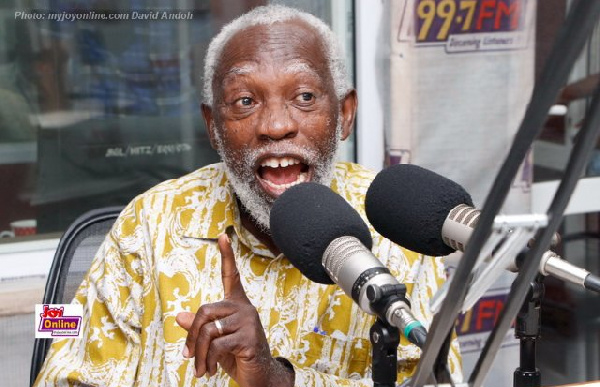
Educationist Professor Stephen Adei has voiced concerns over the practical implementation of the government’s flagship Free SHS Programme, rather than its legislative backing.
The former GIMPA rector expressed confusion over government’s decision to seek legislation now after seven years of practice.
Speaking on PM Express on Tuesday, he noted, “What they’ve done for the past several years has not been illegal; it’s been by government policy and is acceptable.”
His comment follows Education Minister Dr Yaw Adutwum’s announcement that the Free SHS Bill, 2024, will be presented to Cabinet for debate this week.
The proposed bill aims to give legal backing to free and compulsory senior high school (SHS) education, along with several other changes to the education system, including the restructuring of junior high school (JHS) and the cancellation of the Basic Education Certificate Examination (BECE) as a prerequisite for SHS admission.
Dr Aduwtum added that another proposal of the bill was the cancellation of the Basic Education Certificate Examination (BECE) as a precondition for gaining admission to the secondary level. Rather, it would be used for school selection purposes.
When passed, the certification for completing SHS would become the first level of formal certificate any student could obtain in the country, rather than the BECE certification, the Education Minister further stated.
“What we need is a law that says there should be free, compulsory universal secondary education. This means the minimum education for the Ghanaian should be a senior high school and not junior high school,” he said, adding “It is our responsibility to provide the support for them”.
Despite these proposed changes, Professor Adei remains sceptical.
He argues that the policy is sound, but the focus should be on refining its implementation rather than legislating it.
“There must be a reason why they want to bring in a law now,” he said, questioning the necessity of the proposed legislation.
Professor Adei suggests that the Education Ministry should consult with experts, stakeholders, and ordinary Ghanaians to improve the policy.
“I’ve been in public service all my life until retirement, and this is a very weird way of doing policy,” he added, emphasising the need for practical solutions over legal formalities.
Latest Stories
-
Mahama outlines plans to elevate Kwahu Business Forum
3 minutes -
Ghana’s disinflation drive came at significant cost – BoG Governor
13 minutes -
Prudential Life settles GH¢100,000 medical bills under its PRUCares Valentine Experience Initiative
6 hours -
Wa West Picnic: Peter Lanchene Toobu champions peace, health and unity in landmark celebration
7 hours -
Dr Mensah Market flooded after downpour in Kumasi
7 hours -
Armed men reportedly storm Adjen Kotoku Onion Market amid tensions
8 hours -
Tecco Mensah writes: Why football fans must look beyond statistics
8 hours -
Police recover stolen Honda CR-V in Kumasi within 48 hours
9 hours -
Apetorku Gbodzi 2026 Festival opens in Dagbamete with development focus
9 hours -
President Mahama arrives in Lyon to co-chair One Health Summit
9 hours -
Beverly View Plus Hotel draws crowds amid coastal Easter rush in Volta
9 hours -
Maiden Zongo Festival held in Wa amid calls to tackle drug abuse among the youth
10 hours -
FDA warns of fake HIV test kits on Ghanaian market
10 hours -
Africa urged to build resilient health systems as donor support tightens
10 hours -
Easter gesture: Ablakwa settles medical bills for 85 North Tongu constituents
12 hours