

Audio By Carbonatix
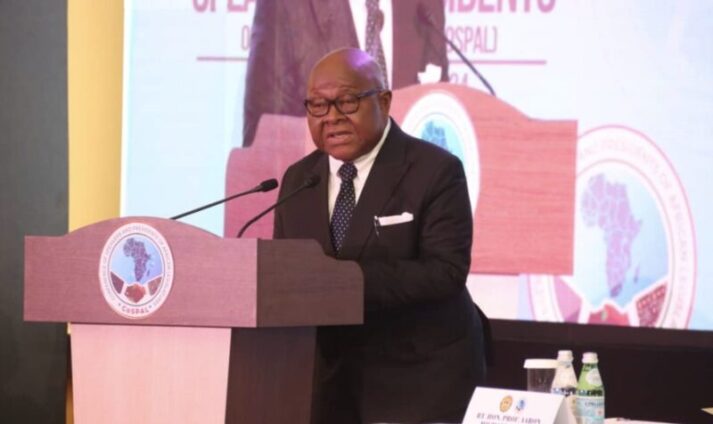
Professor Aaron Mike Oquaye, a former Speaker of Ghana’s Parliament, has called on African leaders to take advantage of the continent’s abundant rich natural resources to develop it.
He said for a long time, matters relating to the various developmental issues facing Africa had virtually been accepted as the exclusive preserve of the executives in their various countries.
Prof Oquaye made the call at the Second General Assembly of the Conference of Speakers and Presidents of African Legislatures (CoSPAL in Accra.
CoSPAL is the first permanent platform that seeks to mobilise and unite Speakers and Presidents of legislatures across the continent to support the agenda for Africa’s growth and sustainable development.
One of the core tasks of the two-day Conference in Accra is to consider and adopt the Draft Constitution submitted by the Interim Technical Working Group (ITWG), which was assigned that responsibility at the first General Assembly held in Abuja, Nigeria in May 2022.
Prof Oquaye said postponement, adjournment, or whatever, was also just to continue with the perennial issue of Africa’s indebtedness.
“And as we come from the experience of that conference, we want to reexamine ourselves as to how we, as legislators, are going to take charge of some of the things that touch and concern Africa the most,” Prof. Ocquaye said.
He said it was important that African countries faced the possible middle of the 21st century, to ask themselves, how do they make themselves able to manage their own economies? Declaring that “we can manage it by what we have.”
Citing Africa’s natural resources such as gold, diamond, bauxite, manganese, timber, cocoa and oil, Prof Oquaye reiterated the need for their harmonisation for Africa’s development.
Mr Alban Sumana Kingsford Bagbin, the Speaker of Ghana’s Parliament, rallied his fellow Speakers and Presidents of African Parliaments to step up efforts to combat poverty on the African continent.
“As Africans, we share a common destiny and face the common enemies of ignorance, poverty, and deprivation. Let us remember that no single country can address these challenges alone.
"We are politically, culturally and economically interconnected, and collective action is therefore necessary to overcome these challenges.”
Latest Stories
-
Mahama defends digital recruitment in security services, rejects claims of favouritism
22 seconds -
Electric Vehicle: Gov’t urges private sector investments into solar-powered charging stations
2 minutes -
SSNIT is strong and doing well – D-G reassures
12 minutes -
Police Special Operations Team withdrawn from Kumasi hours after anti-crime deployment
13 minutes -
Mahama affirms respect for Lincoln University despite withdrawal of honorary degree
17 minutes -
Mahama calls for unity over UN Reparations Resolution
23 minutes -
Government releases ¢11.6m to settle railway salary arrears – GRDA boss
23 minutes -
Levy cut threatens natural resource benefits – IEA
28 minutes -
Fertilizer Platform Ghana raises concerns over lack of clarity in Feed Ghana Programme
33 minutes -
Make cybersecurity core business infrastructure – Banks Association
37 minutes -
Vincent Assafuah slams gov’t over ‘zero funding’ for NYA, calls it a ‘generational betrayal’
42 minutes -
Volta ECG meets PURC over consumer’s concerns
47 minutes -
Gov’t to roll out electronic road toll system by fourth quarter of 2026
53 minutes -
Exim Bank resets to intensify Ghana’s export capacity
1 hour -
Deadly Aseseso hill crash sparks fresh road safety demands
1 hour