

Audio By Carbonatix
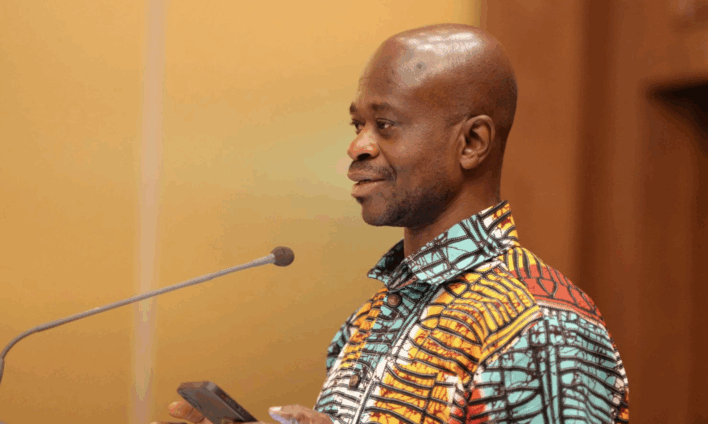
Africa’s participation in the global green transition must lead directly to industrialisation, value addition and strengthened economic sovereignty, Nana Dr Antwi-BoasiakoAmoah, Chair of the African Group of Negotiators (AGN) under the United Nations Framework Convention on Climate Change (UNFCCC), has stated.
He said the continent’s climate engagement should be anchored in green industrial development rather than in the continued export of raw materials.
“The question before us is no longer whether Africa will participate in the global green transition, but whether Africa will industrialise through that transition,” he said.
Nana Dr Amoah made the remarks at a high-level dialogue on Africa’s green industrialisation and climate diplomacy, held on the margins of the 39th Ordinary Session of the African Union Assembly of Heads of State and Government at the AU Headquarters in Addis Ababa, Ethiopia.
The event brought together representatives of the African Continental Free Trade Area (AfCFTA), the Green Climate Fund (GCF), the Climate Vulnerable Forum and other development partners.
He explained that the strategic vision of the AfCFTA was not only to boost intra-African trade, but also to shift the continent from an extraction-driven economic model to one rooted in value addition, industrial capacity and economic sovereignty.
According to the AGN Chair, Africa’s engagement within the UNFCCC process was increasingly transitioning from negotiation to implementation, with global climate rules now shaping investment flows, regional markets and industrial opportunities.
“Our engagement in the UNFCCC policy space is not abstract. It is about securing political recognition and shaping rules that must translate into investable pipelines and bankable projects,” he said.
Reflecting on outcomes from COP30, Nana Dr Amoah identified three priority areas for Africa: the Just Transition Mechanism, climate–trade dialogue and climate finance under Article 9.1 of the Paris Agreement.
On the Just Transition Mechanism, he stressed that Africa’s interpretation must extend beyond worker protection to encompass national development and shared prosperity.
“For Africa, a just transition must mean manufacturing solar panels, batteries and green hydrogen components on African soil. It must mean local beneficiation of critical minerals, supported by skills development and meaningful technology transfer,” he said.
He warned that a green transition that keeps Africa at the bottom of global value chains, limited to raw material exports, could not be considered just.
On trade, he noted that unilateral trade measures, carbon border adjustments and green subsidies were already reshaping global competitiveness and posing significant risks to African economies.
He emphasised that the AfCFTA offered a platform to aggregate regional markets and overcome scale challenges, but highlighted the need to safeguard policy space for green industrial strategies and differentiated transition pathways.
Turning to finance, Nana Dr Amoah underscored that Article 9.1 of the Paris Agreement clearly mandates developed countries to provide financial resources to developing countries.
“In an era of tight fiscal space, climate finance must be adequate, predictable and patient. It must address Africa’s high cost of capital and support debt sustainability,” he said.
He called for a move away from fragmented, project-by-project financing toward programmatic and regional investment platforms capable of transforming entire sectors and value chains.
Nana Dr Amoah noted that initiatives such as the Global Implementation Accelerator and the Belem Mission to 1.5 signalled a stronger focus on real-world delivery within the UNFCCC framework.
“The UNFCCC sends political signals that shape markets, investment decisions and institutional priorities. Those signals must reinforce Africa’s development objectives and advance a genuinely green industrial future,” he stated.
He reaffirmed the commitment of the African Group of Negotiators to ensuring that climate diplomacy strengthens Africa’s industrialisation agenda and long-term economic transformation.
Ambassador Ali Mohamed, Special Envoy for Climate Change for the Government of Kenya, said Africa’s high cost of capital and growing debt burden remained significant constraints on green industrialisation.
He noted that many African countries face borrowing costs far above global averages, making large-scale renewable energy and industrial projects difficult to finance.
“Without reforms to the global financial architecture, stronger credit enhancement mechanisms, and blended finance instruments that crowd in private investment, climate commitments will struggle to translate into bankable projects,” he said.
He added that ensuring affordable, predictable and patient capital was essential to aligning climate ambition with economic transformation.
Infrastructure and industrial capacity gaps, he said, threatened to limit Africa’s ability to capture value from the energy transition.
Expanding renewable energy generation, Ambassador Mohamed suggested, must be complemented with investments in transmission networks, storage, transport corridors, digital systems, skills development and technology transfer.
He said coordinated implementation under frameworks such as the AfCFTA would be crucial for aggregating markets, harmonising standards and building regional value chains capable of competing globally.
Latest Stories
-
Trump says he is considering firing US ambassador to Greece
28 minutes -
Man City bananas ‘brought fun back’, says Varadi
32 minutes -
Meta releases Muse Wonder AI models to challenge Anthropic and OpenAI
41 minutes -
Daily Insight for CEOs: The CEO as Chief Decision Maker
41 minutes -
Burnham had formal meeting with Man City chair while mayor
48 minutes -
Is Ghana producing too many lawyers? What is the best lawyer-to-citizen ratio?
50 minutes -
NDC sinking Ghana’s democracy with Emelia Agbenyo’s appointment – Miracles Aboagye
60 minutes -
Seedorf back in football as Corinthians head coach
1 hour -
Hincapié and Zubimendi injured in post-match training session
1 hour -
Fridges in French supermarkets hit by cyberattack
2 hours -
Qantas flight grounded after bedbug outbreak
2 hours -
Reality Zone with Vicky Wireko: International Day of the Girl, shaping today’s girl for tomorrow’s future – ZONTA Clubs lead the way
2 hours -
Global health must be led by countries, not designed for them – Mintah Akandoh
3 hours -
Mahama honoured at 2026 World Health Summit in Berlin for global health leadership
3 hours -
Breast cancer is not a death sentence – Besease Kontire Obaapanin, Magmina Foundation lead awareness campaign
3 hours