

Audio By Carbonatix
Behind the rising towers lies a silent crisis of sewage, drainage, water, and planning failure
Across many African cities today, skylines are changing rapidly: Glass towers are rising. Luxury apartments are multiplying. Commercial high-rise developments are appearing where low-density structures once stood.
Urban centres increasingly project the image of modernisation and economic progress. At first glance, this appears encouraging. After all, urban growth is often interpreted as a sign of development and investment confidence. But beneath the excitement of rising skylines lies a deeply uncomfortable question that too few African societies are asking honestly:
- Where are the expanded sewage systems?
- Where are the upgraded drainage networks?
- Where are the reinforced water supply systems?
- Where are the integrated transport corridors?
- Where are the modern waste management systems?
- Where are the power systems capable of supporting this vertical urban expansion sustainably?
Because the truth is difficult but unavoidable: What is wrong with us is not that we are building upward. What is wrong with us is that, in many cases, we are building upward without adequately strengthening what lies underneath.
NyansaKasa (Words of Wisdom):
“A skyline may impress the eye, but it is the invisible systems beneath it that determine whether a city survives.”
Interpretation:
Visible growth means little if the infrastructure supporting it remains weak or neglected.
We Have Begun To Confuse Construction With Development
Across many African urban centres, visible construction activity has increasingly become confused with genuine urban development. Cranes dominate city horizons. Concrete rises rapidly. Developers advertise luxury lifestyles and modern living experiences. Yet true urban development is not measured only by the height of buildings. It is measured by the strength, resilience, and sustainability of the systems supporting them. A twenty-storey building connected to a weak sewage network does not represent sustainable progress. A luxury apartment connected to unreliable drainage infrastructure does not represent urban maturity. High-rise growth without underground infrastructure planning simply transfers future risk to future generations. Many African cities are now experiencing exactly this contradiction. Population density is increasing vertically while infrastructure capacity remains dangerously stagnant.
NyansaKasa (Words of Wisdom):
“Civilisation is not defined by how high buildings rise, but by how well the systems beneath them function.”
Interpretation:
Modernity depends on invisible systems, not architectural appearance alone.
The Invisible Infrastructure Crisis Is Growing
The most dangerous urban crises are often invisible until they fail. Sewage systems do not attract political excitement the way skyscrapers do. Underground drainage tunnels rarely appear in glossy investment brochures. Wastewater treatment facilities are not photographed like luxury towers. Yet these invisible systems determine whether cities remain functional or descend into recurring crisis.
According to the United Nations, Africa is urbanising faster than any other region globally. By 2050, nearly 60 per cent of Africans are expected to live in urban areas. However, infrastructure investment continues to lag significantly behind urban population growth. In many African cities, sewage systems were originally designed decades ago for populations far smaller than current realities.
- Stormwater systems are overstretched.
- Informal drainage modifications worsen flooding.
- Water supply systems experience mounting pressure.
When high-density developments are added onto already-strained infrastructure systems without corresponding upgrades, the risks multiply quietly beneath the surface.
NyansaKasa (Words of Wisdom):
“A city does not collapse only when buildings fall. It also collapses when systems silently fail beneath them.”
Interpretation:
Infrastructure failure often begins underground long before it becomes visible above ground.
We Continue To Build Cities As Though Water, Waste, And Drainage Are Secondary Issues
Perhaps one of the most troubling aspects of urban expansion in parts of Africa is the tendency to treat underground infrastructure as an afterthought rather than the foundation of development. In several cities, high-rise developments emerge while drainage channels remain blocked, sewage systems remain inadequate, and roads remain heavily congested. Flooding has become increasingly common across parts of Lagos, Accra, Nairobi, Kinshasa, Johannesburg, and Dar es Salaam, partly because urban growth has outpaced drainage planning and environmental enforcement. Wetlands that once absorbed excess rainfall are paved over. Natural waterways are narrowed or encroached upon. High-density developments emerge in areas where supporting infrastructure was never designed for such pressure. Then, when floods occur, societies often describe them as natural disasters rather than planning failures.
NyansaKasa (Words of Wisdom):
“Nature often exposes the weaknesses that planning chose to ignore.”
Interpretation:
Environmental disasters frequently reveal human planning failures.
We Are Importing The Appearance Of Modernity Without The Discipline That Supports It
Modern cities are not sustained by architecture alone. They are sustained by disciplined long term planning. Singapore’s skyline did not emerge independently of its drainage systems, public transport planning, sewage infrastructure, and integrated urban governance. Dubai’s urban expansion was heavily supported by large scale infrastructure investment. Cities such as Tokyo, Seoul, and Copenhagen continuously modernise invisible systems alongside visible growth.
In contrast, some African urban centres are importing the appearance of modernity without investing proportionately in the invisible infrastructure that sustains modern urban life. The result is a dangerous imbalance.
- Beautiful buildings rise while roads deteriorate around them.
- Luxury apartments emerge while surrounding drainage systems fail during rainfall.
- Urban density increases while waste management systems remain weak.
This is not an argument against urban growth. Africa needs investment, modern housing, commercial expansion, and urban renewal. But growth disconnected from infrastructure resilience becomes fragile development.
NyansaKasa (Words of Wisdom):
“A modern building standing on outdated infrastructure is progress balanced on uncertainty.”
Interpretation:
Visible development becomes fragile when underlying systems remain weak.
Short Term Economic Interests Often Override Long Term Urban Planning
Another uncomfortable truth is that many African planning institutions remain politically and financially constrained. Developers seek approvals quickly. Cities seek investment.
Governments seek visible growth. But long term infrastructure upgrades are expensive, politically less visible, and often slower to deliver electoral excitement. As a result, construction approvals may move faster than infrastructure expansion.
- Sewage systems remain undersized.
- Road networks become overloaded.
- Electricity demand rises beyond existing capacity.
- Water pressure weakens.
- Waste collection systems struggle to cope.
Urban congestion intensifies, reducing productivity and quality of life. The African Development Bank estimates that Africa’s infrastructure financing gap remains between 68 billion and 108 billion dollars annually. This deficit directly affects urban resilience.
NyansaKasa (Words of Wisdom):
“When infrastructure investment lags behind urban ambition, cities eventually inherit expensive disorder.”
Interpretation:
Rapid growth without supporting infrastructure creates long term instability.
We Are Ignoring The Public Health Risks Beneath Urban Expansion
Weak sewage and drainage systems are not merely engineering concerns. They are public health concerns. Poor wastewater management contributes to water contamination, disease outbreaks, and environmental degradation. Flooded sewage systems increase exposure to cholera, typhoid, and other sanitation-related diseases. In several rapidly growing cities globally, sewage infrastructure was expanded aggressively alongside urban density growth. In parts of Africa, however, population density often rises far faster than sanitation investment. The consequences are cumulative:
Overflowing drainage systems
- Contaminated water bodies
- Flood-damaged communities
- Rising environmental stress
These are not isolated urban inconveniences. They are indicators of structural planning imbalance.
NyansaKasa (Words of Wisdom):
“A city that neglects sanitation eventually pays for it through public health crises.”
Interpretation:
Public health deterioration often begins with neglected infrastructure.
What Must Change If African Cities Are To Remain Liveable
Africa’s urban future cannot be sustained through vertical expansion alone. Several urgent shifts are necessary.
- First, infrastructure planning must precede or move simultaneously with major urban development approvals.
- High-density growth cannot continue independently of sewage, drainage, transport, and water capacity assessments.
- Second, governments must strengthen town and country planning institutions technically, financially, and politically.
- Planning enforcement cannot remain weak while cities expand aggressively.
- Third, infrastructure financing models must become more innovative.
- Public private partnerships, infrastructure bonds, and long term urban investment frameworks must support integrated urban systems rather than isolated projects.
- Fourth, environmental protection must become central to urban planning.
- Wetlands, natural drainage systems, and ecological buffers cannot continue being sacrificed for uncontrolled development.
- Fifth, African cities must prioritise underground infrastructure with the same seriousness given to visible architecture.
Because ultimately, sewage systems may not appear glamorous, but cities cannot function sustainably without them.
NyansaKasa (Words of Wisdom):
“The strength of a city is often hidden underground, not displayed in its skyline.”
Interpretation:
Urban resilience depends on invisible systems more than visible structures.
What Is Wrong With Us And Why We Keep Sustaining It
What is wrong with us is not that African cities are growing. Growth is natural. Urbanisation is inevitable. Development is necessary. What is wrong with us is that too often we pursue the appearance of modernity faster than we build the systems required to sustain it.
- We celebrate rising towers while ignoring ageing sewage systems.
- We approve dense developments while drainage systems remain inadequate.
- We admire skylines while invisible infrastructure quietly weakens beneath them.
And perhaps the deeper issue is psychological. In many societies, visible projects attract greater political and commercial attention than invisible systems. A skyscraper can be photographed. A sewage tunnel rarely can. Yet one attracts admiration while the other determines whether the city survives.
NyansaKasa (Words of Wisdom):
“Cities are not judged only by what rises above ground, but by what continues functioning beneath it.”
Interpretation:
Sustainable cities depend on invisible systems as much as visible architecture.
Conclusion
If Africa continues urbanising without proportionate infrastructure investment, many cities risk becoming vertically impressive but structurally fragile. The Africa we desire cannot be built on appearances alone. It must be built on resilient systems, disciplined planning, long-term thinking, and the humility to recognise that sustainable cities are sustained not only by what people see, but also by what responsible societies choose not to neglect.
Top of Form
Bottom of Form
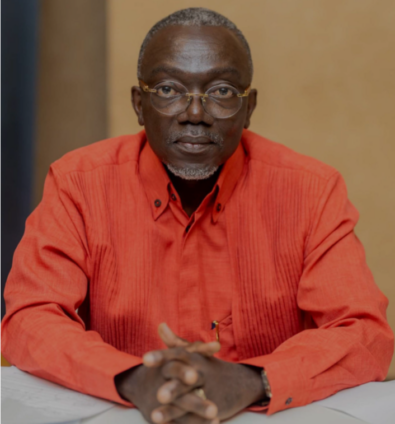
About Ing. Professor Douglas Boateng
Ing. Professor Douglas Boateng is a pioneering international industrial, manufacturing, and production systems engineer, governance strategist, and Pan-African thought leader whose work continues to shape boardroom thinking, supply chain transformation, and industrialisation across both the continent and globally. As Africa’s first appointed Professor Extraordinaire in Supply Chain Management, he has consistently championed the integration of procurement, value chain, industrialisation strategy, and governance into national and continental development agendas, aligning practice with purpose and long-term impact. An International Chartered Director and Chartered Engineer, he has received numerous lifetime achievement awards and authored several authoritative books. He is also the scribe of the globally acclaimed and widely followed daily NyansaKasa (Words of Wisdom), which continues to inspire reflection, accountability, and purposeful living among audiences worldwide. His work is driven by a simple yet powerful belief: Africa’s transformation will not come from rhetoric but from deliberate action, strong institutions, and leaders willing to build for future generations.
Latest Stories
-
Ghana housing finance conference adopts communiqué to improve affordable housing access
4 hours -
Special Initiatives Minister urges Wa Technical Institute to enrol more girls as EU-backed solar training lab opens
5 hours -
In the matter of my first year at the Bar
5 hours -
ActionAid Ghana calls for an end to child marriage, greater investment in girls’ rights
5 hours -
Newsfile to tackle World Cup visa scandal, beach demolitions, education strikes, BRICS bid
5 hours -
UK-Ghana Trade & Investment Summit: Trade Resource Centre to help businesses maximise UK-Ghana trade opportunities
6 hours -
Embassy of Denmark celebrates World Maritime Day
6 hours -
Linking LEAP to productive inclusion could cut extreme poverty by 2030 – UNICEF
7 hours -
Trade Ministry backs use of creative arts to rehabilitate prison inmates
7 hours -
Negotiations with government to continue despite strike suspension – GNAT
7 hours -
‘Ghana cannot afford to waste public resources; every cedi has a job’ – Ato Forson
7 hours -
Ghana expects economic boost as World Assemblies of God Congress brings 10,000 delegates to Accra
7 hours -
Joy in Nayilifong as Farouk Aliu Mahama donates 100kVA transformer to improve power supply
7 hours -
Chief Justice urges employers to tackle mental health stigma in workplaces
8 hours -
Analysis: Ghana’s yellow fever numbers reveal a gap between vaccination and protection
9 hours