

Audio By Carbonatix
An investigative analysis of how macroeconomic optics, policy failure, and institutional rot are conspiring to destroy the livelihoods of over five million Ghanaian smallholder farmers.
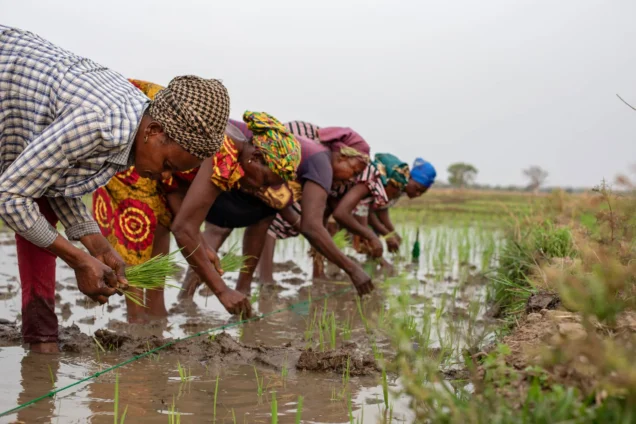
There is something deeply obscene happening in Ghana's fields right now. Across the Bono Region, the Volta Basin, the northern plains, and the rice belts of Pwalugu and Aveyime, farmers who rose before dawn, took out loans, applied fertiliser by hand, and poured entire seasons of their lives into the earth are watching their harvests rot not because the rains failed, not because there was disease or drought, but because the food market has been engineered to exclude them. Imported rice and maize, made artificially cheap by a surging Ghanaian cedi and an open-door import permit policy, are flooding the shelves. And the very institutions that should be buying from these farmers are either looking away or, worse, looking abroad. But in the farming communities, there is no corner being turned. There is only a wall and the government built it.
The Glut That Was Made, Not Grown
Let us be precise about what is happening, because the language of "glut" can be misleading. When economists speak of a glut, they typically mean excess production, a bumper harvest so large the market cannot absorb it. That is not what Ghana is experiencing. What Ghana has is an artificial glut: a crisis manufactured not by abundance but by policy choices that have systematically shut local farmers out of their own market.
Ghana's grain sector is on the brink of crisis, with more than 100,000 metric tonnes of maize and rice from the 2024 harvest still unsold, leaving farmers trapped in debt and threatening the survival of local processors. By November 2025, the situation had deteriorated catastrophically. According to the Peasant Farmers Association of Ghana (PFAG), more than 200,000 metric tonnes of unsold paddy rice and maize from the last season remain stuck in warehouses and on farms, with some rice still unharvested, leaving farmers exposed to bird invasions, bushfires, and mounting post-harvest losses. The Chamber of Agribusiness Ghana (CAG) painted an even grimmer picture: Ghana's grain sector faced an escalating crisis with over 1.2 million metric tonnes of rice, maize, and soya beans remaining unsold across farming communities. Citi Newsroom + 2
The financial cost is staggering. The Chamber of Agribusiness Ghana warned that the glut is destabilising the sector, with US$330 million equivalent to GH¢5 billion worth of paddy rice alone lying unsold. GBC Ghana
What caused this? According to the Chamber, the glut has been worsened by a surge in cheap imports and rampant smuggling of substandard grains, which has forced many farmers to sell below their production cost. The normal rhythm of agricultural commerce, harvest, store for three to five months, sell, then buy inputs for the next season, has completely broken down. The flour mills, the feed processors, and the institutional buyers that should be drawing down local stocks have instead turned to cheaper imported alternatives. Citi Newsroom
The disconnect between falling prices and rising hunger is a matter of survival. "I have bags of maize stacked to the ceiling, but no one is buying at a price that pays back my fertiliser loan," explains Naa Dei Okai, a farmer in the Bono Region. GBC Ghana
The Cedi's Dark Side: When a Nation's Success Becomes Its Farmers' Ruin
The appreciation of the Ghana cedi has been celebrated as a macroeconomic triumph. But what the government's press releases leave out is that a strong currency, in a country with a structurally weak productive base, can be just as destructive as a weak one, just for different people.
According to economist Prof. Godfred Bokpin, an overly strong cedi could deter Foreign Direct Investment and make imports cheaper than local goods, hurting domestic production. "A strong cedi may not work effectively in our favour because we have a weak productive sector," he warned. The Vaultz News
This is not abstract theorising. It is playing out in real time in Ghana's rice and maize markets. The national president of the Peasant Farmers Association of Ghana, Wepia Addo Awal Adugwala, says the stronger cedi has created a structural paradox: consumers, drawn by lower prices at the market, are choosing imported rice and other commodities over domestic alternatives, effectively routing jobs and productive investment out of the country at the expense of Ghanaian growers who are already operating under severe financial strain. News Ghana
While the stronger currency has lowered the cost of imported inputs like fertiliser, it has created a "price squeeze" for local producers, with farm-gate prices crashing even as rural incomes remain tied to the suppressed prices of unsold local crops. GBC Ghana
And beneath all this lies a structural injustice that no exchange rate movement can fix. Local farmers borrow at rates far above what their counterparts in major exporting countries pay, as banks classify agriculture as a high-risk lending category. Inputs, including fertiliser, agrochemicals, and tractor services, are largely imported and priced accordingly. By the time land rental and labour costs are factored in, the total cost of producing rice and other staples makes price competition with imports structurally unviable. He noted that farmers in some competing countries access agricultural credit at rates of nearly one per cent, a figure that bears no comparison to the lending environment facing Ghanaian smallholders. News Ghana
The Import Permit: A Minister's Pen, Wielded Against the Farmer
Here is the fact at the centre of this entire crisis, and it deserves to be stated with no ambiguity whatsoever: in Ghana, only the Minister of Food and Agriculture has the authority to grant import permits for milled rice and maize grain. Every bag of imported rice flooding the Ghanaian market, undercutting local farmers, exists because someone in that ministerial office signed off on it.
Even as local farmers struggle to sell their grains, importers continue to flood the market with cheap rice and maize. Weak border controls and poor enforcement of standards have made this worse, undermining national efforts to promote food self-sufficiency. Imani Africa
The Chamber of Agribusiness Ghana expressed alarm over alleged collusion between smuggling syndicates and corrupt border officials, stressing that the government is losing critical revenue through tax evasion. "This not only jeopardises farmer incomes but also weakens the domestic value chain, making Ghana increasingly dependent on foreign imports and eroding food sovereignty," the Chamber noted. GBC Ghana
The National Seed Trade Association has been explicit about who must be held to account. Its president called on Minister Eric Opoku to issue a directive restricting the purchase of imported rice, especially for government institutions, and to promote Ghana-grown rice. He warned that the financial muscle of the importing cabal makes this a political fight, not merely a technical one, adding that "the guys who are importing have the financial muscle." Ghanamma
Meanwhile, the Chamber of Agribusiness Ghana has called for nothing less than a moratorium. CAG proposed a three-month moratorium on rice imports, the establishment of a Strategic Grain Reserve Procurement Programme to purchase surplus produce directly from farmers, and a five-year Ghana Rice Production Strategy with expanded irrigation infrastructure. Ghanamma
None of this has happened. Instead, the minister who speaks movingly about smallholder farmers at international forums, Minister Eric Opoku, addressing the Third General Assembly of the World Farmers Markets Coalition in Rome, highlighted the crucial role of smallholder farmers and noted that about 80 percent of Ghana's farming population consists of smallholder farmers who contribute significantly to the country's food security, presides over a ministry that continues to grant import permits for the very commodities those farmers grow, while they sit on mountains of unsold grain. GBC Ghana
The cognitive dissonance is breathtaking. The contradiction is policy.
The Feed Ghana Phantom: Grand Words, Absent Action
When the government launched its flagship "Feed Ghana Programme" in April 2025, it was presented as a transformative vision. The programme aimed to enhance local agricultural production, minimise reliance on food imports, and create sustainable job opportunities, with key features including establishing farmers' service centres, promoting grains and legumes development, and introducing cutting-edge technologies. Ministry of Foreign Affairs
The Minister himself acknowledged at the programme launch that Ghana's heavy reliance on food imports, totalling over $2 billion per year, with poultry alone accounting for $300 million, places the country at risk of external market fluctuations and currency instability. Ministry of Foreign Affairs
And yet, even as the ministry announced a programme to reduce food import dependency, import permits for rice and maize kept flowing. The season turned, and farmers who planted in hope are sitting on empty fields and mountains of old-season grain with no buyers.
The NAFCO Black Hole: Where Did the Money Go?
The government, under pressure from farmers and agribusiness groups, released funds to the National Food Buffer Stock Company (NAFCO) to intervene in the grain market. The amounts announced were significant: an initial GH¢100 million, followed by a further GH¢100 million. In the 2026 Budget Statement, the government directed an emergency release of GH¢200 million to NAFCO, which also set a floor price of GH¢5 per kilogram for paddy rice to protect farmer incomes. GBC Ghana
The money was announced. The floor prices were set. And then, nothing the farmers could see or touch.
Farmers reported they had not seen any real purchases by approved buying companies. According to the PFAG, there was no information or data on which districts benefited, raising serious concerns about accountability and transparency. Business Day Ghana
The PFAG called on NAFCO to publish a list of contracted companies, indicating purchase locations and quantities. Farmers wanted direct access to aggregators or millers for timely lifting of their grains, demanding clear timelines and transparency. Adomonline
If the government allocated GH¢200 million to buy local grain, and local farmers report they have seen no buyers, the question must be asked plainly: Did this money flow to imported, cheaper alternatives instead of local farmers? Is this how the procurement budget that was supposed to rescue smallholder farmers ended up reinforcing the very import cycle that is destroying them?
The historical record of NAFCO does not provide reassurance. NAFCO's former Chief Executive Officer and his wife were arrested and prosecuted for the alleged embezzlement of GH¢78 million, funds earmarked for national food programmes and buffer stock maintenance, with investigations revealing a web of fraudulent transactions spanning several years. Accra Street Journal
Most damning of all: after fifteen years of existence, NAFCO only established its first legally mandated audit committee in October 2025, with its CEO acknowledging that prior to this, the company did not even have an internal auditor, a major governance gap that exposed the company to operational lapses. Graphic Online
Civil society organisations confirmed the unlawful diversion of over GH¢78.2 million in funds earmarked for national food programmes, noting that "these cases don't represent isolated errors, they expose institutional vulnerabilities in our budget-execution systems and demonstrate that access to data alone is insufficient when citizens cannot trace how funds move, who is accountable, or whether any action follows." Ghana
This is the institution that Ghana's five million smallholder farmers are now depending on to save them. A fifteen-year-old institution that, until last year, had never once held a mandatory audit. An institution whose former leadership is before the courts for embezzlement. An institution whose proclaimed procurement of local grain has produced no visible benefit in the farming communities it was designed to serve.
Eight Million Hungry in a Nation Swimming in Grain
Perhaps the most damning statistical indictment of this entire policy failure comes from AGRA's November 2025 Food Security Monitor. While national harvests are surging, 23.96 per cent of Ghanaians, approximately 8 million people, now struggle with insufficient food consumption. GBC Ghana
The Ghana Statistical Service itself reports food insecurity at 38.1 per cent as of Q3 2025, an increase of 2.8 percentage points from Q1 2024, even as food inflation was falling. Cheaper food prices on paper have not translated into food security in practice. Ghana Statistical Services
The statistical optics and the lived reality have completely diverged. The GSS Government Statistician acknowledged this plainly: "Lower inflation does not mean lower prices. Prices are still high; they are simply rising more slowly." And for farmers, lower farm-gate prices do not mean economic relief. They mean ruin. Modern Ghana
Food prices and utility costs were the biggest drivers of Ghana's annual inflation in 2025, accounting for a combined 66.3 per cent of overall price increases, with food and non-alcoholic beverages alone contributing 52.3 per cent to total inflation, making it the single largest driver of rising prices. Meanwhile, the farmers producing that food are being crushed. The system is extracting value from both ends, charging consumers more and paying producers less. MyJoyOnline
The Coming Famine Is Being Planted Now
This crisis has a time dimension that makes it even more alarming than its present scale suggests. The farmers who failed to sell last season cannot service their loans. Neither group can easily justify planting next season.
The PFAG has warned explicitly: "Without urgent intervention, many farmers, particularly the youth, may abandon cultivation next season due to growing frustration and financial distress." Thebftonline
Many farmers are already planning production cuts for next season to avoid further debt, a move that could flip today's surplus into a future shortage. GBC Ghana
Some mills and processing plants are already operating far below capacity, while others have shut down completely due to a lack of sales. When those mills close permanently, the value chain collapses, and no amount of future production will restore it quickly. GBC Ghana
The Verdict
The government of Ghana, its Minister of Food and Agriculture, and the National Food Buffer Stock Company owe the public clear answers to a set of unambiguous questions that cannot be deflected with press releases and policy launches:
How many import permits for rice and maize have been issued since January 2025, and to whom? What quantities do those permits authorise, and when were they signed? What is the timeline for NAFCO's GH₵200 million procurement? Which districts have actually received payment, and what volume of locally produced grain has been purchased? Why are flour mills and feed processors purchasing imported grain instead of local produce, and has the ministry used its regulatory authority to mandate otherwise?
A minister cannot travel to Rome to champion smallholder farmers and return home to sign import permits that destroy them. A buffer stock company cannot absorb hundreds of millions of cedis in government funds and leave farmers unable to identify a single buyer in their district.
The food glut should be a wake-up call, not just for the government but for all stakeholders in the sector. Agriculture is no longer just about growing food; it is about managing value chains efficiently from farm to market. Imani Africa
Ghana's farmers did not fail their country. Their country failed them, at the market, at the border, in the ministry's permit office. The rot in Ghana's agriculture is not in the soil. It is in the governance. And until the government reverses course, suspending import permits, mandating institutional procurement from local sources, and enforcing transparency at NAFCO.
The statistics will look better. The cedi will be strong. And in the fields of Bono, in the paddy belts of the Volta, across the northern breadbasket, farmers will keep looking at bare soil and unsold grain.
Latest Stories
-
Ghana explores centre of excellence for hearing, communication and cochlear implant care
42 minutes -
Schizophrenia-related disorders lead mental health cases recorded in Ghana
1 hour -
Dutch authorities enlist Ghana in hunt for fugitive drug lord Bolle Jos
1 hour -
Ghana housing finance conference adopts communiqué to improve affordable housing access
6 hours -
Special Initiatives Minister urges Wa Technical Institute to enrol more girls as EU-backed solar training lab opens
6 hours -
In the matter of my first year at the Bar
7 hours -
ActionAid Ghana calls for an end to child marriage, greater investment in girls’ rights
7 hours -
Newsfile to tackle World Cup visa scandal, beach demolitions, education strikes, BRICS bid
7 hours -
UK-Ghana Trade & Investment Summit: Trade Resource Centre to help businesses maximise UK-Ghana trade opportunities
7 hours -
Embassy of Denmark celebrates World Maritime Day
7 hours -
Linking LEAP to productive inclusion could cut extreme poverty by 2030 – UNICEF
9 hours -
Trade Ministry backs use of creative arts to rehabilitate prison inmates
9 hours -
Negotiations with government to continue despite strike suspension – GNAT
9 hours -
‘Ghana cannot afford to waste public resources; every cedi has a job’ – Ato Forson
9 hours -
Ghana expects economic boost as World Assemblies of God Congress brings 10,000 delegates to Accra
9 hours