

Audio By Carbonatix
The North East Region has emerged as the epicentre of multidimensional poverty in Ghana, with six districts in the region recording the highest poverty incidences in the country.
This is according to a report released by the Ghana Statistical Service on Monday, May 18.
Yunyoo Nasuan District in the Northeast Region recorded the highest multidimensional poverty incidence in 2025, with 51.6 percent of its population experiencing multiple deprivations simultaneously, the report revealed.
At the other end of the spectrum, Ayawaso North Municipal in the Greater Accra Region recorded the lowest poverty incidence at just 5.5 percent.
The release marks the first time in Ghana's history that comparable multidimensional poverty estimates have been produced for all 261 districts consistently over multiple years, a milestone the Government Statistician described as a turning point for decentralised planning, poverty targeting, and evidence-based policymaking.
Encouraging progress, but deeply uneven
Out of Ghana's 261 districts, 250 recorded reductions in multidimensional poverty between 2021 and 2025, demonstrating that investments in education, healthcare, social protection, infrastructure, and livelihoods can make a difference.
However, the report also reveals that progress is deeply uneven. The gap between the highest and lowest districts is more than 46 percentage points.
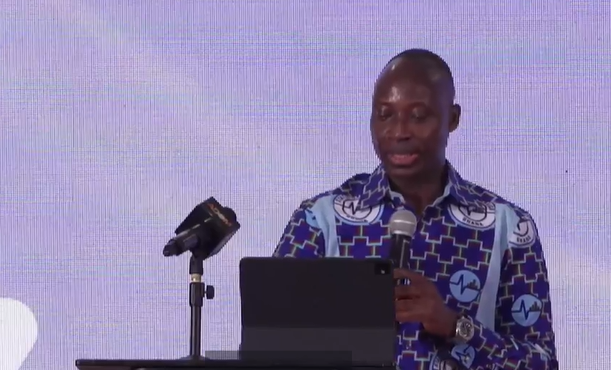
"This is a powerful reminder that where a person lives in Ghana still significantly shapes their opportunities and quality of life," said Dr. Alhassan Iddrisu, the Government Statistician, while delivering his welcome remarks at the launch held at the Alisa Hotel in Accra on Monday (May 18).
The evidence shows that poverty remains concentrated mainly in parts of the North East, Northern, Oti, Savannah, Upper East, Upper West, and Bono East regions. The six districts with the highest poverty incidences in 2025 are all located in the North East Region.
Success stories
Some districts achieved remarkable progress. Wa West District in the Upper West Region reduced multidimensional poverty from 61.9 percent in 2021 to 24.0 percent in 2025, representing the largest improvement nationally. Sekyere Afram Plains in the Ashanti Region also reduced poverty dramatically from 50.5 per cent to 13.5 per cent within the same period.
"These districts show that meaningful progress can happen, even in places that once faced very high poverty levels. We must study what worked in these districts and apply the lessons everywhere," Dr. Iddrisu urged.
Where poverty worsened
However, the report also identifies districts where poverty worsened. Guan District in the Oti Region recorded the largest increase in multidimensional poverty, rising from 28.1 percent in 2021 to 34.8 percent in 2025. Some districts also recorded only marginal improvements.
"This tells us clearly that progress cannot be assumed. It must be monitored, sustained, and strengthened continuously," the government statistician warned.
What is multidimensional poverty?
Dr. Iddrisu explained that poverty is not only about income. Multidimensional poverty means that people experience several forms of deprivation at the same time—such as little or no education, poor housing, lack of access to clean water or sanitation, inability to find decent work, or inability to access healthcare.
"Multidimensional poverty measures whether people are able to live healthy, productive, safe, and dignified lives. A household may earn some income and still face serious deprivation in education, health, housing, sanitation, electricity, nutrition, and employment opportunities," he said.
Methodology
The estimates were produced using internationally accepted small area estimation techniques, combining data from the 2021 Population and Housing Census, the 2022 to 2024 Annual Household Income and Expenditure Survey, and the 2025 Quarterly Labour Force Survey across thirteen well-being indicators. The result is the most detailed and comprehensive district-level poverty evidence ever produced in Ghana.
Tool for parliament, assemblies, and citizens
The Government Statistician emphasised that the district poverty rankings provide Parliament with powerful evidence to strengthen budget debates, improve oversight, guide constituency development priorities, and ensure that national resources reach districts with the greatest levels of deprivation.
"The value of this ranking is not in naming districts. The value lies in guiding action. These rankings should help the government target interventions better, help metropolitan, municipal, and district assemblies improve planning and budgeting; help Parliament strengthen oversight; help development partners align support with districts facing the greatest need; help businesses identify underserved communities where investments can create jobs and improve livelihoods; and help citizens demand accountability backed by evidence," he stated.
Individual fact sheets for every district
The Ghana Statistical Service has released not only the national district ranking but also individual poverty fact sheets for all 261 districts. Each fact sheet provides detailed evidence on poverty trends over time, the number of multidimensionally poor people, poverty intensity, the contribution of education, health, living conditions, and employment to poverty, the key drivers of deprivation, and practical recommendations for action.
The fact sheets are publicly available on the Ghana Statistical Service website.
A national responsibility
Dr. Iddrisu concluded with a clear message: poverty reduction must move from broad national discussions to precise district-level action. Districts falling behind must receive urgent attention. Districts making progress must be supported to sustain gains. Districts that have succeeded must be studied so that their lessons can guide national policy.
"Let us therefore use this evidence boldly. Let us target resources where deprivation is deepest. Let us strengthen district planning with data. Let us align budgets with evidence. Let us monitor results honestly. And above all, let us ensure that no district and no community is left behind in Ghana's development journey," he said.
The Government Statistician also acknowledged the Government of Ghana and the Ministry of Finance for their unwavering support and congratulated the Minister for Finance, Dr. Cassiel Ato Baah Forson, for his leadership in guiding Ghana to complete the three-year IMF-supported Extended Credit Facility programme.
Latest Stories
-
Special Initiatives Minister urges Wa Technical Institute to enrol more girls as EU-backed solar training lab opens
5 minutes -
In the matter of my first year at the Bar
17 minutes -
ActionAid Ghana calls for an end to child marriage, greater investment in girls’ rights
22 minutes -
Newsfile to tackle World Cup visa scandal, beach demolitions, education strikes, BRICS bid
46 minutes -
UK-Ghana Trade & Investment Summit: Trade Resource Centre to help businesses maximise UK-Ghana trade opportunities
1 hour -
Embassy of Denmark celebrates World Maritime Day
1 hour -
Linking LEAP to productive inclusion could cut extreme poverty by 2030 – UNICEF
2 hours -
Trade Ministry backs use of creative arts to rehabilitate prison inmates
2 hours -
Negotiations with government to continue despite strike suspension – GNAT
2 hours -
‘Ghana cannot afford to waste public resources; every cedi has a job’ – Ato Forson
2 hours -
Ghana expects economic boost as World Assemblies of God Congress brings 10,000 delegates to Accra
3 hours -
Joy in Nayilifong as Farouk Aliu Mahama donates 100kVA transformer to improve power supply
3 hours -
Chief Justice urges employers to tackle mental health stigma in workplaces
4 hours -
Analysis: Ghana’s yellow fever numbers reveal a gap between vaccination and protection
4 hours -
Education Ministry welcomes suspension of teachers’ strike
4 hours