

Audio By Carbonatix
Across the continent, Africa is witnessing a profound political contradiction. Elections are held regularly in many countries, constitutions are celebrated, regional institutions continue to issue declarations on democracy and governance, and governments increasingly speak the language of reform, inclusion, and accountability.
Yet beneath these formal structures lies a growing crisis of legitimacy. Citizens are asking difficult questions: Are African countries truly becoming democratic states rooted in social contracts with their people, or are many merely territorial administrations struggling to maintain authority over fragmented societies?
This distinction between “African states” and “states in Africa” may appear semantic, but it goes to the heart of the continent’s democratic future. An African state should represent a political community shaped by legitimacy, shared identity, public trust, and accountable governance akin to the African Ubuntu principles. It is a state that derives its authority not simply from inherited colonial borders or coercive institutions, but from the consent, aspirations, and participation of its people.
This distinction becomes even more important when viewed through the historical origins of the modern African state itself. Many of the states that emerged across Africa were not organic political communities that evolved through negotiated social contracts among their peoples.
Rather, they were colonial constructions created primarily to serve imperial administrative and extractive interests. Borders were drawn externally with little regard for existing political systems, cultural identities, economic realities, or historical relationships among communities.
The colonial state was therefore not designed to produce citizenship, democratic accountability, or inclusive governance. Its principal objectives were control, extraction, and order. Independence transferred political authority to African elites, but in many cases the inherited structures of the state remained largely intact. As a result, many postcolonial governments inherited institutions that were territorially defined but socially disconnected from citizens.
This colonial legacy continues to shape governance crises across the continent today. In several countries, the state is still perceived less as a collective public institution and more as an instrument for elite competition, patronage distribution, coercion, and access to resources.
The struggle in many African countries has therefore not simply been about democratizing politics, but about transforming colonial-era states into legitimate African states rooted in social legitimacy and citizen ownership. By contrast, a “state in Africa” merely exists geographically on the continent while remaining disconnected from citizens socially, politically, and economically. Such states often preserve the external architecture of sovereignty but struggle internally with legitimacy, inclusion, and democratic accountability. The challenge facing Africa today is that many political systems remain trapped between these two realities.
For decades, the dominant international narrative about democracy in Africa focused heavily on transitions: military to civilian rule, one-party systems to multiparty elections, constitutional reforms, and electoral cycles. Progress was measured by the number of elections conducted rather than the quality of governance produced. While these transitions were important, they often failed to address the deeper structural crisis of statehood itself.
This explains why democratic regression today is occurring even in countries that once appeared institutionally stable. The erosion of public trust is not merely about elections; it reflects deeper frustrations over exclusion, inequality, corruption, elite capture, unemployment, insecurity, and the widening distance between governments and citizens.
Across the continent, young people increasingly feel politically orphaned. Africa’s median age is below twenty, yet many political systems remain dominated by aging elites who continue to recycle old political bargains and patronage networks. Civic spaces are shrinking in some countries, opposition voices are criminalized, and constitutional manipulation is normalized under the language of stability.
At the same time, coups have re-emerged in parts of West and Central Africa, revealing a dangerous reality: in societies where democratic institutions lose legitimacy, military interventions can wrongly present themselves as corrective alternatives. While unconstitutional changes of government should never be normalized, the unconstitutional retention of power must also be criminalized. The popularity of some military takeovers reflects the depth of citizen frustration with failed civilian governance. This moment therefore requires more than defending existing democratic institutions; it demands rethinking the democratic project itself.
Africa’s democratic future cannot simply be about preserving institutions that citizens no longer trust. It must instead focus on rebuilding legitimacy between states and societies. The future of democracy in Africa will depend less on procedural compliance and more on whether governance systems can genuinely deliver dignity, justice, opportunity, participation, and security. This is where the conversation must shift from “democratic transitions” to “democratic futures.”
Democratic futures require moving beyond the inherited governance models that were often designed primarily for extraction, central control, and elite management. Many postcolonial African states retained these structures with limited transformation. As a result, governments often remain physically present but socially absent. They are visible through security institutions and taxation systems, yet weak in delivering public goods or fostering inclusive citizenship.
Reimagining democratic futures means building states that citizens experience not as distant authorities but as legitimate public institutions responsive to collective needs. It also requires expanding the democratic imagination itself. Democracy cannot be reduced to elections every four or five years. It must encompass economic justice, civic participation, digital freedoms, local governance, gender inclusion, intergenerational leadership, and social accountability.
As a Reminder
The future African state must therefore become developmental, participatory, and citizen centred.
Regional institutions such as the African Union and subregional bodies also face an important test. Too often, continental responses to democratic crises focus narrowly on unconstitutional changes of government while paying insufficient attention to constitutional abuses by elected governments. Selective accountability weakens public confidence in democratic norms.Africa’s governance institutions must become more consistent in defending democratic principles, regardless of whether threats come from military juntas or civilian administrations. Democracy loses credibility when constitutional manipulation is tolerated but coups are condemned in isolation.
Civil society, youth movements, women’s groups, independent media, religious institutions, the creatives, and grassroots actors will also play a decisive role in shaping democratic futures. Across the continent, some of the most innovative democratic energy is emerging outside formal political institutions. From digital accountability campaigns to community-based organizing and civic technology platforms, citizens are redefining participation beyond traditional party politics. This transformation should not be seen as anti-state. Rather, it represents an attempt to reclaim the state itself.
Ultimately, the question confronting Africa is not whether democracy will survive. The deeper question is what kind of democracy will emerge.
Will African countries continue operating as states in Africa that are territorially sovereign but politically disconnected from their citizens? Or can they evolve into genuinely African states rooted in legitimacy, inclusion, and democratic accountability?
The answer will shape not only the future of governance on the continent, but also Africa’s broader development, peace, and social cohesion in the decades ahead. Africa’s democratic future will not be secured merely through elections or constitutional formalities. It will be secured when citizens once again believe that the state belongs to them, works for them, and reflects their collective aspirations. That is the democratic future worth building.
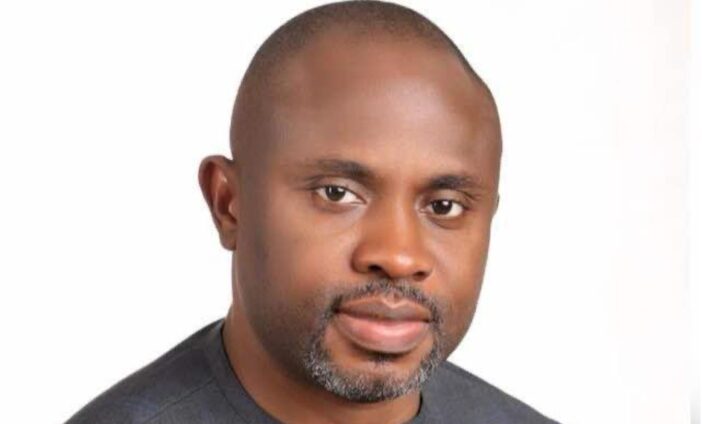
By: Chukwuemeka B. Eze, Director, Democratic Futures in Africa, Open Society Foundations
Latest Stories
-
Ghana, Germany deepen cooperation on railways, labour mobility
1 minute -
Huge crowds greet Pope in Paris for open-air Mass
12 minutes -
‘I never said I’ll declare a state of emergency’ – President Mahama on galamsey
52 minutes -
Bobby Banson condemns EOCO’s attempted arrest of Nana Agyei Baffour Awuah
1 hour -
When Kumasi begins to look like somebody is in charge
1 hour -
Parliamentary probe into cocaine seizure would be a waste of time – Inusah Fuseini
1 hour -
Cocaine seizure: Focus on Ghana’s reputation, not partisan blame – Osae-Kwapong
2 hours -
Two Invitations, Three Interrogations: Did Baffour Awuah tell the whole story?
2 hours -
Drug cartels may be seeing Ghana as easy route – Lenin Anane Agyei
3 hours -
Ghana risks gaining notoriety as drug-trafficking hub – Bobby Banson
3 hours -
Government dismissed my drug trafficking warning, then tried to arrest me – Ntim Fordjour
3 hours -
Day Two: 3rd Republic Bank-JoyNews Habitat Fair Clinic underway at Junction Mall
3 hours -
NACOC addressing inherited gaps in fight against drug trafficking – Deputy Director-General
3 hours -
Taekwondo goes to school as GTF launches five-region youth campaign
3 hours -
The issues Mourinho is struggling to fix at Real Madrid
3 hours