


Audio By Carbonatix
Ghana has secured a $40 million diaspora-led investment commitment aimed at accelerating enterprise development across Africa, with the country selected as the launch point for a broader continental growth strategy unveiled at an economic dialogue in Atlanta.
The funding, under the African Diaspora Venture Fund, was announced by Jacques Nack Ngue of JNN Group Inc. and is expected to support businesses in fintech, agriculture, and workforce development across African markets.

Ngue said the initiative seeks to transform diaspora engagement from traditional remittance flows into structured investment vehicles that can create jobs, expand enterprise, and deliver long-term economic returns.
“The next decade of African growth will be built by the diaspora, not just for the diaspora,” he said.
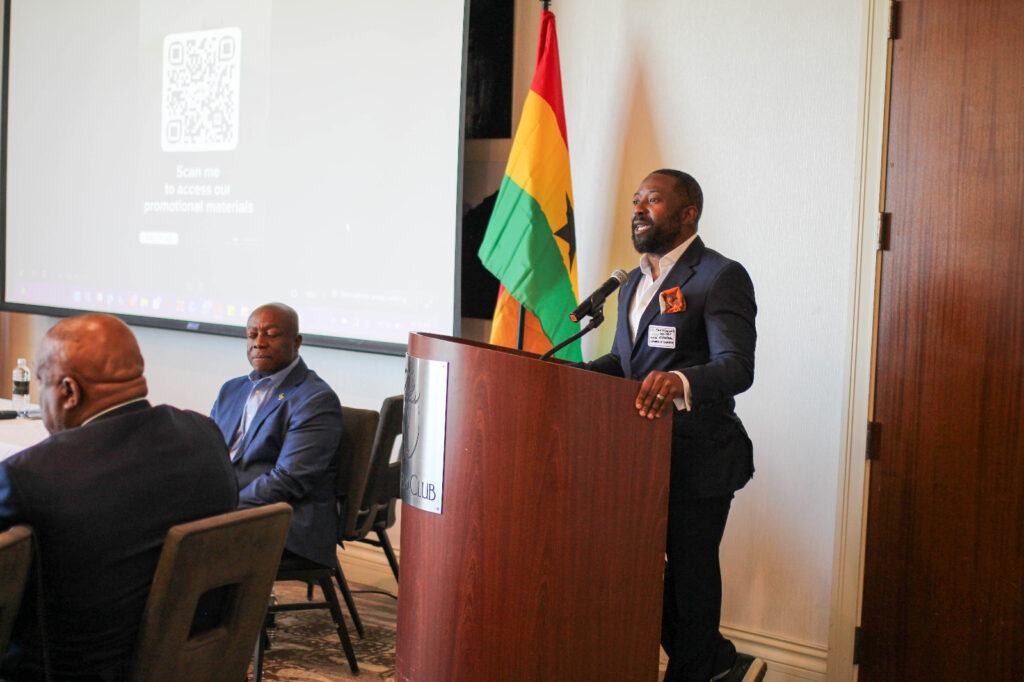
He explained that the fund will focus on directing capital into productive sectors, particularly agriculture and labour systems, where scalable investments can generate a broad economic impact. He noted that one of the fund’s portfolio companies, Quantum, has already enrolled more than 167,000 agricultural and forestry workers across Africa.
Ghana was selected as the entry point for the fund due to what investors described as its political stability, democratic governance, and predictable investment environment.
“Stability is the new alpha,” Ngue said, stressing that global investors are increasingly prioritising markets with policy consistency and institutional credibility.
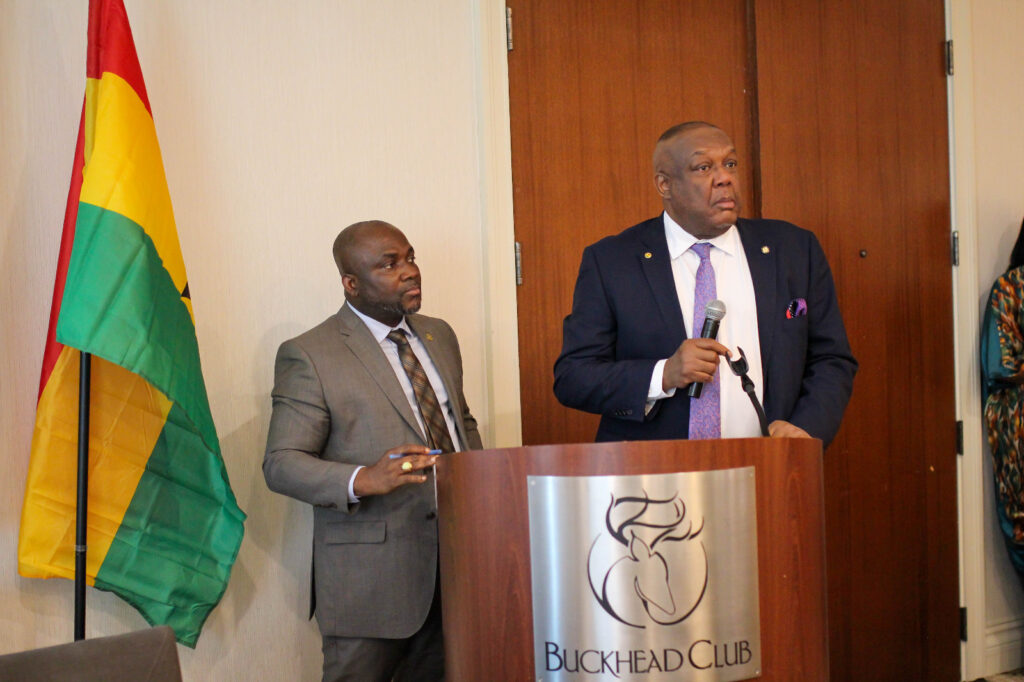
At the dialogue, Victor Emmanuel Smith, Ghana’s Ambassador to the United States, highlighted the country’s strategic sectors for investment, including agriculture, fintech, aviation, logistics, manufacturing, and education.
He said Ghana’s reputation for democratic stability and investor confidence continues to position it as a preferred destination for long-term capital on the continent.
The event also spotlighted Ghana’s energy sector, with officials from Cen Power Generation Company outlining ongoing reforms and opportunities for investors.

Nana Brew-Butler said stronger collaboration between government and private sector players has renewed confidence in the country’s power sector, helping attract both international and African investors.
According to him, 68 per cent of Cen Power’s ownership is now in African hands, reflecting growing local participation in the sector.
He added that the company currently contributes about 12 per cent of Ghana’s dependable electricity supply and serves more than one million households, reinforcing its role in national development.
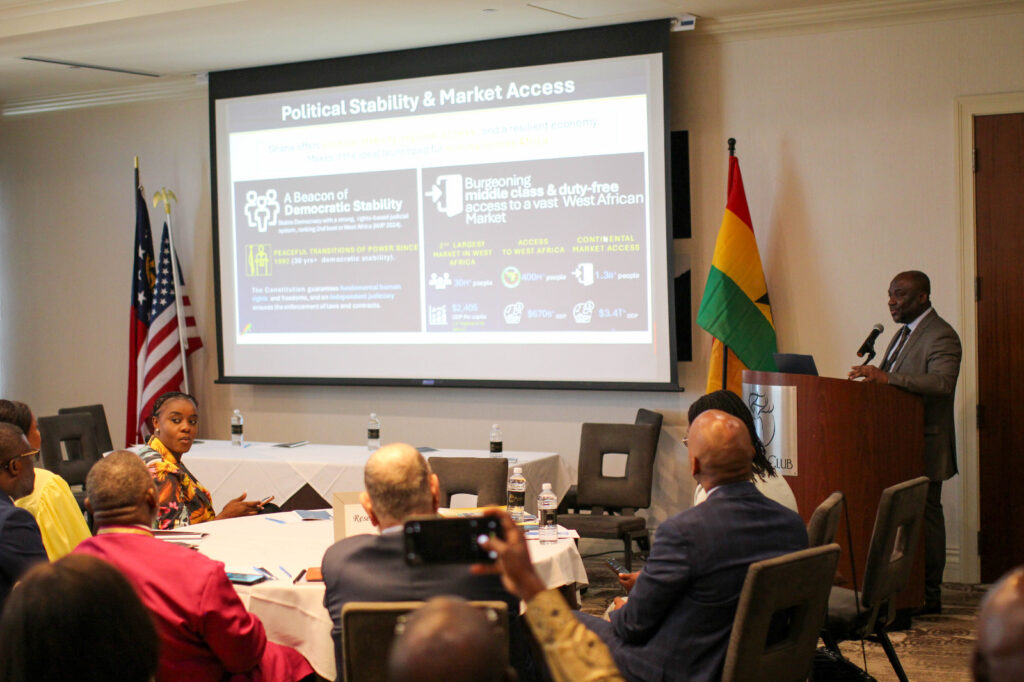
The Atlanta engagement concluded with renewed calls for stronger Ghana–U.S. trade ties and expanded diaspora-led investments to support industrial growth, innovation, and job creation across Ghana and the wider African continent.
Latest Stories
-
Ghana, Germany deepen cooperation on railways, labour mobility
2 minutes -
Huge crowds greet Pope in Paris for open-air Mass
12 minutes -
‘I never said I’ll declare a state of emergency’ – President Mahama on galamsey
53 minutes -
Bobby Banson condemns EOCO’s attempted arrest of Nana Agyei Baffour Awuah
1 hour -
When Kumasi begins to look like somebody is in charge
1 hour -
Parliamentary probe into cocaine seizure would be a waste of time – Inusah Fuseini
1 hour -
Cocaine seizure: Focus on Ghana’s reputation, not partisan blame – Osae-Kwapong
2 hours -
Two Invitations, Three Interrogations: Did Baffour Awuah tell the whole story?
2 hours -
Drug cartels may be seeing Ghana as easy route – Lenin Anane Agyei
3 hours -
Ghana risks gaining notoriety as drug-trafficking hub – Bobby Banson
3 hours -
Government dismissed my drug trafficking warning, then tried to arrest me – Ntim Fordjour
3 hours -
Day Two: 3rd Republic Bank-JoyNews Habitat Fair Clinic underway at Junction Mall
3 hours -
NACOC addressing inherited gaps in fight against drug trafficking – Deputy Director-General
3 hours -
Taekwondo goes to school as GTF launches five-region youth campaign
3 hours -
The issues Mourinho is struggling to fix at Real Madrid
3 hours