

Audio By Carbonatix
Ghana’s mobile usage has surged in recent years, driven by smartphone adoption, digital banking, and many online services. This rapid growth has placed enormous pressure on existing base stations, especially in cities like Accra, Bolgatanga, Kumasi, Sunyani, Tamale and Takoradi. This has led to poor mobile network quality, resulting in everyday frustration. Dropped calls, slow internet speeds, and unstable mobile money transactions continue to affect both urban and rural users, despite years of investment in telecommunications infrastructure.
While macro towers remain the backbone of national coverage, they are increasingly stretched beyond optimal capacity in high-density areas. The result is familiar to many users: congestion, especially during peak hours, inconsistent signal strength, and slow data speeds.
As complaints grow louder, one solution is often repeated in public debate to build more telecom masts. However, research suggests that simply doubling the number of large cellular towers may not solve the problem and could even deepen existing inefficiencies. Beyond technical costs, macro mast expansion comes with real-world challenges such as land acquisition disputes, zoning restrictions, high maintenance costs, and increasing resistance from communities concerned about aesthetics and environmental impact. Telecom networks are not just about coverage; they are about capacity, distribution, and intelligent load management. When too many users connect to a single macro tower, performance drops, even if more towers exist nearby. This is where Ghana’s current challenge becomes clear. The issue is not only a lack of infrastructure, but also inefficient network distribution.
In dense urban areas, large towers struggle to handle concentrated demand. In rural areas, they may be too far apart to provide stable indoor connectivity. Simply doubling them does not automatically fix these structural imbalances. As a result, a shift toward heterogeneous networks, where different types of cells work together to distribute traffic more efficiently, is needed.
Telecommunication companies relying solely on large masts is the solution. In the twenty-first century, modern telecom systems increasingly use smaller, low-power cells to strengthen coverage where it is most needed. A smarter, layered network system that combines existing traditional masts with smaller, more efficient technologies, such as microcells, is more prudent.
Microcells are compact base stations designed to handle moderate traffic over smaller geographic areas. In Ghana, they could be deployed along busy streets, commercial districts, transport terminals, and university campuses. The microcells operate by offloading traffic from overloaded macro towers, thereby reducing congestion and improving overall network stability in high-demand zones. The future lies in smarter design, where smaller cells work alongside existing towers to deliver stronger, more stable connectivity.
For Ghana’s digital ambitions to succeed, the focus must shift from how many towers are built to how well the entire network is engineered to serve users in real time.
-
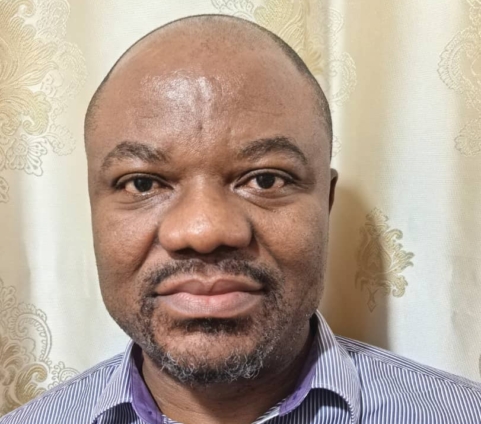
Dr John Kwao Dawson/Sunyani Technical University
Latest Stories
-
Ghana’s BRICS move requires clear strategy to manage risks – Godfred Bokpin
53 minutes -
Pay teachers realistic income – Duncan Amoah to gov’t
1 hour -
Bechem to become chicken capital of Ghana – Mahama projects
1 hour -
Gov’t targets recruitment of 16,500 health professionals in 2026
2 hours -
Two-week strike will not derail academic calendar – GNAT President
2 hours -
Headmaster detained after BBC investigation into alleged sexual abuse of students
2 hours -
GNAT pushes for clear implementation procedures of teachers’ conditions of service
2 hours -
Recurrent strikes threaten quality of education and academic calendars – Prof Bokpin
2 hours -
‘Cockroach’ group leaders among hundreds detained in Delhi protest
2 hours -
Don’t let speed of information become your judgement – CJ tells new lawyers
3 hours -
World Cup visa scandal: People have leveraged public office to facilitate fraud – Senyo Hosi
3 hours -
Glut! Farmers count losses as prices crash, customers happy
4 hours -
GSA postpones auction of unserviceable vehicles
4 hours -
Man charged with attempted murder after stabbing
4 hours -
World Cup visa scandal: Senyo Hosi says issue goes beyond calls for Sports Minister’s resignation
4 hours