

Audio By Carbonatix
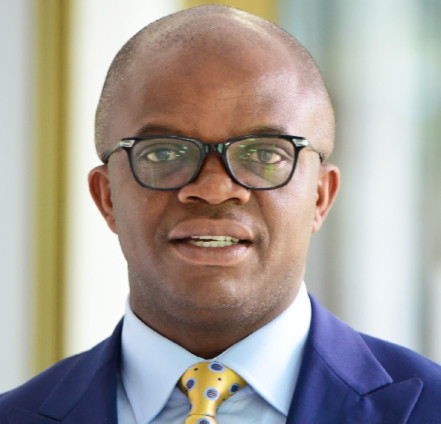
Former Deputy Finance Minister, Stephen Amoah, has called for far-reaching structural reforms to stabilise Ghana’s economy and prevent the country from returning to another bailout programme with the International Monetary Fund (IMF).
The Member of Parliament for Nhyiaeso's remarks come amid discussions surrounding Ghana’s transition from the IMF-supported programme to the Policy Coordination Instrument (PCI), which government officials say is intended to strengthen policy coordination and maintain fiscal discipline without direct financial support.
Dr Amoah argued that Ghana’s economic challenges cannot be solved through arbitrary expenditure reductions alone, insisting that spending cuts must be guided by sound economic analysis and national development priorities.
“There are so many fundamental anomalies that we need to fix first. The way we even embark on expenditure control, to me, I disagree. You cannot just wake up and say you are cutting expenditure by 30%—by what econometric analysis?” he questioned.
According to him, poorly targeted cuts in government spending could negatively affect economic growth if policymakers fail to identify which sectors are critical to the country’s Gross Domestic Product.
“Which of the items do not have strong correlation with our GDP such that when we cut them it won’t impact us?” he asked.
Dr Amoah also criticised government borrowing on the domestic market, warning that high interest rates continue to suppress private sector growth and investment.
“Governments most of the times borrow on our domestic market at a high rate than the private sector; this thing is destroying this country,” he stated.
He further pointed to corruption, inefficiency and wastage within public institutions as major threats to Ghana’s long-term economic stability.
“Wastage, corruption at all levels and in all departments,” he added.
Speaking on Citi FM, the Nhyiaeso MP stressed the need for urgent investment in agriculture to reduce Ghana’s dependence on imports, particularly products that could be produced locally.
“We need to quickly come back and deal concisely with issues of agriculture to the extent that importation of even fruit juice that won’t require complex value chains we deal with them,” he said.
He maintained that strengthening local production and implementing targeted reforms would help build a more resilient and self-sustaining economy.
Latest Stories
-
Ghana housing finance conference adopts communiqué to improve affordable housing access
2 hours -
Special Initiatives Minister urges Wa Technical Institute to enrol more girls as EU-backed solar training lab opens
3 hours -
In the matter of my first year at the Bar
3 hours -
ActionAid Ghana calls for an end to child marriage, greater investment in girls’ rights
3 hours -
Newsfile to tackle World Cup visa scandal, beach demolitions, education strikes, BRICS bid
3 hours -
UK-Ghana Trade & Investment Summit: Trade Resource Centre to help businesses maximise UK-Ghana trade opportunities
3 hours -
Embassy of Denmark celebrates World Maritime Day
4 hours -
Linking LEAP to productive inclusion could cut extreme poverty by 2030 – UNICEF
5 hours -
Trade Ministry backs use of creative arts to rehabilitate prison inmates
5 hours -
Negotiations with government to continue despite strike suspension – GNAT
5 hours -
‘Ghana cannot afford to waste public resources; every cedi has a job’ – Ato Forson
5 hours -
Ghana expects economic boost as World Assemblies of God Congress brings 10,000 delegates to Accra
5 hours -
Joy in Nayilifong as Farouk Aliu Mahama donates 100kVA transformer to improve power supply
5 hours -
Chief Justice urges employers to tackle mental health stigma in workplaces
6 hours -
Analysis: Ghana’s yellow fever numbers reveal a gap between vaccination and protection
7 hours