

Audio By Carbonatix
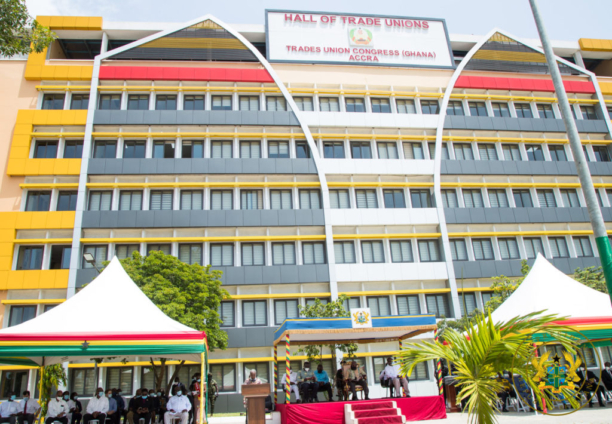
The Trades Union Congress (TUC) has cautioned that Ghana could remain dependent on International Monetary Fund (IMF) programmes unless it adopts production-driven economic policies.
Dr Kwabena Nyarko Otoo, Deputy Secretary General of the TUC, said the country’s continued reliance on IMF-style policies risked undermining sustainable economic transformation and job creation.
He made the remarks on a current affairs programme monitored by the Ghana News Agency.
Dr Otoo’s comments come after Ghana exited the IMF-supported Extended Credit Facility programme and entered a 36-month non-financing Policy Coordination Instrument arrangement with the Fund.
He said Ghana’s repeated recourse to IMF support stemmed not only from external shocks but also from policy frameworks that prioritised macroeconomic stabilisation over productive sector growth.
Dr Otoo noted policymakers often continued to implement IMF-style measures after programme completion, creating a cycle of dependence that failed to promote industrialisation and broad-based development.
“The IMF leaves and may not even give us money, yet the people in our ministries and at the Bank of Ghana are so addicted to IMF policies that do not ensure production,” he said.
Dr Otoo said the policies had contributed to an import-driven economy, limiting job creation and domestic value addition.
He noted that although recent macroeconomic indicators, including improvements in foreign reserves, appeared positive, they did not necessarily reflect improvements in livelihoods.
“Take gold prices out of the equation and assess where the economy would have been,” he said.
Dr Otoo said gains in external commodity prices, particularly gold, had significantly influenced the current economic outlook, while domestic initiatives such as the gold purchase programme had also helped to stabilise the economy.
He stressed the need for policies that promoted local production, industrialisation and decent job creation to ensure long-term economic and social stability.
“Our challenge is to ensure that macroeconomic stability translates into social stability. That means creating decent jobs and building a productive economy,” he said.
Dr Otoo called for a comprehensive review of Ghana’s economic strategy to reduce import dependence and enhance domestic value creation.
He stressed that without such reforms, Ghana could continue to cycle in and out of IMF programmes despite periodic signs of economic recovery.
Latest Stories
-
Vice Chancellors Ghana appeal to striking university administrators to resume work
6 minutes -
KNUST postpones 2026/2027 academic year reopening indefinitely amid GAUA strike
10 minutes -
Fire destroys mattress showroom at Sokoban in Kumasi
30 minutes -
ECOM-SMS Ghana launches ‘Agriculture Our Future Clubs’ to address threat of ageing farmer population
33 minutes -
Nicholas Atsu Kumi
34 minutes -
Cherif Sarr: Economic participation needs more pathways, not one prescribed route
35 minutes -
Cyber Security Authority: Ghana led Operation Blackout, not FBI
40 minutes -
GH¢800,000 goods destroyed as fire engulfs Kia Rhino truck on Apedwa-Kibi Road
1 hour -
Chief Justice calls for supportive workplaces to address mental health stigma
1 hour -
NVI CEO defends GH¢13m spending on training, workshops and conferences
1 hour -
Ghana targets first locally manufactured vaccine by 2027
1 hour -
Teachers suspend strike after reaching agreement with government
1 hour -
Council of State describes talks with striking teachers as fruitful
2 hours -
Adjaye Associates opens new Accra studio with public space for cultural exchange
2 hours -
BoG to issue new Credit Risk Directive as NPL ratio in the Savings and Loans sector deteriorates
2 hours