

Audio By Carbonatix
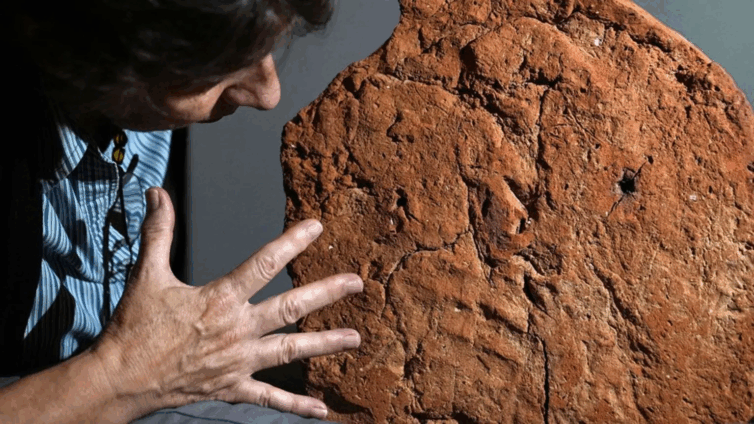
A 4,000-year-old handprint has been found on an ancient Egyptian tomb offering by curators preparing for an exhibition.
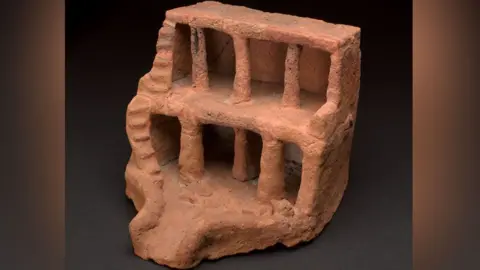
The discovery was made by University of Cambridge researchers on a "soul house", a type of clay model in the shape of a building, typically found in burials.
Curator Helen Strudwick said the complete handprint, which dates from 2055 to 1650 BC, was "a rare and exciting" find.
The ceramic will go on display as part of the university's "Made in Ancient Egypt" exhibition at the Fitzwilliam Museum, opening on 3 October.
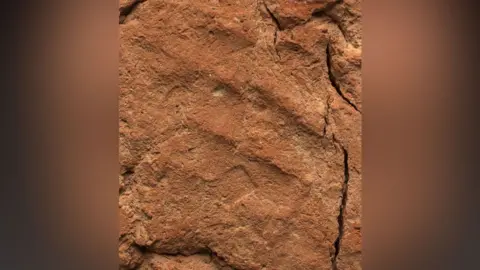
Ms Strudwick, senior egyptologist at the Fitzwilliam Museum, said: "We've spotted traces of fingerprints left in wet varnish or on a coffin in the decoration, but it is rare and exciting to find a complete handprint underneath this soul house.
"This was left by the maker who touched it before the clay dried.
"I have never seen such a complete handprint on an Egyptian object before."
The exhibition concentrates on the people who made the ancient Egyptian crafts.
While ceramics were widely used and vast amounts of pottery survive, there are relatively few details known about the potters themselves, in comparison to other ancient Egyptian craftsmen.
The ready availability and generally low value of pottery may have affected their status, according to the museum, which cited a text known as the Teaching of Khet, comparing potters to pigs who wallow in mud.
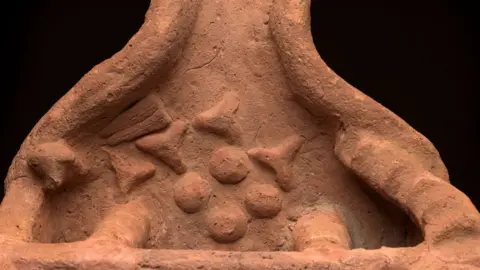
Soul houses may have acted as offering trays or provided a place for the soul of the deceased to live within the tomb.
They had an open front space where items of food were laid out, in this example loaves of bread, lettuce and an ox's head.
Analysis of the item suggested the potter who made it first created a framework of wooden sticks and then coated it with clay to make a building with two storeys supported by pillars.
During firing, the wooden framework burnt away, leaving empty spaces in its place.
The handprint found underneath was probably made when someone, perhaps the potter, moved the house out of the workshop to dry before firing in a kiln, according to the researchers.
The stories of Egyptian rulers, like Tutankhamun, have received a great deal of attention, but the makers of the artefacts themselves are often overlooked.
Made in Ancient Egypt aims to show who these people were, how they thought of themselves and what other Egyptians thought of them.
Latest Stories
-
Nearly 400 sentenced in Nigeria for links to militant Islamists
18 minutes -
Ghana’s recovery supported by gold strength despite global oil price pressures – Standard Bank Research
24 minutes -
Kwaku Azar writes: A-G vs OSP
57 minutes -
Mfantsipim–Adisadel rivalry built excellence, not division – Sam Jonah
1 hour -
Vice President launches Mfantsipim’s 150 years of shaping Ghana’s greatest mind
2 hours -
I assure Otumfuo, Mahama will join him to commission KNUST Teaching Hospital by end of this year – Haruna Iddrisu
2 hours -
Barcelona dominate derby to extend La Liga lead
3 hours -
Gov’t to roll out free special education for persons with disabilities from July 1 – Education Minister
3 hours -
Importers and Exporters Association declares full support for Publican AI port system
3 hours -
“We used it to test our officiating officials’ readiness” – Bawah Fuseini after CAA Athletics event
3 hours -
Volleyball emerges as Ghana’s fastest rising sport
3 hours -
National Sports Fund needs strong leadership from the top – Administrator David Wuaku
4 hours -
JoySports Exclusive: Steve McLaren in talks with GFA after expressing interest in Black Stars job
4 hours -
Fire guts auto parts warehouse at Bubuashie, one fire officer injured
4 hours -
I owe my victory to coach Ofori Asare – Allotey after winning WBA Africa Gold Super Flyweight belt
4 hours