

Audio By Carbonatix
It is not the first time and for sure, it would not be the last time in the history of our major public health institutions across the country. I am referring to what is known as hospital detention.
It is the situation where in-patients who are unable to afford their hospital admission and other medical bills are kept by hospital authorities beyond their discharge. They are detained because they fail to fully settle their bills as if detaining them automatically conjures a wand that delivers cash for the settlement of the bills.
In last Saturday, September 26, 2020 issue of the Daily Graphic, it was reported that some 101 in-patients in some public hospitals across the country, though discharged, were detained by the respective hospital officials for their inability to settle their medical bills. Fortunately for these in-patients, including about 31 from the Eastern Regional Hospital in Koforidua, they had all been discharged following the full payment of their medical bills by the Vodafone Foundation. The gesture was part of the Foundation’s annual “Homecoming” initiative.
Hospital discharge
Indeed, discharge from the hospital, even if it is after a day’s stay, is a welcome relief for the sick. To the patient, a discharge assures them that their medical condition is manageable. It means that their condition is stabilised and the doctors are happy to let them go home. Psychologically, that is healing.
It is not surprising therefore to hear that while in the ward, instant happiness greeted the detained patients at the Eastern Regional hospital last Thursday. They could not hide their joy as they got to hear that their bills had been settled by the Foundation. According to the Daily Graphic’s report, the “rescued” in-patients at the Regional Hospital “could not hide their joy” at the benevolence of their benefactors and “showered praises on the initiative”.
If it is true that hospital stays are likely to increase a patient’s risk of contracting even more infections if proper care is not taken, then detaining discharged patients really is not the best. One is talking about possible infections that could worsen their original condition. In a pandemic era, why would hospitals hold in-patients to ransom for their inability to raise funds to settle their medical bills? Is the act not precipitating ethical concerns?
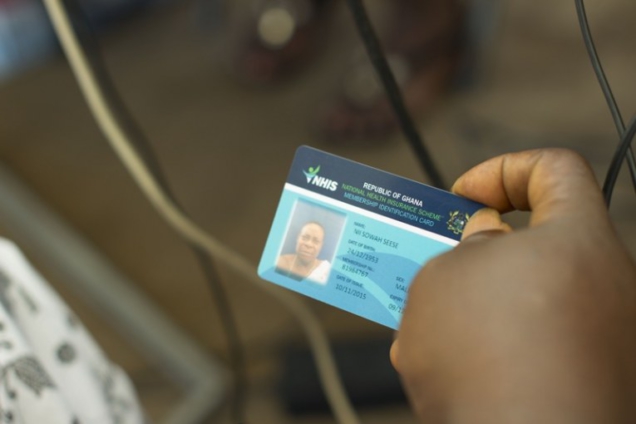
NHIS
In a season of political promises and electorate demands, the gesture of the Foundation would have scored good political points and sure votes. But it is not and mind you, it should not be a one-off gesture. That is why though a season for electorates to demand, incidents of this nature make one ponder as to whether a review of the scope of services provided by the National Health Insurance Scheme (NHIS) should not include such “benevolence”.
As we seek to improve on deliveries by the NHIS and consider which other areas of benefit and which to add to the scheme, one would like to make a passionate plea. Could the scheme not consider extending help to the financially challenged citizens who get caught up in hospital detentions especially the vulnerable in the society?
How disheartening to hear that in the Koforidua Regional hospital “rescue” case, the persons rescued with the full settlement of their medical bills included newly delivered mothers, children and the elderly.
Recurrent pattern
Anyone who has followed cases of hospital detentions in public hospitals across the country over time must have noticed the recurrent pattern of those who fall victim. More often than not, they turn out to be from vulnerable groups such as newly delivered mothers, children and the elderly.
The pattern is so consistent that it should be easy for the NHIS to draw up support to free these vulnerable individuals whenever they come face to face with such problems. If we have a national index for pro-poor programmes being executed by the Ministry of Gender, Children and Social Protection, it should be easy to use same index to assess the hospital detainees who need help.
If ever the NHIS had to review its services to include help to any vulnerable groups in our society, they should not look too far. Help to free hospital detainees is something to consider for the future.
Philanthropists may come in once in a while to free hospital detainees but what happens in between? We need a permanent provision, perhaps under the NHIS.
****
Writer’s email: vickywirekoandoh@yahoo.com
Latest Stories
-
Late Solanke strike salvages 10-man Spurs draw at Man United
9 minutes -
Gender Ministry to monitor welfare of Nana Akua Addo’s children amid domestic violence case
16 minutes -
Benedict Okyere Yeboah: Ghana’s football problem goes beyond sacking a coach
25 minutes -
GPL 2026/27: Darkwah Wiafe’s winner sees All Blacks beat Kotoko
31 minutes -
ITF World Tour : Patel Wins Boys’ Singles Final at J100 Accra
44 minutes -
Ghana must pursue BRICS partnership if it brings economic benefits – Kpebu
47 minutes -
Success and Wright Claims J100 Accra Girls’ Doubles Championship
47 minutes -
ITF J100: America’s Wright wins J100 Accra Girls’ Singles Title
54 minutes -
Expedition hopes to find aviator Amelia Earhart’s plane on remote island
54 minutes -
US seeks changes to rejected $109m health compact with Ghana – Mahama
1 hour -
Nine dead in mass shooting at Pennsylvania home
2 hours -
‘Time for Ukraine to get new president,’ says Trump after Zelensky condemns diesel deal
2 hours -
Hincapie injury adds to Arsenal issues after Guimaraes rescue act
2 hours -
Henderson scores twice as Chelsea thumb Bournemouth
2 hours -
Photos: Mentapulse Africa convenes health and labour summit to address talent retention
2 hours