

Audio By Carbonatix
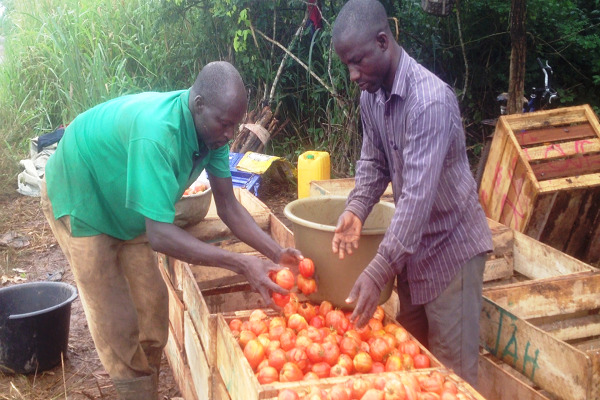
Tomato traders are calling on government to revive the Pwalugu Tomato Factory and establish new tomato factories to address the persistent hike in tomato prices.
According to them, having a factory moderates the supply of tomatoes on the market and in situations where the tomato is going bad, the factory buys and processes it.
Naomi Atuahene, a tomato trader for 25 years described this year as the worst.
According to her, life would be easier if there were factories to process tomatoes before they go bad as well as prevent traders from incurring losses.
This will also prevent value chain players from selling their produce cheaply.
“Our markets are flooded with tomatoes. If we do not devise ways to sell them, we lose profit and vice versa. We suffer losses when we sell them too quickly to avoid it being rotten. We will plead with government to revive tomato processing factories.”
“During former President Kufuor’s era, I worked at the Pwalugu Tomato Factory and I believe it really helped to prevent situations like this,” she intimated.
Prices of tomatoes have shockingly reduced significantly. A box of tomato which was sold in early May 2022 for about ¢3,000 is now selling at ¢300.
About four weeks ago, tomatoes of a small paint bucket was sold at some major markets in Accra for ¢100, but is now going for ¢30.
Joy Business engaged some tomato traders at the Alai Station in Accra and Matilda Baffour explained that, tomatoes are seasonal crops; and we are experiencing a decrease in prices because of the abundance of tomatoes in the middle belt of the country.
“This job is seasonal. There are times like this when we have too many tomatoes and times like April when prices were so high. Tomato is a perishable good and players along the value chain always want to sell their produce without having to incur lot of losses, hence the consumer rush on the markets”, she explained.
“Now a box of tomato is being sold for ¢300 or even as low as ¢200. Meanwhile, we buy from the farmgates at the same prices,” she said.
Another trader, Olivia Baidoo said although there are lot of tomatoes on the market, patronage is very low.
According to her, traders are competing with farmers as the farmers now prefer to sell at the markets directly, due to economic hardships.
“Prices have reduced yet they are not buying. A box is selling at ¢300, but we buy at the farmgates for ¢200. If you factor expenses like transportation, loading fee and cost of boxes, you would realise that we’re incurring losses.”
“The farmers are complaining of the increase in fertiliser prices and other factors negatively affecting their operations. Hence they would rather come and sell directly to consumers,” she said.
Latest Stories
-
US, Iran fail to reach peace agreement after marathon talks in Pakistan
4 minutes -
ECG kicks off Phase Two of transformer upgrades at Lashibi; brief outages expected
38 minutes -
Port crises loom as 11,000 drivers threaten four-day strike
1 hour -
A source of excellence across generations – Vice President Opoku-Agyemang lauds Mfantsipim
2 hours -
(Photos) Mfantsipim School launches historic 150th anniversary
3 hours -
Knights and Ladies of Marshall group backs Catholic Bishops’ stance on anti-LGBTQ+
4 hours -
Bright Simons writes: All the Filla in the Ibrahim Mahama/E&P – Gold Fields Saga
4 hours -
Monetise Idiocy In Ghana
4 hours -
The Ghanaian prophet and the mysterious death of his scottish wife Charmain Speirs
5 hours -
Nearly 400 sentenced in Nigeria for links to militant Islamists
5 hours -
Ghana’s recovery supported by gold strength despite global oil price pressures – Standard Bank Research
5 hours -
Methodist Church hails Mfantsipim@150; calls for “fresh consecration” to excellence
6 hours -
‘Excellence is our inheritance’ – Nana Sam Brew-Butler hails Mfantsipim’s 150-year reign in leadership
6 hours -
Kwaku Azar writes: A-G vs OSP
6 hours -
Mfantsipim–Adisadel rivalry built excellence, not division – Sam Jonah
6 hours