

Audio By Carbonatix
Low-income countries reportedly consume significantly fewer materials and produce far fewer climate impacts, with a consumption rate six times lower and climate impacts ten times lower in comparison to high-income countries.
Over the last five decades, upper-middle-income countries have seen a more than twofold increase in resource consumption due to their expanding infrastructure and the transfer of resource-intensive activities from high-income countries. Despite these trends, per capita resource usage and associated environmental impacts in low-income countries have remained relatively low and stable since 1995.
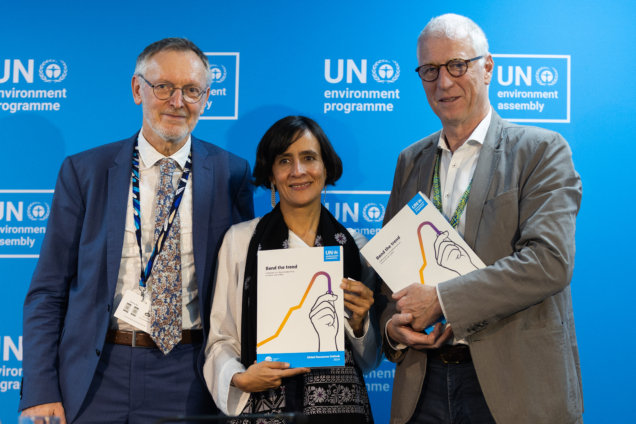
This was captured in the 2024 Global Resource Outlook, released by the International Resource Panel during the sixth session of the UN Environment Assembly.
The report advocates for significant policy changes to enable humanity to live sustainably within its means and urges for a reduction of projected resource use by one-third while simultaneously promoting economic growth, enhancing well-being, and mitigating environmental impacts.
The report highlights a significant increase in resource use since 1970, rising from 30 to 106 billion tonnes, or from 23 to 39 kilograms of materials utilised on average per person per day. This growth has resulted in profound environmental consequences, with resource extraction and processing contributing to over 60 per cent of planet-warming emissions and 40 per cent of health-related impacts from air pollution.
Specifically, the extraction and processing of biomass, such as agricultural crops and forestry, are responsible for 90 per cent of land-related biodiversity loss and water stress, as well as one-third of greenhouse gas emissions. Similarly, the extraction and processing of fossil fuels, metals, and non-metallic minerals, including sand, gravel, and clay, collectively account for 35 percent of global emissions.
“The triple planetary crisis of climate change, nature loss and pollution is driven from a crisis of unsustainable consumption and production. We must work with nature, instead of merely exploiting it,” said Inger Andersen, Executive Director of UNEP. “
"Reducing the resource intensity of mobility, housing, food and energy systems is the only way we can achieve the Sustainable Development Goals and ultimately a just and liveable planet for all.”
Latest Stories
-
Landfilling waste management creates no value, it’s an economic waste
8 minutes -
Photos: Speaker Bagbin Commissions MPs constituency office under parliamentary decentralisation programme
24 minutes -
Black Stars technical advisor Winfried Schäfer sacked as GFA shakes up backroom staff
29 minutes -
Wenchi water project almost complete, critical to gov’t agenda – GWL MD
45 minutes -
Anti-LGBTQ+ bill not part of government’s legislative agenda – Inusah Fuseini
47 minutes -
Anti-LGBTQ Bill: Forget the rumour mongers, I’m a man of action, and will pass the bill – Speaker
2 hours -
Women and children among those killed in Sudanese army shelling of wedding celebration
2 hours -
President Mahama is not sincere with Ghanaians on LGBTQ bill matter – Hassan Tampuli
2 hours -
Gov’t to establish Prison Industrial Hub to equip inmates with income-generating skills – Prison Service boss
2 hours -
Alhassan Tampuli donates cement, roofing sheets to support storm victims in Gushegu
2 hours -
Alhassan Tampuli appeals for urgent support for storm victims in Gushegu
2 hours -
The hypocrisy must stop; pass Anti-LGBTQ+ Bill now – Alhassan Tampuli to Mahama
2 hours -
Imprisonment should be rehabilitative, not punitive – Ghana Prisons boss at UNGA
3 hours -
Ga Adangbe traditional priests petition Mahama over McDan aviation licence revocation
3 hours -
Anti-LGBTQ Bill: NDC’s arrogance is worrying – Hassan Tampuli
3 hours