

Audio By Carbonatix
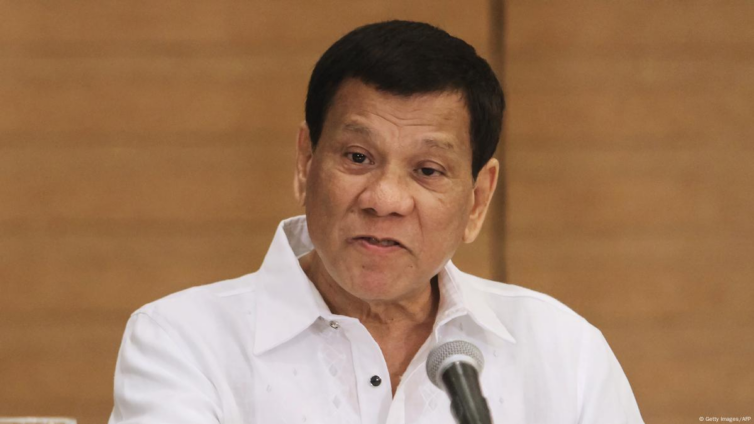
Just short of his 80th birthday, Rodrigo Duterte, a man who once vowed to purge his country through a bloody anti-drugs and crime campaign, found himself outmanoeuvred and in custody.
The former president was met by Philippines police as he arrived in Manila on a flight from Hong Kong, where he had been rallying support for his candidates for the upcoming mid-term election among the large Filipino diaspora there.
The much-talked-about warrant for his arrest from the International Criminal Court (ICC) was, it turned out, already in the hands of the Philippines government, which moved swiftly to execute it.
A frail-looking Mr Duterte, walking with a stick, was moved to an air force base within the airport perimeter. A chartered jet was quickly prepared to take him to the ICC in The Hague.
How had this happened? How had a man so powerful and popular, often called "the Trump of Asia", been brought so low?
In vain, his lawyers and family members protested that the arrest had no legal basis and complained that Duterte's frail health was being neglected.
President Marcos now appears to have moved deftly to neutralise his main political rival. But his strategy is not risk-free. The Dutertes remain popular in much of the country, and may be able to mobilise protests against the former president's prosecution.
Sara Duterte has issued a statement accusing the government of surrendering her father to "foreign powers" and of violating Filipino sovereignty.
An early test of the support enjoyed by both clans will be the mid-term elections in May.
In his comments to journalists after the plane carrying his predecessor had taken off from Manila, President Marcos insisted he was meeting the country's commitments to Interpol, which had delivered the ICC.
But he was coy about the fact that it was an ICC warrant he was executing, given that many Filipinos will question what the ICC's remit is in a country which has already left its jurisdiction.
It is not risk-free for the ICC either. The court is an embattled institution these days, with the Trump administration threatening to arrest its top officials should they travel to the US, and few countries willing to extradite those it has indicted.
Getting former President Duterte to The Hague might therefore look like a welcome high-profile success.
But there was a warning, from China – admittedly not a signatory to the ICC and currently at loggerheads with the Philippines – not to politicise ICC cases.
This was a thinly-veiled reference to the fact that this case, which is supposed to be about accountability for serious international crimes, has ended up playing a decisive part in a domestic feud in the Philippines between two rival political forces.
Latest Stories
-
Accra New Town collapsed building is an abandoned GETFund project — NADMO
44 seconds -
They said he was stubborn — But it was autism: Breaking the silence in Ghana
11 minutes -
Government to cover medical bills for Accra Newtown collapse victims — Ayawaso Central MP
15 minutes -
The “no bed syndrome” is a direct effect of the destruction of LHIMS – Dr. Ekua Amoakoh
18 minutes -
GES suspends classes at Accra Newtown school after deadly building collapse
23 minutes -
Ghana must take public safety seriously — Institute of Architects says after Accra Newtown building collapse
28 minutes -
Ghana, Burkina Faso reaffirm commitment to stronger bilateral trade ties amid tomato export challenges
34 minutes -
2026 U20 WWCQ: Black Princesses name provisional squad for Uganda hurdle
44 minutes -
Dr. Stephen Adjei officially announces candidacy for NPP-USA Branch Treasurer
46 minutes -
‘They sacked me like a goat’ – Henry Quartey decries alleged mistreatment during Newtown building collapse response
47 minutes -
Ogyeahoho Yaw Gyebi II commends Asante Gold for advancing Bibiani Resettlement Project
52 minutes -
Dr Bomfeh calls for independent probe into ‘Big Push’ road contracts
55 minutes -
Oil rises above $115 and Asia shares slide as Iran war enters fifth week
59 minutes -
AU pledges stronger cooperation with Arab League as Nabil Fahmy assumes top role
59 minutes -
MFWA defends sole-sourcing probe, calls for accountability in Big Push contracts
1 hour